

The Worst Anime of Spring 2026
by The ANN Editorial Team,
What makes an anime 'bad'? The answer to that question will differ for everyone. An engaging story is marred by distractingly lackluster animation. A gorgeously animated series is hindered by a trite or nonsensical story. Maybe the characters are wholly unlikable, yet there are five seasons chronicling whether they'll get together. Sometimes a show is nothing more than a shadow of a better, more original production. Or its entire production is little more than a cheap Ambien to lull you to sleep. Below are Anime News Network's Editorial Team's nine worst anime of spring 2026.
9. Rent-A-Girlfriend Season 5
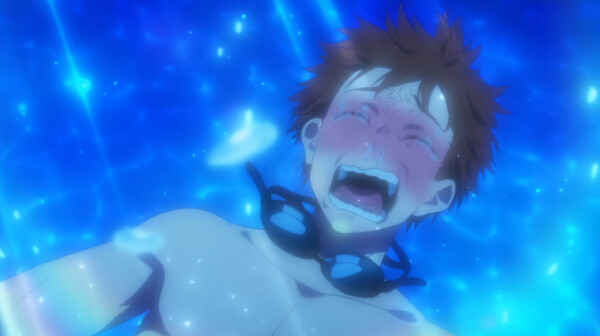
I actually had a lot of high hopes for season five of Rent-A-Girlfriend. I know that sounds weird since almost every season of the show has had varying fluctuations of bad. Still, I figured it could not get much worse than season four, which just felt needlessly drawn out in a series that really didn't have that much material to justify getting to this point in the first place. A lot was going on in season five right out of the gate, from Mami's backstory to major revelations finally getting some payoff, like the lie finally being revealed. The problem is that even when something happens in Rent-A-Girlfriend, it doesn't feel like it actually matters. This season actually tests that critique to the limit, with major reveals and character confrontations that still feel like they're barely moving the needle on the intrigue scale.
Yes, it is nice to see Mami finally confronted about some of her odd behavior, and aside from Chizuru, she's probably one of the only people in this show with a genuine character. However, she's so unlikable by design since she is also the closest thing the show has to an antagonist, but not even a good one, because after a full season of vague posting, her big plan this season doesn't amount to anything. However, I would rather watch a story exploring her tragic backstory and questionable character motivations than continue watching Kazuya. Sometimes, he gets a decent moment when he gets brave and takes responsibility for a situation. But my God, it's almost like this show has a mandate to showcase just how pathetic he is.
This is also the season that includes THAT SCENE with Kazuya under the water in the pool, and it perfectly summed up just how hard it is to fully get behind him as a character five seasons in. If the whole idea is that he is supposed to be this whimpering, pathetic guy who eventually comes around into someone I want to root for, then I shouldn't be getting eye drops of that five seasons in. I am at a point right now with this series where it actually needs to do something that feels impactful to be mediocre. So much of my time has been wasted, and I am still here writing about it to find some abstract justification for why I continue. This show is still a train wreck, but there might've been a point where it was a fun train wreck to dog on. Now it's just an uninteresting train wreck that continues to insult my intelligence every step of the way. I don't care if there's more manga material to adapt; can this please be the end?
— Bolts
8. Liar Game
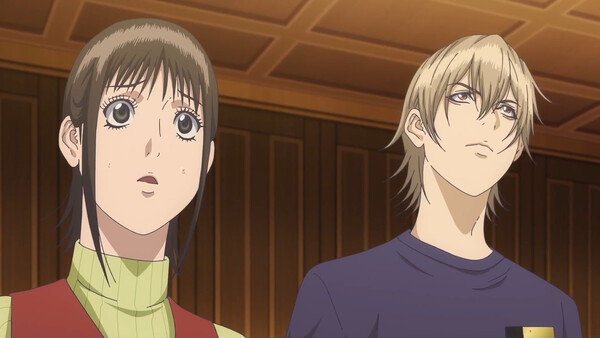
Guys. It's time for some game theory. Liar Game was one of my most anticipated anime of spring thanks to its suspense-filled penalty-game format, which promised shocking twists and upsets. Previously a manga, a live-action series, a K-drama, and several films, this '90s vintage has had a lengthy shelf life. All the more unfortunate that its latest incarnation as an anime is instantly forgettable. Visually, Liar Game looks like it was filmed in the backrooms: a monotonous, never-ending hotel lobby. Plotwise, it has the same monotonous drone as if somebody explained the play-by-play of a German board game to you for nine hours—making sure to helpfully repeat the more complicated bits over and over, and over... With more rules than story beats, the most incorrigibly ignorant protagonist possible, and a queer stereotype villain, I found little to enjoy about this franchise.
Other characters are always telling Nao, the protagonist of Liar Game, that she's stupidly honest. However, the events of the show make it clear she's just stupid. It's one thing to believe there's good inside of everyone—that part of Nao's personality is endearing. But after another player deceives her, laughs in her face, and is even violent toward her, Nao's actions are irredeemably dumb. She defeats this villain and then, inexplicably, gives him her entire winnings of 1 million yen. The plot doesn't work without this (if she had held onto the money, she could have given it to the organizers to drop out of the titular Liar Game), but it left such a bad taste in my mouth to see her give so much money to a man who doesn't care if she lives or dies. Nao never learns; her honesty and repeated victimization are her most perennial qualities.
Still, it's not until halfway through the season that an even more unpleasant character appears: a villain whose transgender identity is treated as a spectacle. At a critical moment, she pulls off her wig and announces, “I'm a man!” In the manga, this character defines themself as a “transvestite” and uses he/him pronouns. In the anime, this character uses she/her pronouns and defines herself as “female-presenting.” It's clear that the anime was attempting to update this character for a modern audience, and the fan reception is a mixed bag because this villain, as evil as she is, remains a tactical genius. We wholeheartedly support trans women's wrongs at ANN, but this '90s vintage portrayal is designed for cheap shock value.
— Lauren Orsini
7. That Time I Got Reincarnated as a Slime Season 4
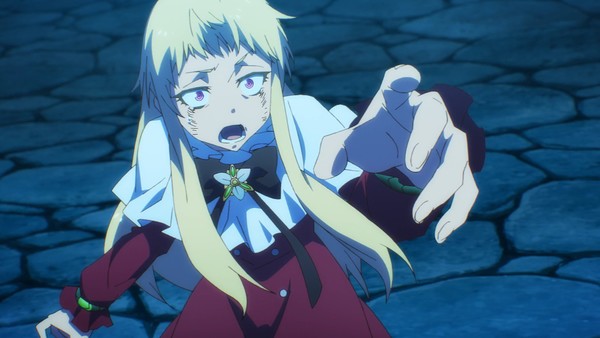
The third season of That Time I Got Reincarnated as a Slime was plagued with endless meetings. Episode upon episode, the characters sat around tables and discussed everything from international policy to building a gamified dungeon. Sure, there was some action—especially in the first half, where Hinata was an actual threat to our heroes—but the back half was a slog to say the least. However, in the midst of all that, a looming threat to our heroes began to emerge: the puppet master behind much of what had befallen Tempest, Mariabell Rosso.
This season is almost entirely focused on Mariabell and her attempts to bring Tempest down. It's no understatement to say that the season lives or dies on her portrayal. And one thing is unquestionably clear by the end of the season: She is the most anticlimactic villain of the entire series so far.
Mariabell is built up as the opposite of Rimuru. When it came to brains, Rimuru was a normal salaryman. Mariabell, on the other hand, was a woman who ruled Europe from the shadows—a person well-acquainted with managing massive organizations and outthinking opponents. Of course, Rimuru has the powers of the Storm Dragon and a Demon Lord—not to mention Raphael, who acts as an unseen advisor to help him use his powers and rule his nation. However, Mariabell has her own cheat ability—the ability to mind-control practically anyone, even reincarnated people like Yuuki. She can even give those she controls a massive temporary boost in power.
This sets her up to be a real threat to Rimuru and Tempest. She's smarter than the slime and can make anyone she meets into an unknowing puppet. The story practically writes itself: anyone could be a spy, terrorist, or assassin. Even Rimuru's most trusted friends could be corrupted—placing him in a position where even he can't simply smash his way out with overwhelming power. National leaders could likewise be brought under her control, bringing economic instability or outright war to Tempest.
Of course, nothing like that happens.
All Mariabell does is try to bait Rimuru into making enemies out of a collection of smaller countries through bribery and assassination, and then tries to isolate and murder Rimuru himself. Neither of the plans gets even close to succeeding. Rimuru effortlessly, almost accidentally in some cases, overcomes Mariabell's scheming. Even the big fight—the controlled Yuuki fighting Rimuru with all his strength—is over in mere minutes with little in the way of actual danger.
Mariabell and the entire season feel like the ultimate squandering of potential. With Mariabell, we faced a threat that could have brought real harm to our heroes—even turning them against one another amid the drama and tension such an act would create. Instead, Mariabell was barely even a stepping stone. It didn't even take clever thinking to defeat her. (The message of the season seems to be that she underestimated Rimuru, and that was her downfall.) In the end, while I wouldn't call this season outright unwatchable, it's certainly a pale shadow of what it could have been.
— Richard Eisenbeis
6. Snowball Earth
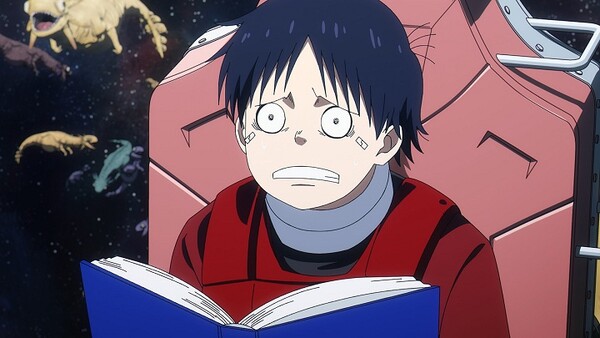
I had high hopes for Snowball Earth. For one, I enjoyed the manga's first volume back when I reviewed it for the Spring 2024 Manga Guide. Then there's the fact it's made by Studio KAI, whose recent stunningly animated adaptation of Sentenced to Be a Hero was a highlight of the Winter 2026 season. I enjoyed their work on Hell Teacher: Jigoku Sensei Nube, and this season, they're also responsible for the fantastic The Ramparts of Ice. So what happened with Snowball Earth? Could it be the cancer of cheap CG animation making everything look awful?
I've seen worse CG in anime. I somehow endured the entirety of EX-ARM, mainly because it was fun to hate-watch with my similarly incredulous online friends and point fingers at the sheer absurdity of its hubristically terrible visuals and incompetent direction. I survived both seasons of Berserk (2016/2017), mainly because of my love for the source material and a vain hope that the ghastly animation would, one day, get better. Snowball Earth does not approach those levels of offensively animated abortion, yet its CG is so inconsistently used and so weirdly intrusive that it actively fights against the intentions of almost every scene. Doll-like CG characters have stiff facial features that struggle to emote properly, a problem common to many of these bargain-basement CG shows, and only specialists like Studio Orange seem to have mastered it.
Other primary issues concern the characters and plot. Protagonist Tetsuo Yabusame is fine, I guess. He's a super-shy lad who wants to make friends but struggles with even basic social interactions. He's a bit of a caricature, but most viewers who experience introversion can empathize with him. What's less convincing is his role as “savior”. Shoved into a robot as a child, Shinji Ikari-style, by an overbearing father, for some reason, he and his mecha partner, Yukio, become more or less the sole line of defense against the invading extraterrestrial Kaiju. Although there is an entire defense force, they seem to be more or less useless, and the fate of humanity is placed in the hands of one psychologically damaged boy. So far, so anime, right?
The bulk of the anime takes place ten years after Tetsuo's catastrophic failure (due to sabotage) to prevent an enormous Kaiju swarm in space from overwhelming the Earth. Placed into emergency cold sleep, he crash-lands back on an Earth frozen like a nuclear winter. He finds a small group of survivors and almost immediately has to defend them from a group of antagonistic former defense soldiers, led by the most whiny and pathetic Colonel Sagami. This conflict spans the vast majority of the season, feels padded and inconsequential, and the show spends far too much time trying in vain to make Sagami feel even slightly sympathetic. He's not; he's a horribly selfish man-child who is motivated by jealousy against a child. Even the season's penultimate episode, which reveals his selfless actions in saving the children under his care, doesn't justify the show's ill-advised focus on his character.
Underneath the CG sludge and iffy character work, there's a fun kaiju-vs-mecha show screaming to be let out. The two main female heroines are adorable and fun, but don't receive anywhere near enough screen time, as they're sidelined almost as soon as they're introduced. Snowball Earth isn't a terrible show, but it is a disappointing one.
— Kevin Cormack
5. Agents of the Four Seasons: Dance of Spring
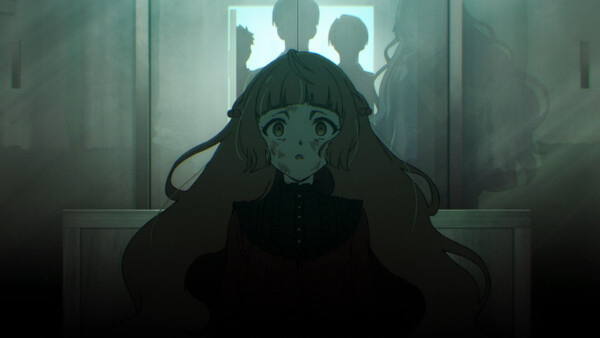
Agents of the Four Seasons: Dance of Spring is one of the most frustrating wastes of potential I've covered in a long time. On the surface, it has all of the components and blueprints a show could need to deliver, if not a masterpiece of modern television, then at least an entertaining season of fantasy melodrama. The idea of children all over the world being imbued with magical powers to serve as avatars of the four seasons is an interesting one, and Wit Studio is one of the most prestigious studios in the industry, so you know the show is going to at least look incredible. Yet, I am here to tell you that dramatic and artistic potential is more or less wasted by the infuriatingly inept execution of Agents of the Four Seasons' story.
Right away, this show needs you to know that it is a tale about Trauma with a capital-T. The Agent of Spring, Hinagiku, has been so traumatized by her kidnapping and abuse that she has regressed to speaking with the halting, fragile mannerisms of a porcelain doll who suffers from a debilitating oxygen deficiency. Her handler, Sakura, was traumatized by the violent disappearance of her closest friend and the cruel indifference of the adults who were supposed to protect her (not to mention the extra layer of violence she suffers on account of Hinagiku's terminal heterosexuality). The twin sisters who act as the Agent and Guardian of Summer have been traumatized by the future-shattering responsibility of being selected for this divine role, not to mention the increasingly frequent attacks by shady military Insurgents. The Agent of Winter, Rosei, is so traumatized by the guilt he feels for letting Hinagiku get kidnapped that he barely does anything for the entire season except wake up from night terrors and mope to his Guardian, Itecho, who has been traumatized by…being around all of this trauma, I suppose. All of this, and I haven't even gotten to the tiny little Agent of Autumn who gets traumatized by the intercontinental ballistic missile that a deranged and sexually abusive psychopath drops on her head.
No, that was not a pithy joke. Dropping missiles onto nine-year-olds so terrorist sex-traffickers can kidnap them is simply what Agents of the Four Seasons thinks passes for great drama. There are truly effective works of blatant emotional manipulation, like DEVILMAN crybaby, or Made in Abyss, might also be chock-full of exaggerated and even somewhat tasteless depictions of relentless human suffering; those anime use that human suffering to speak to their characters' growth, perseverance, and evolution in the face of life's hardships. Agents of the Four Seasons, on the other hand, might pay lip service to such frivolous narrative devices as “character development” or “a plot that goes somewhere even remotely interesting”, but actions speak louder than words. The show makes it very clear that the misery porn is what we are all really supposed to be showing up for. Why else would it spend a dozen of its episodes circling the drain of the same depressing flashbacks over and over and over again? Why else would it go to the trouble of introducing the lurid and exploitative elements of child sexual abuse in the middle of the climactic episodes that are meant to show the characters working together and fighting back for once?
It might look like the part of a big-budget prestige production, but Agents of the Four Seasons shares more in common with empty-calorie junk like Magical Girl Site and Redo of Healer. I am not against such trash existing as a rule. I get a little pissed off when the trash suddenly gets notions that it ought to be taken seriously and treated like good television.
— James Beckett
4. Petals of Reincarnation
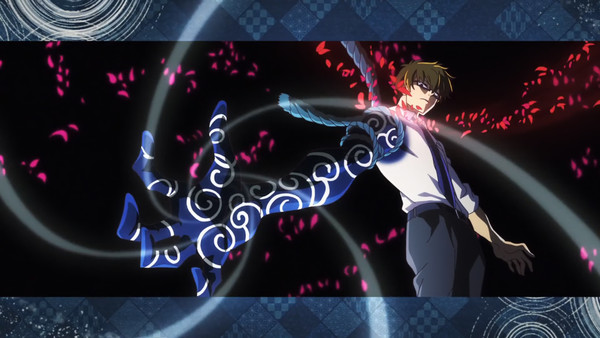
I have great news for anyone who ever wanted Fate/stay night, but make it boring and a million times harder to follow, and with infinitely less payoff: Petals of Reincarnation. A bitter, edgelord high schooler named Touya Senji yearns for a big, special talent because he's been living his life in the shadow of his prodigal older brother. He's tried a little bit of everything, but nothing has ever really stuck. But then, he meets a new classmate who has the reincarnated sword talent of Miyamoto Musashi. This leads to him gaining a reincarnated talent of his own—which is functionally a special power. In his case, it's the thieving talent of Goemon Ishikawa. So he sets out to steal the talents of everyone else with a reincarnated talent who's around him—which turns out to be a lot of people, because he gets recruited to help in a big fight with other people with reincarnated powers for Reasons™.
If this sounds like it's going to cut you with all that edge—yeah. This show is absolutely going for that “No one understands me, so I'm going to run to my room and listen to Linkin Park” vibe that, executed better, might have made this anime more popular if it came out 20 years ago. The key phrase is, “executed better.” The story largely takes a back seat to long fight scenes that only rarely deliver the hype and aura they're actually meant to. Not that it really matters, because the story is a tragic blend of convolutedness and poor explanation. So, it's not for anyone who wants some easy watching. Why is everyone fighting again? Why are they trusting Touya—whom they only just met, and don't really “get” his power—again? And if Touya's goal really is to betray everyone by stealing their talents, then why doesn't he just do it already? These are only some examples of the kinds of questions you're likely to find yourself asking time and time again.
Still, to be fair, it's not all bad. The visual style and overall direction of this anime are really cool… pretty much only in the first episode. There'll be occasional reminders—brief glimpses—of style in the rest of the series, but for the most part, the visuals lose a lot of their unique flair after that first episode. So you can't even find solace in the show's cool visual identity.
— Kennedy
3. The Warrior Princess and the Barbaric King
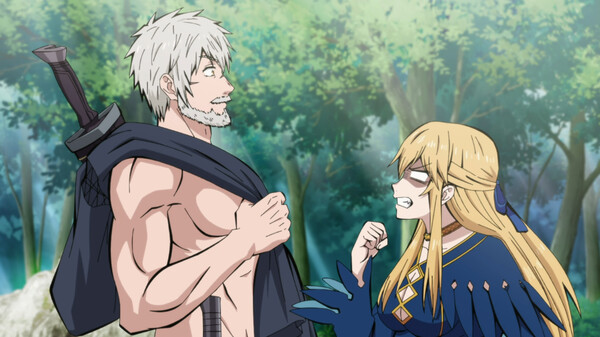
There is nothing sadder – or more annoying – than wasted potential. At first, The Warrior Princess and the Barbaric King seemed like an interesting story about cultural differences and the drive some cultures have to colonize as many other cultures as possible. And, in all fairness, those things are present in this series. But thanks to a liberal application of the Sledgehammer of Symbolism, any storytelling merit these ideas have is crushed to a pulp, then put through a strainer for good measure, resulting in a thin, unpalatable liquid version of what it might have been.
To say that this is disappointing may be an understatement. It's just such a waste of both potential and characters. While the first episode made some very questionable choices, such as playing Serafina's worries of sexual assault off for laughs and the appearance of a surprise penis, it wasn't until a bit later that the problems came to the fore. Chief among them is a complete lack of subtlety. Veor's “barbaric” people are just this close to being “noble savage” archetypes, living in harmony with the land and other races and forming a largely egalitarian society in a fit of writing that would make Samuel Johnson, the author of Rasselas, Prince of Abissinia think they were overdoing it. The Ildorans, our colonizers/warmongers/western civilization avatars, are portrayed as stuffy, religious zealots who are, by and large, incapable of learning, with three notable exceptions besides Serafina – one of whom has, quite literally, been reduced from a warrior woman to being barefoot and pregnant. While it is absolutely possible to have it all, none of the women are shown as actually making that work, for the most part opting for domesticity. Add in that the “barbarians” also have changed the engagement ring into a literal collar around women's (and not men's) necks, and this isn't quite passing the feminist sniff test – and barely the Bedchel Test in many episodes.
To these storytelling issues are added problems with animation and pacing. Perspective is often very awkward, with characters changing size and position between frames, and other baffling choices, such as putting what appear to be abs on Serafina's dress and the apparently genetic scars that both Veor and his mother, Resia, have on their cheeks. While I don't personally love the thick black outlines that seem to be used primarily on Serafina, they aren't bad per se – but they do call attention to problems in the art, making them a visual liability. Throw in a couple of awkward CG dragons, and the issues only feel worse.
The Warrior Princess and the Barbaric King could have been a good show. It has all of the elements. But by not trusting its audience to make connections and draw conclusions, it kneecapped itself, and playing fears of sexual assault for laughs in at least two cases doesn't help. I understand the manga is better, but this show has annihilated any interest I had in checking it out.
— Rebecca Silverman
2. Fist of the North Star: Hokuto no Ken
Anime has come a long way. We get lavish adaptations of source material, both classic and current. Huge strides in animation have been made to the point where alternative options like CGI are viable and can serve their stories well. English dubs have reached a point of consistency that it's easier than ever for folks who wish to enjoy series in their native language. It took a lot of work to get here.
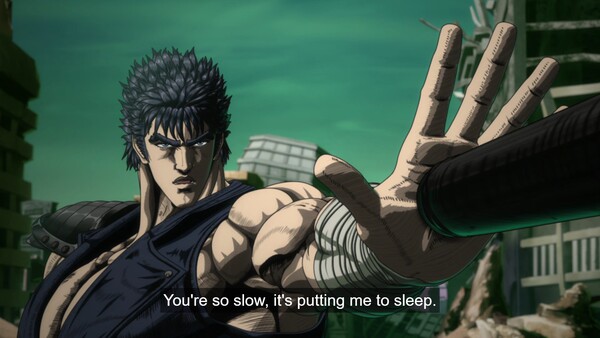
Hokuto no Ken: Fist of the North Star is, seemingly, a calculated offensive to undo all of that. Like an apocalypse sending the world back to a barely hospitable wasteland, this anime is a barren landscape where only the strong will survive—or manage to sit through this show, anyway. Already being a tepid, point-for-point re-adaptation of the storied Fist of the North Star story is a dubious prospect. This is a legendary pillar of manga canon, so influential that even those who have never read it still know plenty of it. A reanimation can't simply be a fresh alternative to the…let's be generous and say "well-remembered" 1980s version. This new project would have to go hard. It doesn't.
Not content to blithely recap the iconic panels of Buronson and Tetsuo Hara's manga, Fist of the North Star opts to render things in 3D CGI animation that's seemingly as strapped for resources as the wasteland that Ken wanders. CGI animation is virtually a solved problem in anime these days. Plenty of shows have demonstrated the wonders of the medium and how it can complement and elevate things in competent hands. But these are bloodied, broken hands that can barely manage lumpy, weirdly shaded characters and lip-flaps that move like someone moving them up and down with a computer mouse. The cutscenes in Ken's Rage, a FOTNS video game from 2010, look nicer than this!
Not content to drag itself through one layer of hell, someone at Amazon or the production company had the bright idea to produce an English dub of Fist of the North Star. Theoretically, that makes sense; this is a globally known property. But of course, you already know by now that any pretense of prestige with this product has exploded like some poor mook's head. They cheaped out on this, with seeming single-take mispronunciations and line flubs delivered through wooden, mismatched performances (why does the boy Bat sound like a 30-year-old man?). Astonishingly, Clayton Alexander as Ken, the main character anchoring this show, is far and away the worst performance. He's woefully miscast and misdirected, sounding more like someone doing a bad Ken impression as a joke for an abridged series. Somehow, they decided to bring him in as the actor for Ken's incoming guest appearance in Fatal Fury: City of the Wolves. And they advertised it! They thought this vocal performance would be a draw!
This sucks. It's not just that Fist of the North Star is bad in a way that recalls Berserk (2016). It's bad in a way that actively sets the medium of anime itself back. That's what makes it so insulting to both loyal fans and newcomers alike. With other refreshed retro adaptations becoming a go-to for anime, this should have been the chance for a fresh start for Fist of the North Star. It should have arisen and led a whole new generation to discover what made the classic (at least, most of it) such an icon. Alas, it's already dead.
— Christopher Farris
1. The Drops of God
As a born-and-raised Wisconsinite, I am acutely aware of the cultural, historical, and creative dimensions present in alcohol creation and consumption. While my palate is far more developed for appreciating beer than wine, much of this skill set and culture is transferable. So, when I say that Drops of God is full of shit in how it depicts and explores wine appreciation, I do so with enough authority and expertise to merit some degree of legitimacy.
While I initially thought Drops of God's penchant for explaining wine appreciation through comparisons to music or art was a means to explain wine appreciation to an audience unfamiliar with the practice, it quickly became apparent this show does not have the chops to examine what makes this art form so interesting and enduring. This is an anime where a character will say with a straight face something like, “This painting makes me want to taste so and so vintage,” which is a patently ridiculous thing to say and also deeply reductive when it comes to wine appreciation. Every beer or wine tasting I've been a part of is grounded in the craft of brewing or distilling, with an overview of how different techniques and ingredients produce different flavors. Drops of God constantly grounds wine appreciation in other art forms, ultimately making this work feel like it's minimizing the craft it's trying to celebrate.
Drops of God also isn't helped by the fact that every character in it is written like an alien, and nobody behaves as a normal human being would. The act of decanting wine, a process of aeration that's supposed to draw out the flavors of a vintage better, is treated with a wholly unearned degree of reverence and importance. Seriously, these characters talk about decanting like it's some hidden technique in the world of wine, which is hilarious considering I first learned about it from a college girlfriend who described it as “a way to make wine taste better.”
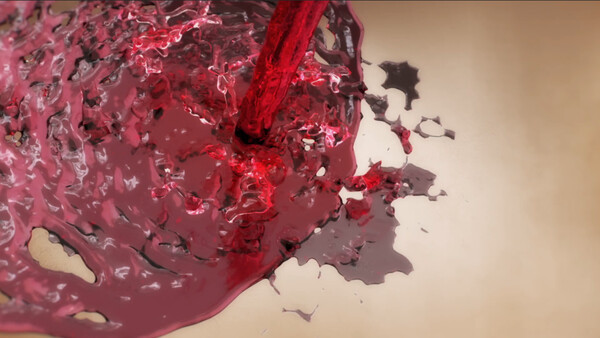
Last but not least, the biggest factor in Drops of God earning a spot in this “Worst Of” list is just how cheap and amateurish it looks. Beyond poor CGI rendering of the liquid pivotal to this anime's plot, the characters are distractingly stiff and expressionless. After watching Drops of God, the only thoughts and feelings stirred within me are questions like, “Why did studio Satelight make this?” “Why is this series one of the most popular manga in France?” and “Why did Crunchyroll decide to give this series one of the coveted English dubs it doles out every season?”
Drops of God isn't even bad in a fun or interesting way, and you shouldn't watch it.
(Also, as a quick reminder, the world of high-end wine is rife with fraud and is often connected to money laundering.)
— Lucas DeRuyter
Disclosure: Kadokawa World Entertainment (KWE), a wholly owned subsidiary of Kadokawa Corporation, is the majority owner of Anime News Network, LLC. One or more of the companies mentioned in this article are part of the Kadokawa Group of Companies.
The views and opinions expressed in this article are solely those of the author(s) and do not necessarily represent the views of Anime News Network, its employees, owners, or sponsors.
discuss this in the forum (13 posts) |
