

The Most Anticipated Anime of Summer 2026
by The ANN Editorial Team,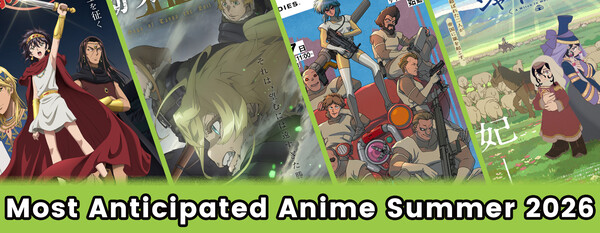
It's going to be a hot summer and an even hotter anime line-up this season. For us "oldtaku," there's no doubt that Science SARU's The Ghost in the Shell is one to watch. Surprisingly, the studio is also premiering the Mongolia-set historical epic Jaadugar: A Witch's Life in Mongolia in the same season with the illustrious Naoko Yamada on board as chief director. Below you'll find the editorial team's top 10 of the upcoming season, from laugh-out-loud sequels to monstrous transformations.
10. Kaiju Girl Caramelise
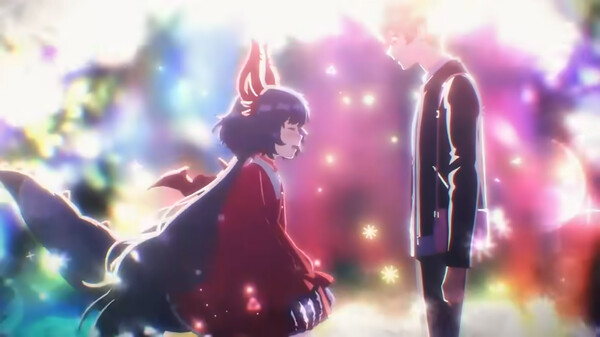
I don't know about you, but I absolutely felt like a monster sometimes when I was a teenager. Part of it was the hell of puberty, part of it was just being different at a time when that wasn't handled well – by which I mean “high school.” There were definitely days when I felt like I was two seconds away from sprouting horns, wings, and a tail and going on a Godzilla-style rampage. And if you did, too, then you aren't going to want to miss Kaiju Girl Caramelise.
Poor Kuroe doesn't just feel like a kaiju sometimes, she actually turns into one. Specifically, it happens when she's in the throes of powerful emotions – and one of those powerful emotions is love. When she's around her crush, Minami, Kuroe becomes the kaiju Harugon, a giant, heart-speckled Godzilla-esque monster, rampaging around the city. And if you thought it was embarrassing to talk to boys about getting your period as a teenager, it's even worse when you have to tell him that just being around him and liking him makes you turn into an actual menace to, at the very least, the structural aspects of your city.
That's just the surface story, though. Underneath the idea that love turns Kuroe into a literal monster, this is a quasi-magical girl tale about someone trying to understand herself and where she comes from. Kuroe knows she's different, but she doesn't know why, and that compounds the whole kaiju issue. She wants to be a normal girl with normal problems, and she doesn't understand why she isn't. As Harugon, she does her best not to hurt anyone and to make sure that her friends and her crush are safe, but that's a tricky proposition when the JSDF is firing on you from military helicopters. Her story is that of adolescence writ large, a monsterization of what a lot of us felt at that point in our lives. She's not alone – she has her mom, her weird dog, and her friends – but she often feels like she is, and that's one of the most powerful parts of her journey. Kuroe is a perfect example of how you have to love yourself before you can love someone else unconditionally.
Kaiju Girl Caramelise looks kind of goofy on paper. The trailers have played up that aspect with screaming metal music and other fun visual and auditory cues. And yes, Harugon looks a little less amazing in animated form than she did in the manga. But there's a good message underneath the silly and a relatable story. We're all monsters sometimes – Kuroe takes that to the extreme.
— Rebecca Silverman
9. Young Ladies Don't Play Fighting Games
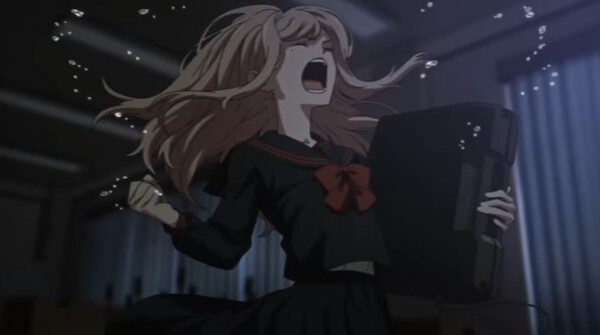
In the year 2026, I find most anime with the premise “this cute girl is secretly into male-coded nerd stuff” deeply frustrating. My annoyance comes from these kinds of anime usually being framed as a form of wish fulfillment for a presumed straight male audience. It's also deeply reductive to frame women's interest in nerdy hobbies as new or uncommon, as women have been the backbone of many fandom spaces for years and have had a vocal presence in those communities for decades. However, Young Ladies Don't Play Fighting Games seems to buck a lot of those trends in favor of a story that explores both gender norms and the world of competitive fighting games, and I could not be more excited for it!
Based on Eri Ejima's cult hit manga of the same name, this anime is set to focus on young women attending a prestigious all-girls academy who are secretly hardcore fighting game players. When the two leads are outed to each other as FGC sickos, they have to navigate social stigma, internalized misogyny, and what seems to be a budding romance while pursuing their shared hobby together. While the premise of “cute girls doing cute things,” where the “thing” in question is a competitive fighting game, already piqued my interest, the teased execution of this premise has made it a must-watch for me.
While the Young Ladies Don't Play Fighting Games manga has the characters playing an in-universe game that's an overt homage to the long-running Street Fighter video game franchise, the Young Ladies Don't Play Fighting Games anime will have the characters play legitimate, actual, no bamboozles Street Fighter 6! This, to the best of my knowledge, will make Young Ladies Don't Play Fighting Games the first anime to feature machinima extensively, and make this work an even more explicit celebration of, and commentary on, the fighting game community. Considering how much overlap there's been between gaming spaces and the anime community in the past two decades and change, this overt collaboration between Street Fighter and Young Ladies Don't Play Fighting Games feels like a Venn diagram transforming into a circle in a way that I can't help but be excited about.
As a neurodivergent queer person who has inexplicably made a career out of incredibly niche nerd stuff, an anime that's poised to be a commentary on both gender norms and competitive fighting games sounds like it was explicitly made for me! I cannot wait for Young Ladies Don't Play Fighting Games to come, and talk to at least five different people in my social and professional circles about each new episode week after week. Even if it's less than perfect, I think this is an anime that's about to bring a lot of people and communities together, and I'm so eager to see what that cultural moment looks like.
— Lucas DeRuyter
8. Clevatess Season 2
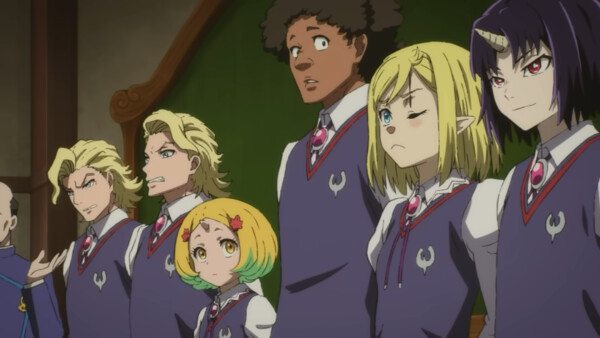
Look, I'm about as fed up with the “Overpowered God of Death in the Form of a Tiny Anime Boy Goes to Magical School” trope as anyone possibly could be, but if there's one show that could get it right, I'd put my money on Clevatess. For one, while most of these Magic Hero School dweebs might technically have the power to blow up football fields with a snap of their fingers, our boy Clevvie is literally an eldritch dog-thing from the darkest corners of the unknown past who really has eradicated entire cities of people on a whim with his unfathomable wellspring of infinite darkness. That alone makes him the kind of character I would follow to a magical fantasy private school, just to see what kind of carnage he can cause. Also, the previews have already shown us that Clevatess' undead slave knight, Alicia, has to rock the cutest little Hidenian disguise that will undoubtedly make it that much more entertaining when she inevitably starts slicing baddies' limbs off with her badass sword.
In all seriousness, though, the first season of Clevatess was such an unexpected bounty of sterling dark fantasy visuals and dark-as-hell-but-also-infectiously-likeable storytelling that I am chomping at the bit to see where the show goes from here. The gang's infiltration of magical high society might not lend itself so much to the gooey and gory Advanced Dungeons & Dragons visuals that made Season One such a treat, but the story has already proven itself enough that I'm interested to see what strange and dark secrets Clevatess uncovers as he continues to worm his way into the good graces of the world's most powerful elite. An anime with an antihero protagonist is rarely willing to let the audience genuinely wonder if the main character might really go through with their plans of world domination and ruin, but Clevatess has proven that its titular dark lord of doggy destruction is no innocent puppy in disguise. He may have grown some affection for his zombie-knight babysitter and the actual baby that he kidnapped last season, but that doesn't mean he thinks that anyone else but him ought to be ruling over the races of the world with the bloody fist (or paw) of a despot.
I adore how well Clevatess has been able to blend its dark fantasy world-building and its surprisingly nuanced characters with all of the more typically satisfying bursts of anime ultra-violence and melodrama. That is why I am currently willing to follow this show to any cliche anime setting that it damn well pleases. As soon as this semester at Magic School is done, go ahead and whisk me away to a season-long beach episode, baby. Toss me into the depths of an endless JRPG dungeon, even if it means giving Clevatess one of those dreaded video-game stat screens. Enroll me in a tournament arc filled with dozens of new characters whose names I all have to keep on a sticky note by my computer so I don't get them mixed up every single week. I am a willing thrall to the Canine of Carnage. May his reign of terror never end.
— James Beckett
7. The 100 Girlfriends Who Really, Really, Really, Really, Really Love You Season 3
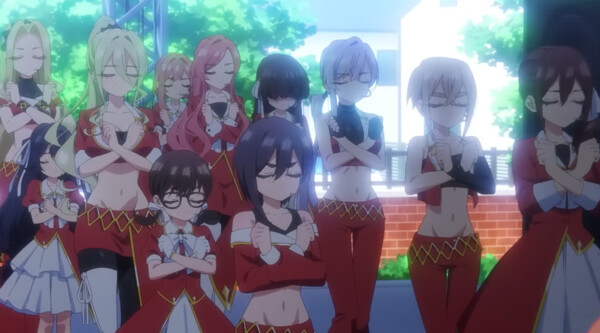
I find it very funny that 100 Girlfriends might be one of the strongest examples of healthy polyamorous representation I have seen in popular anime. I know that's not necessarily a high bar, but considering that this show has done such a good job of selling the idea that Rentaro is the ultimate caretaker character who can not only balance multiple partners but also do so in a way where the entire harem feels like a legitimate family is an accomplishment in and of itself. Throw in some incredibly random but also surprisingly clever humor, and what I was left with was a show that never ceased to make me laugh. The fact that season two somehow managed to up the ante, not only in terms of exaggerating character archetypes, but also just in terms of sheer comedic quantity and quality, is nothing short of amazing.
It's hard to say if season three could top the past two seasons, but once I gave in to the madness that the show sold the audience on within its first five minutes, it would take a lot for me to complain about anything that the show actually tries to throw at me. It's so over-the-top and self-indulgent that you are either with it or you're not, and I have been with this show ever since it premiered. I'm looking forward to seeing the new girls that get introduced in the upcoming arc, how specifically Rentaro ends up winning them over, and, probably more importantly, how these new girls will tie into the larger Rentaro family, especially since promos seem to be leaning into an idol angle. What will happen when the new girls bounce off the other characters? What weird problem of the week are all of them going to have to confront, and will the show ever reach that breaking point where it feels like too much? I want to see just how far this show can really go with its premise because it's setting the bar so ridiculously high that even if it ends up crashing and burning, I want to be with it right until the end of that line.
— Bolts
6. The World Is Dancing
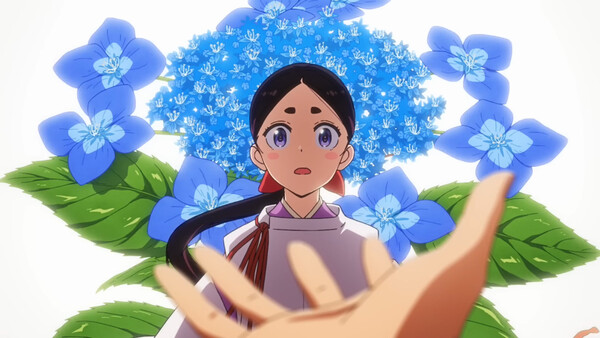
Nothing hits quite like a really good period piece, and if World is Dancing is anywhere near as good as it looks, then we're in for quite a treat. Set in 1374, World is Dancing follows a boy named Oniyasha, born into a theatrical family, whose life is changed by dance. He would eventually be remembered by history as Zeami—a deeply influential Japanese actor and playwright.
History what-if scenarios can be a really fun and interesting sandbox to play in, which we've been in many times before in the realm of anime. One could argue to a certain extent that every historical drama is necessitated to do this, but that's a pretty big can of worms to open here and now. The point being that this can be a really cool and effective way to engage with history, especially history that's so long ago that there are still plenty of blind spots to be filled in through interpretation. A series like this—adhering to history to a decent extent, but taking necessary liberties because there's still a lot we don't know—can make for a really great exercise in understanding history in a more three-dimensional sense. And that really excites me, as someone not terribly familiar with Zeami, but would love to learn more! This makes for an excellent foothold for interest, and I'm sure I'm not alone in thinking that.
The trailers look beautiful and offer glimpses of what seem like pretty artistic, certainly well-animated directions. And speaking of direction, we got Kuroyanagi Toshimasa at the helm of this series. While this isn't his first time directing a series, this could potentially be his first massive directorial hit. If Akane-banashi has given you a craving for more anime about Japanese performance art, albeit with a bit more history in it, this could be exactly what you're looking for to scratch that oddly specific itch.
— Kennedy
5. Saga of Tanya the Evil II
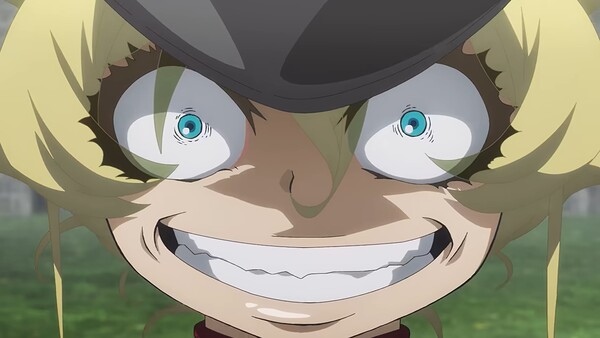
Saga of Tanya the Evil is the story of a cold-hearted (possibly psychopathic) Japanese salaryman who rejects god to his face upon his death and is sent to a world similar to Earth with a technology level around the same as the early twentieth century—only with magic—as his punishment. He is reincarnated as an orphan girl in the hope that living in a world of war and strife will make even this staunch atheist religious.
Of course, as a magic-wielding orphan, “Tanya” takes the best opportunity for a better life she possibly can and joins the military at the age of nine—and she excels in the world of strict rules and hierarchy. There's just one problem: the country she's born into is this world's equivalent of Germany—and a World War is looming.
When it comes down to it, The Saga of Tanya the Evil is as much a dark comedy as historical fiction. Tanya is, if not downright evil, an asshole at the very least. She's selfish in nature and views the vast majority of people as pawns. She kills without remorse and both conceives and carries out pragmatic plans that shock the moral sensibilities of those around her. The trick is that, for every victory, she suffers an equal loss. Either “Being X”, the god who sent her to this world, interferes to make her life harder, or she is a victim of her own success, becoming too valuable for a desk job far behind the front lines.
Yet, despite her nature, Tanya is still likable as a protagonist. She feels responsible for those under her command and truly wants to avoid a World War if possible—even if for purely selfish reasons. You want to root for her—to see her overcome the meddling of gods and men alike—even though her end will almost certainly be a karmically just one.
It's hard to believe it's been nine years since the first season of The Saga of Tanya the Evil—and seven since the sequel movie. Part of this is because the titular Tanya herself has been anything but absent—appearing in a lead role for three seasons of Isekai Quartet as well as its theatrical film. But still, it's good to be back—and I, for one, am excited to see Tanya's rematch with a god-empowered Mary Sue character literally named “Mary Sue.”
— Richard Eisenbeis
4. Red River
AHHHHHHHHHHHHHHHHHHHHHHHHHHHHHHHHHHHHh
Sorry, sorry. Got excited. Let me collect myself for a second. You see, Red River is
AHHHHHHHHHHHHHHHHHHHHHHHHHHHHHHHHHHHHH
Okay. Whew. I promise that won't happen again. It's just that Red River, a '90s shoujo manga I read as a teen, has topped my most-wished-for anime list for a long time. It's a story that I hold dear to my heart. It's not quite so influential to me that I consider it formative to who I am as a person, but it remains what I consider to be one of the examples of what shoujo manga of the era was, for better and for worse.
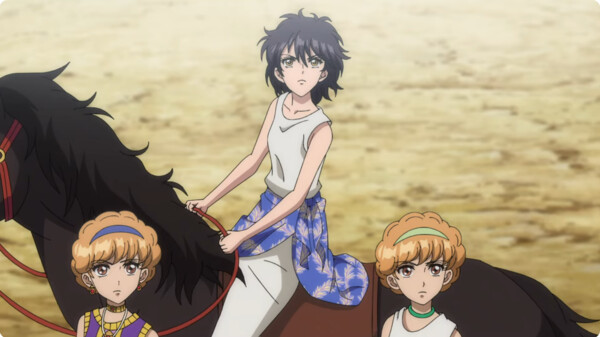
It tells the story of Yuri, an ordinary teenage girl who gets pulled back in time to the Hittite Empire by the wicked queen Nakia, who wants to sacrifice Yuri to ensure her own son's accession to the throne. Yuri must dodge Nakia's plotting while becoming embroiled in the conflict of the era, falling in love with the handsome Prince Kail Mursili in the process. It's a perfect mix of historical fiction, coming-of-age shoujo isekai, and bodice ripper, making for an incredible page-turner.
You see, the original author, Chie Shinohara, is a big otaku for Middle Eastern history. Yuri meets several historical figures, including King Suppiluliuma I, Pharaoh Ramesses II, and, of course, Prince Kail himself, King Mursili II. While she certainly sanitizes aspects of daily life, her attention to detail regarding the region's history is incomparable. That does, unfortunately, extend to men's respect for women's autonomy, and Yuri must fend off the aggressive advances of powerful man after powerful man. It's difficult, but the manga's steamiest scenes are fully consensual and convey a sensuality that's rare in media aimed at a young female audience. I have no idea how they're going to translate this to anime, especially in this era of much more restrictive broadcast standards, but I hope at least some of it makes the leap.
And even if it doesn't, Yuri is an excellent protagonist. Savvy and resourceful, she grows into her role as the human embodiment of Ishtar and Kail's closest confidant and advisor. If you tried Fushigi Yugi and were annoyed by Miaka's flailing helplessness, Yuri may be more your speed as she proves herself again and again, getting out of sticky situations using her intelligence and compassion.
I'd be lying if I said I wasn't a little nervous – the animation in the trailer is extremely limited, more of a slideshow than anything else. After Hana-Kimi, it's hard for me to have faith that even the most beloved '90s shoujo will get a halfway-decent adaptation. Still, I want to believe.
— Caitlin Moore
3. Goodbye, Lara
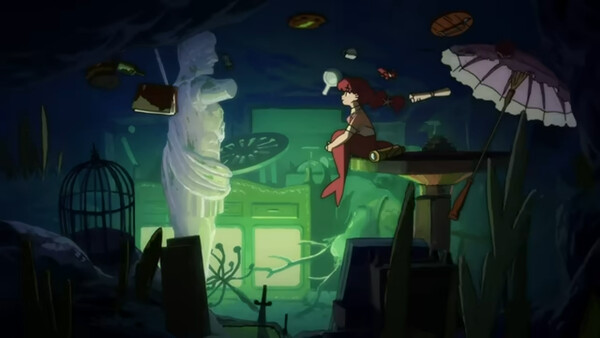
While high-profile battle shonen adaptations have long since beaten out ambitious anime original projects as the dominant lifeform within the greater anime market, I'm always interested whenever a new one of the latter pops up, and this is one I've had my eye on ever since it was first announced a couple of years ago. This one is coming to us courtesy of Kinema Citrus, whose work on series like My Happy Marriage and Made in Abyss stands out for delivering great adaptations and shows with a strong visual identity. This certainly doesn't look like it'll be an exception when it comes to its visuals, as every trailer for this show so far has looked absolutely gorgeous, and it looks like it's been ripped straight from the 1980s in terms of its aesthetic. I'm always a sucker for modern anime that intentionally attempts to replicate a retro look, so between its soft color palette and light shading, I really like how well it manages to capture the feel of cel-drawn animation. It's already doing a lot to help this show stand out from the competition.
As good as it looks, though, the visual aesthetic only goes so far, so I'm glad that the show's premise seems just as promising. The series aims to put a spin on The Little Mermaid by following a mermaid named Lara, who, after wishing to become human, is reborn in the modern day and must learn to adjust to life in the human world. While my own experience with The Little Mermaid doesn't really extend beyond the Disney animated musical it's always interesting to see classic stories get reinterpreted, and given that reincarnation stories are still very in vogue (for better or worse), this is probably the best hook a new version of it could for in terms of gaining an audience so I'm very curious to see how it ends up taking advantage of that.
Plus, while the synopsis does mention Lara encountering the reincarnation of the Prince from the original version of thentale, a lot of the promotional material has also had Lara featured prominently alongside a high school girl named Mari that she becomes close with so I wouldn't be surprised if we end up getting some subversion of how the tale normal goes in favor of some flavor of yuri, which is an angle I'd be more than excited to see play out. Even if that's not what it's going for, though, I do suspect it might be a good deal darker than the trailers suggest. While I may not be familiar with the original Hans Christian Anderson literary fairy tale, I do at least know how it ends, so the title Goodbye, Lara might imply that the titular mermaid here could be in for a similar fate rather than the kind of happy ending Disney gave to Ariel. With this being an original work, there's really no way of knowing where this will end up, but that makes it all the more fun to speculate. If the story here ends up delivering on an experience equal to its visual aesthetic, I think Goodbye, Lara could end up being the hidden gem of the summer lineup.
—Jairus Taylor
2. Jaadugar: A Witch in Mongolia
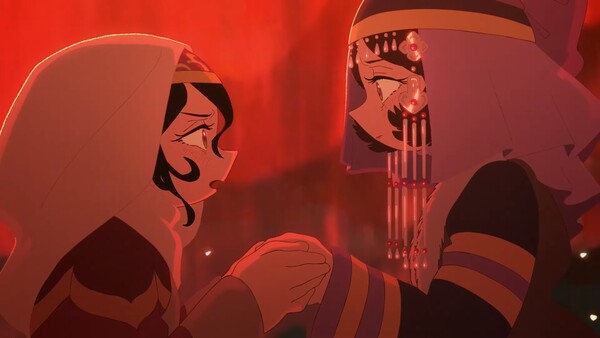
If you have ever had a hankering for an anime set in Mongolia, your choices have been pretty slim, unfortunately. I won't blame the medium for that. I can't think of too many Western series that concern themselves with the medieval Mongol Empire, which seems like a missed opportunity for what was once the largest empire on the planet. Thankfully, Jaadugar: A Witch in Mongolia is here to mine this often-overlooked part of the historical record.
I would be checking out this series for the unique setting alone, but that is far from Jaadugar's only promising component. For me, the headline is Naoko Yamada directing the series at Science SARU. Five years ago, this team-up gifted us The Heike Story, which remains one of the best anime from this decade. On top of that, both Yamada and Science SARU have plenty of brilliant material on their individual resumes. Yamada gave us Liz and the Blue Bird. Science SARU produced Keep Your Hands Off Eizouken! Those are all-timers for which I am forever grateful, so it is difficult to find a stronger pedigree than that. Additionally, co-directing with Yamada is Abel Góngora, a known quantity on the Science SARU team who has been with them since the beginning. He's coming off the second season of Dan Da Dan, and I am eager to see the kind of voice he brings to a more dramatic story.
My expectations are further buoyed by the surface similarities between The Heike Story and Jaadugar. Yamada previously used the perspective of an orphaned girl in order to tell a tragedy about hubris and the wounds left behind—particularly on the women—by the Taira clan's thirst for power. Jaadugar seems to place a similar focus on the plight of women affected by the expansion of the Mongol Empire. Our main character is a slave who was ripped away from her family, and I am encouraged by an anime that seems to treat slavery with the appropriate amount of gravitas. On that note, though, I like the apparent contrast between the heavy subject matter and the cutesy character designs. There's a chance for tonal dissonance there, of course, but I have also seen series like Made in Abyss and Girls' Last Tour utilize their deceptively soft aesthetics for strong thematic reasons.
Jaadugar will have stiff competition this summer, including from Science SARU's other project, The Ghost in the Shell, but I think it might be the dark horse to look out for. And if I know one thing about Mongolia, it has lots of horses.
— Sylvia Jones
1. The Ghost in the Shell
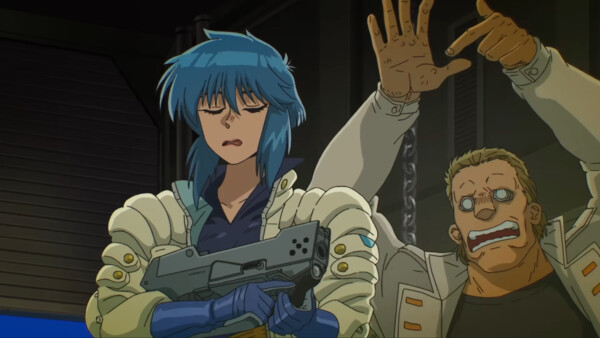
Even though its most famous adaptation, the 1995 Mamoru Oshii-directed movie, is now over thirty years old, there can't be too many anime fans who aren't at least vaguely familiar with the gargantuan Ghost in the Shell franchise. By far the most influential of popular '80s/90s manga creator Masamune Shirow's works (he's also known for Dominion: Tank Police and Appleseed, neither of which has retained quite the same cultural cachet), it's received a healthy number of screen adaptations in the years since, including, most infamously, a Scarlett Johansson-starring live-action Hollywood misfire.
In all of its various theatrical and televisual guises, Ghost in the Shell has become renowned for its serious, thought-provoking, philosophical take on the sci-fi police procedural genre. Iconic series protagonist Major Motoko Kusanagi is a striking lead, both alluring yet terrifying in her beauty and cool competence. A total body conversion cyborg with only her brain remaining from her original body, she leads the elite Public Security Section 9, an anti-cyber-terrorism squad answering only to the Japanese prime minister, mostly given carte blanche to resolve crimes via whatever methods they deem necessary.
Shirow's 1989-90 original manga mixes disturbingly prescient predictions of the World Wide Web, artificial intelligence, and transhumanism with complex political plots and a playful, goofy sense of humor. Most adaptations nail the serious tone, yet frequently excise the levity. For many fans, Kenji Kamiyama's early 2000s TV version, Stand Alone Complex, comes closest to emulating the manga's disparate components. Although it directly lifts many scenes and elements from the manga, it's not a straight adaptation. Kamiyama tells his own story set in a variation of Shirow's world.
What's most alluring about Science SARU's imminent adaptation is what appears to be its unprecedented faithfulness to the source material. Director Mokochan (The Heike Story, Scott Pilgrim Takes Off) and writer Toh Enjoe (The Empire of Corpses, Godzilla Singular Point) seem to have perfectly understood the assignment. Trailers so far showcase a loose, retro style that looks like it could have aired on '90s TV, with smooth animation and character designs ripped straight from Shirow's pages, along with multiple iconic scenes that replicate specific manga panels. These versions of Section 9's staff emote and gesticulate like their manga counterparts, a refreshing change from their arguably much stiffer animated precursors.
The Ghost in the Shell has been one of my enduring obsessions ever since Dark Horse first translated the manga and Manga Entertainment brought Oshii's movie to Western audiences in 1995. I'm almost unreasonably excited to see how the fantastic studio behind such amazing anime as DEVILMAN crybaby, INU-OH, and DAN DA DAN succeeds in bringing a truly faithful rendition of Shirow's classic manga to the screen.
— Kevin Cormack
Disclosure: Kadokawa World Entertainment (KWE), a wholly owned subsidiary of Kadokawa Corporation, is the majority owner of Anime News Network, LLC. One or more of the companies mentioned in this article are part of the Kadokawa Group of Companies.
The views and opinions expressed in this article are solely those of the author(s) and do not necessarily represent the views of Anime News Network, its employees, owners, or sponsors.
discuss this in the forum (22 posts) |
