

Game Review
by Jean-Karlo Lemus,Xenoblade Chronicles: Definitive Edition Nintendo Switch 2 Edition
Nintendo Switch 2
| Description: |  |
||
Discover the origins of Shulk as he and his companions clash against a seemingly unstoppable mechanical menace. Wield a future-seeing blade, chain together attacks, and carefully position your party members in strategic, real-time combat. Journey across a massive world that has been enhanced to run at 4K* resolution in TV mode, full HD in handheld mode, and at 60 frames per second—with smoother and sharper cutscenes. The Nintendo Switch 2 Edition of the game also includes some fun additional features! |
|||
| Review: | |||
Good news, folks! Xenoblade Chronicles is finally a real video game! It's got 4K graphics and everything! 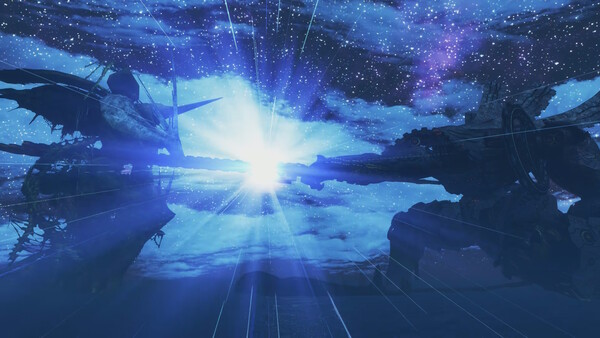 © Nintendo, Monolith Soft The Xenoblade Chronicles series is one of grand ideas, grand vistas and greater impact. People willing to look past its RPG trappings get quickly obsessed with its heady blend of science fantasy and Gnosticism. It's a labor of love from a team that's been trying to get this concept done right since 1998. And it captures the imagination from frame one, introducing us to a world set upon the bodies of two colossal titans locked in an unending battle. Reducing these to RPGs where you kill God does a disservice to the journey. Even I, once a dyed-in-the-wool who scoffed at the efforts of Operation Rainfall, found myself becoming a true believer once the credits rolled. And with the added graphical improvements offered by the Switch 2's update, Xenoblade Chronicles no longer filters potential players with its 30-frames-per-second performance and its plain textures. Xenoblade Chronicles is finally a real video game. 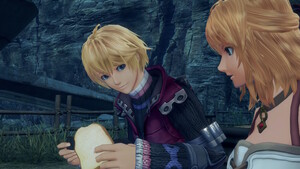 © Nintendo, Monolith Soft As the last vestiges of humanity that live upon the organic paradise of the Bionis fight back against the robotic armies of the Mechonis, the young engineer Shulk takes up the Monado: a divine sword of unfathomable power. His goal is revenge: to end the Mechon once and for all, and to take back the lives they've taken in blood. His journey is, however, far more complicated than that. The Monado is a sword that can change fate. Possessing it grants Shulk visions of the future, which he and his friends set out to change. The path will eventually lead to him killing a God, because that's what these silly Japanese RPGs do, am I right, gamers? But the path there is heavy and earned. What would be a bog-standard plot twist forces you to reevaluate literally every bit of development Shulk has earned up until then, the seeds of his fate sown long before he even picked up the Monado. This is a story about challenging destiny. Not just Shulk's, everyone's. Maybe "destiny" is just a word used to chain people down. Maybe we all can choose who we want to be. Maybe—our true "destiny" is to stand tall and shake the heavens. Also, there's a fluffy puff-ball tagging along, and you're going to want him there. If the disabled war hero can come to appreciate and respect his emotional intelligence, so can you. This is a video game, and you're going to learn how to play and enjoy it. Go read a forensics report if you want something to "take seriously." 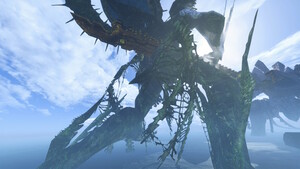 © Nintendo, Monolith Soft 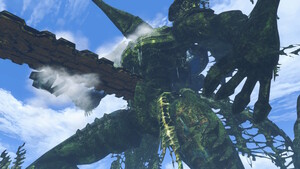 © Nintendo, Monolith Soft Xenoblade Chronicles is often likened to a single-player MMORPG. The comparison is apt. You have a sprawling world—sweeping locales of rolling plains, bioluminescent swamps, primordial jungles, and heavenly floating islands. You are never allowed to forget that these are all just body parts on a massive giant. Look up: you see the Bionis' crown blotting out the stars. Look to the horizon: the Mechonis' red eyes glare back at you, illuminated in the thunderstorms. A running theme in Monolith Soft's games that they deserve credit for is how good it feels to run through the grassy hills of their worlds, punctuated by music from industry legends like Yoko Shimamura and Yasunori Mitsuda. Battles are also akin to MMORPGs, with your toolbar of time-gated abilities and the need to manage aggro between your attackers, tanks, and healers. Positioning is key to maximizing your success; a pity the party AI is so boneheaded outside of just spamming attacks and following up on Break/Topple/Daze combos. (Shulk and Melia are worthless outside of player control because of this.) And, of course, you have the Visions warning you of an incoming attack that'll lay one of your friends low; these guarantee battles stay tense, as you only have so long to respond to change fate and keep your friends alive. Weirdly, the "power of friendship" is well-embodied in this battle system; there are timed prompts for characters to motivate each other, cheering each other on after a well-placed blow or cheering them up after a particularly embarrassing flub. Shulk is not alone in his quest to change destiny. 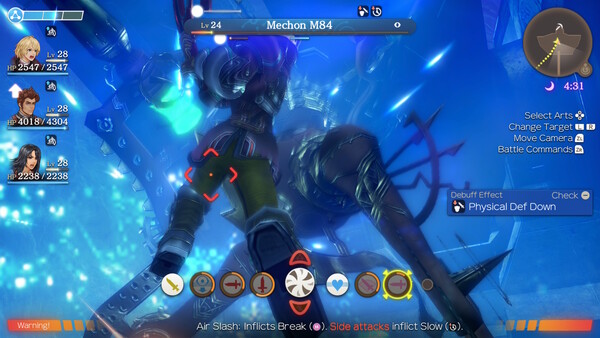 © Nintendo, Monolith Soft These systems and more (the Collectapedia that encourages exploration, the Relationship web that links every titan inhabitant, the story-expanding Heart-to-Hearts) were already enough to make Xenoblade Chronicles a must-play. They're left intact for the Switch 2 Edition, gussied up with improved rendering and animation. Xenoblade Chronicles Definitive Edition already brought the game kicking and screaming into a more modernized aesthetic, more congruent with the artwork of Xenoblade Chronicles 2 and 3 (the loss of the original art style is a topic I can't delve into here). The Switch 2 Edition updates simply bring them into enhanced relief; now Shulk and his friends move at 60 frames per second, in a world with 4K textures. Even I, a stubborn oldhead who still considers 60fps a gimmick, cannot deny that I cannot go back now that I've seen what it looks like when Shulk runs through Gaur Plains at this enhanced resolution. The world of the Bionis was already gorgeous; it undeniably looks even better now. Some problems arise, mind: models still clip in and out of each other. Shulk's swords will invariably clip through his own fist. Reyn's lances keep bumping into his arms when they're holstered on his back. And poor Dunban's swords will always be phasing through the cape he wears on his right arm. The 60 frames per second, while consistent, also chugs a bit in areas with heavy details—do not be surprised if some frames are dropped in the Satorl Marsh or at the Nopon village, even during cutscenes. Longtime players will also be disappointed that the "automatic" camera is also pretty bad whenever you're fighting flying enemies or tall enemies; the camera simply tilts upward. You'll have to baby the camera if you fight anything taller than your bog-standard enemy. 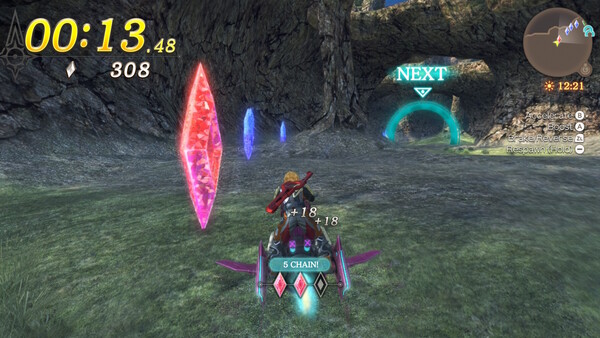 © Nintendo, Monolith Soft The other major update is the addition of Ether Jets, mounted vehicles that Shulk and company can ride on. These are fun—astonishingly so, given the games weren't designed to incorporate them in the first place. There are limits to them (monsters can and will attack you as you ride one, and this will one-shot you). But this makes exploring the vast regions a bit easier; running through these places is undeniably fun, but sometimes you just want to find another damn Moth Crawler and want a shortcut. There are even fun races you can take part in, which unlock new outfits for your party. Are the Ether Jet races going to compete with Mario Kart? No. They don't even have a head-to-head mode. But it's an astonishingly complete minigame that's been added. And they even work in the Definitive Edition's DLC expansion, Future Connected. There is, of course, a downside; inconvenient as it might have been, Xenoblade Chronicles was about taking the scenic route. Many areas and vistas were designed to be appreciated slowly and on foot, fully impressing you with the grandeur of these massive titans that serve as the backdrop of these games. You lose so much of that by zooming around on a rocket-bike. First-time players are encouraged to avoid the ether jets; they really should've been gated behind a New Game Plus.  © Nintendo, Monolith Soft Purists might scoff, but Xenoblade Chronicles' English performances have always been standout. It's a cast unlike any other, with industry veterans like Adam Howden and Jenna Coleman belting their hearts out through this story. No further notes are needed—except for the DLC also adding new voice acting to the game's many Heart-to-Heart scenes (in addition to the Ether Jet races). It's been sixteen years, so Coleman's voice has noticeably deepened a bit compared to her original performance as Melia... but that's something you've likely gotten used to courtesy of the release of Future Connected sixteen years ago. Her performance is still iconic, nevertheless. There's also a detectable amount of age in the new recordings for the rest of the cast... but again, it's been 16 years. More important is that the performances are still there. Jay Taylor's Reyn is still boisterous and lovable as ever. Rufus Jones' Dunban is ever the calm source of wisdom. It is exceedingly rare that games bring back the original cast for something like this, especially for what would be so few lines. But the additions are all the better for it. Their performances worked their way into our hearts in 2010; they've earned their victory lap.  © Nintendo, Monolith Soft I've made some mention of the Future Connected DLC; returning from the original Xenoblade Chronicles: Definitive Edition, it's a follow-up story to the main game that takes place in a hitherto unexplored region (the Bionis' shoulder). It's meant to set the stage for the events of Xenoblade Chronicles 3, but it also allows Melia a chance at closure for her own story. It is effectively a game unto itself, clocking in at about 40 hours long. The bonuses from the Switch 2 Edition upgrade also transfer over to Future Connected, so the Ether Jets and their associated costumes will also be available. Some people will never play Xenoblade Chronicles. They're going to cringe away from the aesthetic, they'll sneer at the Nintendo branding, they won't care about the writing. They'll only care about the music when the one guy with the flute is playing it. That doesn't matter. But you are going to play Xenoblade Chronicles Definitive Edition Switch 2 Edition. You're going to look past the doofy title, and you're going to sit down and play it. You're not going to get caught up in the discourse of the constant banter over battles or this being "another Japanese RPG about killing God," you're going to play this game and enjoy it's myriad elements and how they come together. You'll hit a moment where you think the game is dragging a bit. And then the plot twist will hit, and you'll be fervently chasing after the resolution. And when the credits roll and Monolith Soft's logo pops on screen, and when you see the title screen's background change, you'll know that Monolith Soft earned it. This is a real game that you can play, and it's in 60fps now. And you're going to tell yourself, "Man, I can't believe it took me this long to play it." 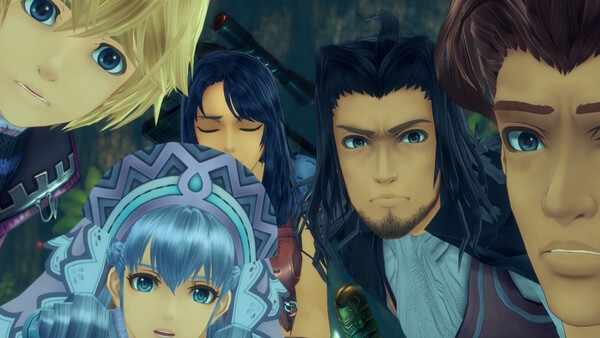 © Nintendo, Monolith Soft |
|
The views and opinions expressed in this article are solely those of the author(s) and do not necessarily represent the views of Anime News Network, its employees, owners, or sponsors.
|
| Grade: | |||
Overall : A
Graphics : A
Sound/Music : A+
Gameplay : A-
Presentation : A
+ Far-reaching story, phenomenal vocal performances, its graphics have never looked better, hours of stuff to do |
|||
|
discuss this in the forum (18 posts) |
bookmark/share with:

|
|||