If you're an avid Shonen Jump reader, you've likely experienced the heartache of your favorite series getting tossed in the bin. Steve and Nick try to parse what makes for a winning formula in the highly competitive magazine, if such a thing even exists.
These manga are available to read on the Shonen Jump and Manga Plus apps
Disclaimer:The views and opinions expressed by the participants in this chatlog are not the views of Anime News Network. Spoiler Warning for discussion of the series ahead.
Nick
You know, Steve, for a column called "This Week" in anime, I think we could stand to be a bit more...topical. Talking about shows is fine and all, but to keep our finger on the pulse of anime fandom, we need to broach the heavy, pertinent topics on the minds of the internet today. So let's get right into that most thorny of internet talking points: Cancel culture.
Steve
I like the cut of your jib, Nick, so I'm gonna take that ball and run it an extra ten yards. Because you know what? Screw anime! I'm sick of talking about anime. Anime hasn't gotten us anywhere. So we should stick to a topic as semantically distal from anime as possible. And by that, I, of course, mean manga.
You read my mind, man. Because, of course, the only cancel culture worth talking about is canceling manga:
To paraphrase a tweet from the Atlanta rapper Young Thug: I hate when MANGA die.
A lot of people do! And for various reasons we'll probably get into, there's no publication more publicly associated with killing manga than Weekly Shonen Jump. It's to the point that for years fans have referred to "getting the axe" for a series ending prematurely.
It's a hot enough issue for its flames to have licked even my carefully regimented internet experience. I'm not a regular follower of WSJ series outside of the occasional exception that poisons my brain (hello Chainsaw Man), but the life cycle of a Jump series certainly seems like it's a feast or famine affair.
Pretty much! While the standards wax and wane over the years, one constant is that any series starting in WSJ has, at best, a 20% chance of making it past a year. Considering I've been following the magazine's lineup for over a decade, I've gotten my heart broken multiple times over! Woo!
And because I don't have that decade of experience, I did the next best thing and looked at graphs. There's a neat website Jajanken that has cataloged data from every issue of WSJ and trended it. While the presentation isn't as robust as I'd like, and thus it's hard to do some proper numerical analysis, it's eye-opening to look through the years and realize just how many HUNDREDS of series have started and stopped throughout the magazine's half-century of history.
It's wild! I've kept a running list of my own that's just stuff that started in the 2010s and beyond, and even then, it's a very populated graveyard. It turns out that real estate in the biggest manga magazine in the industry comes at a premium.
And there is the first detail to remember while looking at these cancellations. Weekly Shonen Jump is the vanguard of popularity in the mangasphere. It's not a scrappy up-and-coming competitor. It is the competition. It's the cutthroat apex of it.
Granted, that context doesn't make it any less heartbreaking when a series you love gets 360 dunked into the trash for the crime of poor sales. Yet the reality is that a series must garner at least a decent-sized readership almost immediately for a series to stay alive. Specifically, a Japanese readership, as English-speaking fans of some recent cancellations were very upset to find out.
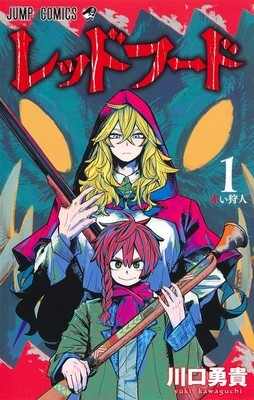
The Hunters Guild: Red Hood is a good case study, and I'm not just saying that because it's 18 chapters long and can be finished in less than an evening. And having done just that, I can understand why it appealed to people. The dark European fairy tale vibe was nice and distinct. The enemy wolves had these great, grotesquely cartoony character designs. The art had a good command of varying line thicknesses. It starred some gigantic women. What's not to love?
It caught on over here, that's for sure, to the point where Viz even released all three volumes in print—something they don't always do for WSJ series that stick around. And that exact popularity made it such a god damn incendiary point in fandom.
That makes sense. But I can understand the other side of the equation too. After the introductory arc, the story's momentum grinds to a halt with a training arc that fails to capitulate on those earlier charms. And it also makes sense that the early stages of a WSJ manga are super sink or swim. You're probably doomed if you can't hook the right audience right away.
For sure, and as much as marketing executives wish otherwise, there's no magic formula for what will or won't be an immediate success. Smacking a bunch of familiar shonen battle concepts together under fantasy packaging doesn't guarantee success unless you're Black Clover.
Ironically, my opinion of Red Hood only perked up in the final few chapters, when the author must have gotten wind that the series would be axed. It goes from paint-by-numbers shonen to a messy mélange of metatextual madness. It's not exceptionally well done or innovative—it's no Princess Tutu—but it gives me an idea of where the mangaka ultimately wanted to go with their tale. And I respect going out in that blaze of glory. When you plan on something lasting for years and don't even get half of one, your options for a conclusion are limited. And your options for a satisfying one are nonexistent. That's heartbreaking.
I don't like the ending of Red Hood, precisely because it turns so much into a commentary on itself that it makes all the characters feel like hollow facsimiles. Were you a reader invested in Grim, Velou, or Bickjoe Bonkers and wanted any progress or resolution to their characters? Sorry! We must cram our entire final arc into three chapters and fill every panel with exposition.
It's such an impossible position to be put in, though! I can't imagine the surge of emotions going through an author who had a spot on the biggest manga magazine in the world and now has to pack up their desk because they failed to tick the unknowable boxes required to make a successful series. Manga isn't science. It's an art that you pour yourself into.
Oh, I get that, and I sympathize with any creator who has to so drastically reconfigure their vision on top of professional and personal disappointment. But if I read a canceled series that flies off the rails into a wild, meta-textual mess, I'll personally take the more thematically coherent Time Paradox Ghost-Writer. However, that one didn't have any 9-foot-tall women with hips the size of a monster truck tire, so it gets championed less.
For the time being, I also imagine that much of the Western fervor around beloved canceled series stems from the whole simulpub situation still being in its infancy. Like, the Shonen Jump app only just turned four years old. If Red Hood had come out a decade earlier, its popularity wouldn't have been able to spread fast enough to garner this much of a response. And a decade from now, English-speaking audiences will probably be more acclimated to these cuts as part of the typical WSJ ecosystem.
Alternatively, people on the internet have been and will always be angry about anything and everything. So.
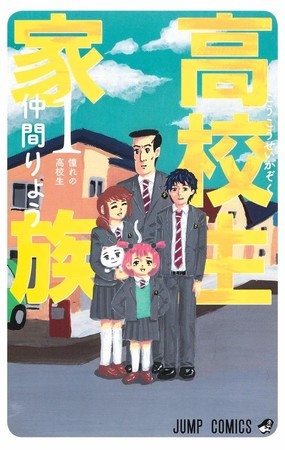
That's certainly part of it. While there were undoubtedly series I loved and lost through scanlations (RIP Double Arts), the current setup of every WSJ title getting an official translation means damn near everything has the chance to get a fandom. Or an anti-fandom in cases like High School Family: Kokosei Kazoku, which was so reviled that its recent end after over two years of serialization was largely celebration.
If you want to see anger, people cursed that manga's name every single time something else was axed. It inspired actual conspiracy theories that the creator was related to somebody at Shueisha.
That raises another salient point: there's no exact science to cancellations either. I've seen people try to read the table of contents like tea leaves. Sure, there are trends over large enough pools of data, but ultimately, the decision to cut or promote one series or another lies in the hands of people whose brains we don't have access to.
I'd wager money is the biggest factor, though. Definitely money.
That's the most frustrating thing about cancellations and the discourse surrounding them. For obvious reasons, Shueisha isn't going to release a list of reasons why any given title was axed, so fans are left to scrub Oricon listings and tabulate external data to speculate on it. And since this is the internet, that means you get a looooooooooooot of people saying baseless stuff with their whole chest.
People will just make up fanfiction, like explaining why a series is in a particular position in the table of contents as the creator turning in their draft late and...I guess getting punished by editorial? Or something?
However, let's look at WSJ as an institution. You'd expect a magazine of this size to gravitate towards crowd-pleasers and thus be more conservative regarding which manga it fosters. Executives and investors will always want a safe return. This is, however, a tricky proposition when it comes to art. Art and its audience will always beg for innovation, so even a magazine like WSJ must take risks. And you see that reflected in the variety of the series it floats.
Like, it's not an underground zine being printed on demand, but it's not all Dragon Ball either.
What's funny to me is, despite the magazine being synonymous with action series, some of the most successful releases in the last couple of years have been a slow-burn romance with 0 fanservice (Blue Box), a slice-of-life dramedy about a dragon girl going through puberty (Ruridragon), and a girl learning the art of centuries-old minimalist performance art that is infamous for decades of waning relevancy (Akane-Banashi).
Yeah! To prep for this column, I read (at your direction) some of these series and was genuinely taken aback by how much I enjoyed them. Ruridragon's both so chill and overtly metaphorical that you can't help but be charmed by it. Akane-Banashi uses a tremendous amount of craft—the facial expressions!—to translate the appeal of rakugo onto the printed page. They're not too far off the beaten path but far enough to feel fresh in their own ways.
They're by no means outsider art, but they're absolutely different enough from the homogenous gestalt that the phrase "Shonen Jump manga" conjures in the mind that I think their success is worth noting.
Ruridragon's also worth noting for being on hiatus since last August. Yet it's not canceled because the first tankobon sold like gangbusters.
Oh, hell yeah, it did. The biggest volume 1 sales the magazine has seen since My Hero Academia back in 2014. On a series with only six chapters. If Masaoki Shindo can ever return to it, that series is on a launchpad and ready to fire into space.
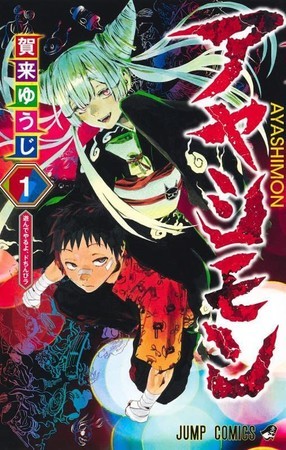
It just goes to show you can't predict what will blow up. Or what won't! Ayashimon seemed like it had all the ingredients for a hit—a previously successful author, strong character designs with a yakuza backdrop, a terminally dense boy protagonist who references other WSJ manga, etc.—yet it died on the vine 25 chapters in.
That one, like Red Hood, got a ravenous fanbase in the West—again, it got a print release where Witch Watch is still digital only—and they did not take it ending well.
After catching up with it after the fact, I felt more attached to this than to Red Hood. So whereas the latter fits the bill of an interesting curiosity, reaching the end of Ayashimon hit me with real pangs of disappointment.
I had issues with it, but I loved how Maruo built himself up as a literal manga protagonist, looking for meaningful and compelling drama in all the violence he enacts. An excellent base made him way more interesting than the typical dumbass punchboy shonen hero.
Another frustrating thing about the nature of many of these cancellations is the feeling that the series never get the opportunity to develop into stronger versions of themselves. Like, there are loads of stories with rough beginnings that take a bit to get going but end up in incredible places. But in WSJ, by and large, if you don't hook 'em fast enough, it's curtains.
True, but there's also something to be said for a series having a solid identity right out of the gate. These are stories meant to run for years, week to week, and giving your audience something they want to return for isn't just good for potential success but a good foundation for the story itself.
That is also true, but I think that shows how, even with its various genres, WSJ still selects for certain kinds of stories told in certain ways. It's not wrong for a magazine to have an individual identity. That's why so many of them publish their stuff to their own audiences. But when talking about the biggest game in town, you feel like pushing it to have an even bigger tent open to even more people.
That's fair, though, in some ways, I think that idea of a "Jump" identity is compelling. In the same way, 90's Disney's ubiquity and defined cultural identity gave its catalog cohesion. Seeing how different creations push and pull against the big viscous embryo of what it means to be in Jump is a lot of fun. That contrast is part of what got Chainsaw Man's foot in the door to become the hit it is today.
The existence of Chainsaw Man really blows this whole discussion open. I still think about how prickly and anarchic its plotting is and how incredibly it did anyway. By the same token, though, you can look at the early stages of Dragon Ball and easily see how much Toriyama was pulling out of his ass week to week. But that didn't matter because he knew how to make it work.
Like we've said, there's no one way to do this, and anyone who tells you there's a surefire way to success is selling you something.
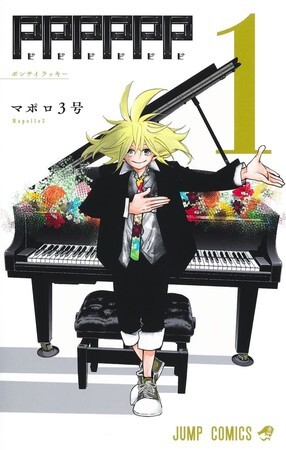
And there's no one way to fail to do this either. To circle back to what instigated the most recent iteration of this ongoing discussion, we have PPPPPP, which played on for 70 chapters before being rushed into its coda.
That one's particularly weird. Usually, this is an all-or-nothing situation—you flame out in under six months or run long enough to get at least a partial anime adaptation. But PPPPPP managed to keep its head above water for nearly two years, only to be left scrambling at its sudden end.
It's made incredibly and awkwardly obvious here, too, thanks to the structure of PPPPPP. Lucky had six siblings to confront in his piano vision quest, but the series ends before he gets to the final two. So whether it's after 18, 25, or 70 chapters, ending your series prematurely seems to suck hard, no matter how much runway you've been given.
It sucks more when a series keeps going just long enough to make you think it's safe, only to be taken out right when you let your guard down. It's why some people only read a series once it's been around for at least a year or two.
I get that, but there's also a certain je nais se quois to keeping up with a serialized series too. Even if they end early, end poorly, or go on for five years too long. The journey is always there, and the nice thing about the increased availability of WSJ in Western circles is that it's easier than ever to find people to share that journey. And to commiserate with. Oh, the commiseration.
Oh, for sure. After doing this beat for years, I've gotten jaded in some ways, but there's a lot of value in getting invested in a fledgling work, regardless of how it ends. Even in early exits, there's something powerful in watching a story try to conclude itself in some fashion—be it Hell Warden Higuma actively deconstructing its own universe's punitive structure or Magu-chan: God of Destruction making me re-experience the dog episode of Futurama.
It hurts to see a series you like get escorted to the manga gallows, but I hope people can learn to take it in stride as an inevitable risk that authors and audiences alike have to assume. That's the nature of both art as business and art as art. Do you know how many webcomics I loved that just petered out because the authors got bored with them or got real jobs? I'm sure some prehistoric humans became inconsolable after their tribe's storyteller got eaten by a sabertooth right before they got to the climax. That's a pain we've always walked with—no need to go all Pepe Silvia every time.
If there's any singular point to this column, it'd be for the audience: getting invested is worth it. Get attached. Search out new series and embrace the ones that resonate with you because even if they get cut short, they'll stick with you.
Also, go read The Last Saiyuki so you can be sad with me. Please.
Okay, I'll do that while I wait for the second season of the Flowers of Evil anime. Any day now :')
Story set during "Prism.3" competition for Prism Show trios― The "King of Prism Super Live Prism☆Tours!" event announced on Sunday that production has begun on King of Prism -Tri-Star Act-, a brand-new film in the King of Prism anime franchise. The story is set during "Prism.3," the competition for trios who perform the franchise's signature Prism Shows. The tagline on the teaser visual (drawn by ch...
2nd season ended with 12th episode on Sunday― The official website for the second television anime season based on Fujino Ōmori and Toshi Aoi's Wistoria: Wand and Sword (Tsue to Tsurugi no Wistoria) manga announced in an teaser on Sunday that production on a third season has been green-lit. The anime's character designer Sayaka Ono drew the visual celebrating the news: The anime's second season ende...
Katagiri helms Laboratory of Optics and Neural Analysis anime with original story, screenplay by Akiko Nogi― WIT Studio revealed on Sunday a new original television anime by director Takashi Katagiri (SPY×FAMILY Code: White film) titled LONA (Laboratory of Optics and Neural Analysis), which will debut in spring 2027. WIT Studio also revealed two teaser videos, three teaser visuals, and the main cast...
Monolith Soft's ambitious RPG is better than ever on the Switch 2.― Good news, folks! Xenoblade Chronicles is finally a real video game! It's got 4K graphics and everything!The Xenoblade Chronicles series is one of grand ideas, grand vistas and greater impact. People willing to look past its RPG trappings get quickly obsessed with its heady blend of science fantasy and Gnosticism. It's a labor of lo...
Season 1's final episode aired on Saturday― The staff for the television anime of Tadatoshi Fujimaki's Kill Blue manga announced after the final episode for てthe first season aired on Sat;urday that the series will receive a second season. Fujimaki drew an illustration to celebrate the announcementViz Media is publishing the manga digitally and in print, and it describes the first volume: Juzo Ogami...
So many iconic moments from the manga are replicated intelligently and beautifully here.― How many different adaptations can one single manga spawn? In the case of Masamune Shirow's 37-year-old Ghost in the Shell, too many TV seasons, movies, and OVAs to count on the fingers of both hands. It's a bona fide phenomenon, with influence beyond the realms of manga and animation. Although every version so...
With millions of views on YouTube and a feature film adaptation, Milky☆Highway is largely the work of a single man: character designer, 3D modeler, animator, and director Yōhei Kameyama.― With millions of views per episode on YouTube, Milky☆Subway: The Galactic Limited Express is one of, if not the, standout short-form anime of 2025—so much so that it got a theatrical run in Japan earlier this year....
The Summer Anime Trailer Watch Party returns with the hottest anime line-up.― The Summer Anime Trailer Watch Party returns with the hottest anime line-up. Watch all the trailers for the upcoming season with special guest Geoff Thew (Mother's Basement), and Anime News Network friends Lynzee Loveridge, Jacki Jing, and James Beckett. Find your next must-watch anime, from the biggest hits to hidden gems...
New season adapts Cohabitation arc― The staff for the anime of Reiji Miyajima's Rent-A-Girlfriend (Kanojo, Okarishimasu) manga announced on Saturday that the anime is getting a sixth season. The season will adapt the manga's Cohabitation arc. Character designer Kanna Hirayama shared a commemorative illustration: The fifth season ended on Wednesday on the DMM TV streaming service, and the season's 12...
Video, illustration, logo unveiled for Record of Ragnarok IV― Warner Bros. Japan announced on Friday that the anime based on Shinya Umemura, Azychika, and Takumi Fukui's Record of Ragnarok (Shūmatsu no Walküre) manga will get a fourth season titled Record of Ragnarok IV. The company streamed a trailer and unveiled the logo: Azychika also shared a commemorative illustration: Record of Ragnarok III, t...
Trailer streamed― The official X/Twitter account for the television anime of Yuhiro Tsujitsugu's Snowball Earth manga announced on Friday that the series is getting a second season. The staff unveiled a trailer: The first season's 13th and final episode aired on Friday. The anime premiered on NTV's extended Friday night programming block on April 3. Hulu is streaming the anime. Viz Media releases th...
Nippon Sangoku and Akane-banashi are locked in a neck-and-neck, seesaw battle for the third spot on the podium! This race won't be settled until the final results next week.― Let's have a look at what ANN readers consider the best (and worst) of the season,
based on the polls you can find in our Daily Streaming Reviews
and on the Your Score page with the latest simulcasts. Keep in mind that these r...
Happy Birthday, Sonic! My, those are some interesting choices Sega's making for you.― Welcome back, folks! I had a very fun long weekend, bookended by the wildest movies to pair together. On Friday, I watched the new Masters of the Universe, which was a total blast and put a big smile on my face. Then on Monday, I met up with some friends and watched Adolescence of Utena on the big screen. Both time...
An engaging story is marred by distractingly lackluster animation. A gorgeously animated series is hindered by a trite or nonsensical story. Maybe the characters are wholly unlikable, yet there are five seasons chronicling whether they'll get together.― What makes an anime 'bad'? The answer to that question will differ for everyone. An engaging story is marred by distractingly lackluster animation....
ChaO's Yasuhiro Aoki to direct anime starring Batman villain― DC Studios and Warner Bros. Animation announced during their panel at Annecy International Animated Film Festival on Thursday the Joker: Laugh Riot anime, based on the Batman villain Joker, for a worldwide release. Yasuhiro Aoki (ChaO, Batman: Gotham Knight episode 4) is directing the anime at Sola Entertainment (The Lord of the Rings: Th...
If this is what’s to come, Bleach might have one of the best final arcs in shonen anime.― 14 years ago, the Bleach anime ended its 8-year run on a bittersweet ending that still left fans hungry for more. What was it Aizen saw within Soul Society that drove him to his tyrannical rage? How did Ichigo become so adept at gathering differing powers? What really happened during the Soul Reapers War with t...
Tsukasa Unohana debuted 4-panel manga in June 2022― Houbunsha's Comic Fuz website announced on Friday that Tsukasa Unohana's Gokigenyō, Ikkyoku Ikaga? (Good Day to You, How About a Game?) 4-panel mahjong manga is getting a television anime. Unohana drew a commemorative illustration: Kaori (Stardust Telepath) is directing the anime at Felix Film. Kazuyuki Fudeyasu (Is the order a rabbit?) is in charg...
Sylvia and Chris revisit Simoun on its twentieth birthday to honor the power of girls kissing.― Sylvia and Chris revisit Simoun on its twentieth birthday to honor the power of girls kissing. Disclaimer: The views and opinions expressed by the participants in this chatlog are not the views of Anime News Network.Spoiler Warning for discussion of the series ahead. Darkroom streams Simoun. @RiderStrike...
Manga about girl traveling around the world's dangerous places to taste local dishes launched in 2021― The official X (formerly Twitter) account for writer Juntarō Aoki and artist Shin Moriyama's Nabe ni Dangan wo Ukenagara (Getting Shots on a Frying Pan or Nabetama for short) manga revealed on Thursday that it is getting a television anime adaptation by J.C. Staff, and will debut in 2027. The anime...
Reiji Kawashima, Rumi Ōkubo star in project No.9 anime 平 純/Jun Taira― A website opened on Thursday to announce the television anime adaptation of Makoto Morishita's The Fledgling Demon Lord's Starter Shop (Sudachi no Maōjō) manga that will debut in January 2027. The website also revealed a teaser promotional video, teaser visual, and the anime's main cast and staff members.Morishita also drew an ill...
Daisuke Sakaguchi, Miyu Tomita, Iori Noguchi star in anime― A website opened on Thursday to announce that author Chinkururi and illustrator Yasutaka Isegawa's Gacha Girls Corps (Gacha o Mawashite Nakama o Fuyasu: Saikyō no Bishōjo Gundan o Tsukuriagero) light novel series is getting a television anime adaptation that will debut in January 2027. Micro Magazine had announced in May 2025 that an anime ...
Thunder 3 is one of the most insane manga I’ve ever read, and it’s incredible.― Thunder 3 is one of the most insane manga I've ever read, and it's incredible. It's a bizarre mash-up that I can only describe as “what if Crayon Shin-chan, but Gantz”. If that sounds like a wild combination, then it is. The first volume, which I reviewed for Manga Guide back in Fall 2024, certainly impressed me with its...
New tentatively titled project reimagines Tatsunoko Production's Shinzō Ningen Casshan anime― American animation news outlet Cartoon Brew reported that Singapore-based anime venture studio Kasagi Labo announced during its panel at this year's Annecy International Animation Film Festival on Wednesday the new tenatively titled Casshan 2045 project, a reimagining of Tatsunoko Production's Shinzō Ningen...


 @Lossthief
 @BeeDubsProwl
 @NickyEnchilada
 @vestenet