You know what they say about people who fail to learn from history.
Disclaimer:The views and opinions expressed by the participants in this chatlog are not the views of Anime News Network. Spoiler Warning for discussion of the series ahead.
Lucas
Sylvia, we spend a lot of time talking about genre in anime circles. While the more demographically targeted vocabulary of shonen, shojo, seinen, josei, etc. tends to dominate the conversation, there are A LOT of less discussed canons of work that are nothing short of pillars in today's anime and manga landscape. Case in point, while historical anime has always been popular, there are a considerable number of high-profile period pieces hitting this and next season, including Sparks of Tomorrow, Jaadugar: A Witch in Mongolia, The Apothecary Diaries, Firefly Wedding, and plenty more!
How'd you like to roll back the clock with me and chat about some choice titles in this genre while we try to figure out just what makes historical fiction so timeless?
Sylvia
Can do, Lucas! Historical fiction has always been my mom's favorite genre of literature, and while I cannot claim to be as avid a fan as she is, I've enjoyed my fair share of creative romps through past times and cultures. It may not be a substitute for a proper history education, but I always walk away from good stories in this milieu feeling like I have a bigger and better picture of the mess we call humanity. And I think Jaadugar is a perfect example for this column—both excellently done and utterly unique in the anime sphere.
Jaadugar would obviously be sensational in a vacuum, but it's especially interesting to me as a zillennial, as every adult around me suddenly had major opinions about the Middle East when I was six, but none of them could even answer basic questions about the region or the culture of the people who live there.
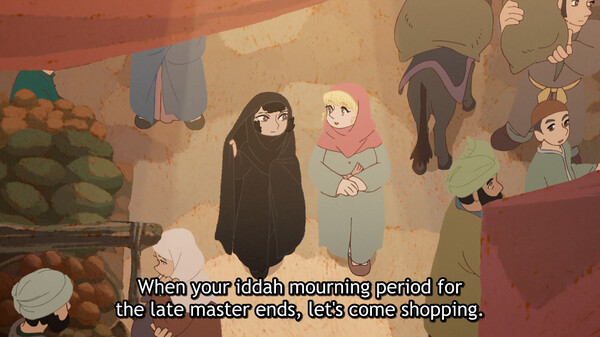
I was immediately charmed by Jaadugar's presentation, but also by how firmly it's rooted in the culture and history of 13th-century Persia. Of specific note, I love how the original writers include both the specific term "iddah" for a widow's mourning period after her husband's passing as well as enough context clues to discern what that culturally-tied term means. Also, props to the localizer on this anime for recognizing the intent of this phrasing and keeping the term in the subtitles!
Yeah, exactly! A ton of research has to go into writing a series like this, especially if it takes place outside of one's own culture. I can't claim to know much about Persian history myself, so I can't comment on Jaadugar's accuracy, but I think it provides a strong portrait of the intellectual focus of the era. Like, I recognized al-Biruni's name as an important astronomer (and then some) from this area, but that's because of other independent reading I've done, not because of anything I learned in school.
And just due to timing and [gestures broadly] worldly issues, I think it's pretty important that we get a story that begins in what would eventually become modern-day Iran. It's not a simple 4-letter monolith we hear in the news every day. It's a huge country with a ton of history and influence on the progression of human society as a whole! Plus it gave us Sitara, who is the best.
Jaadugar is easily one of the most culturally informed and appreciative works of fiction focusing on an Islamic region and people of Islamic culture that I've ever experienced, but it also doesn't sugarcoat the history of the region! To put modern events in further perspective, people have been fighting over what we know as Iran for pretty much all of recorded history, and the inciting event for much of this anime's story is Sitara's life being upended by the invasion of the Mongol Empire.
Though not an anime, but still a delightful work of animation, I really recommend that anyone who appreciated Jaadugar watch the film Persepolis, which covers the recently deceased author and director Marjane Satrapi's experiences growing up during the Iranian Revolution.
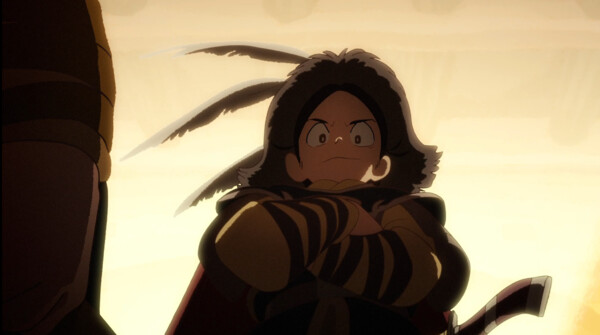
And the Mongolian parts of Jaadugar are no slouch on the historical part of historical fiction either. It stars Genghis Khan's real-life rowdy sons (in fact, most of the main cast has historical roots). It covers both the nitty-gritty of life on the steppes and the grand machinations of the Mongol Empire's war machine. In particular, I like this moment when Sitara figures out how her captors can tell time so accurately. Despite her knee-jerk dismissal, it helps her realize that she cannot think of them as mere barbarians.
Love the use of barbarians as a descriptor there, as Jaadugar helped me realize just how often modern fiction uses the Mongol Empire as inspiration for characters that fall under that stereotype in a deeply reductive way. The most recognizable instance of this today is the Dothraki in A Song of Fire and Ice/Game of Thrones and, while George R. R. Martin at least has the sense to give principal characters from this group some pathos, it really is a shame that the real-world logistics needed for a migratory and militaristic culture rarely make it into the media inspired by them.
While we're talking about stories that take place in the 13th century, we should probably talk about the equally creatively rendered anime adaptation of 13th-century historical epic The Tale of the Heike, or The Heike Story.
Which, before we say anything else about this anime, I'd like to stress just how much it absolutely whips! If you like crunchy tales of empires and how interpersonal friction or cohesion can play just as big a role in warfare as tactics or resources, this is the anime for you!
Also, if you enjoy Naoko Yamada, who directed both! In fact, both series get at another important aspect of historical fiction, which is their ability to frame their stories and histories through lenses you might not see in a typical education. Both Jaadugar and The Heike Story, for example, use female POV characters to depict and comment on the roles, plights, and thoughts of women in these societies.
Like, I could easily imagine Jaadugar as told through the eyes of Genghis Khan's successors, and I'm sure there are works of historical fiction that do just that. But what makes Jaadugar so interesting is how it weaves Sitara's and Töregene's ambitions into these grander schemes, in a way that centers these women's motivations and relates them to gender-based restrictions that still feel relevant in the modern day.
There is definitely an underlying element of "the more things change, the more they stay the same" in both works, which also makes them feel like explorations of the human condition and the societies we've built. While I only picked up on a surface-level reading of the gender politics of the leads in both, I did pick up on the tribalism and the Taira clan's timeless family drama immediately.
But yes, Sitara and Biwa are both terrific frames of reference and audience POV characters, and both being young women is a clearly intentional choice that helps these works feel just as much about the culture of the times and places they depict, instead of just the events that took place in those periods.
The Heike Story is cool, too, because the original work is one of the foundational texts of Japanese literature. It's probably somewhere on the level of The Canterbury Tales when it comes to the "Western Canon." And the average overseas viewer probably won't know that context, but it doesn't preclude them from enjoying and learning about this important slice of history regardless. Historical fiction, as fiction, is able to incorporate lies within itself to make the narrative work. So The Heike Story isn't a "pure" adaptation, yet it hits a modern audience harder thanks to its editorializations.
The original text does mention the kids with weird haircuts, though. That's important to note.
I guess I should also mention that this anime inspired me to actually read The Tale of the Heike back when it aired. Which is another cool thing historical fiction can make people do.
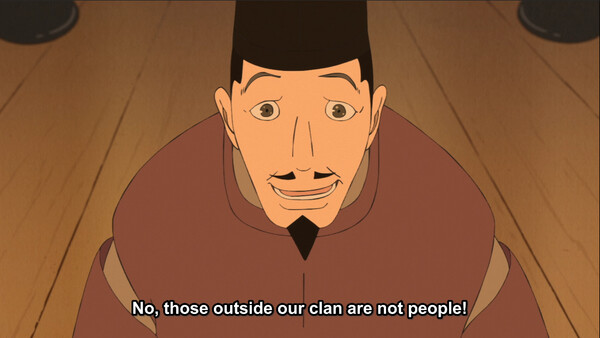
Lol, my genuine first reaction to learning that the Taira clan had roving packs of teenagers who were tasked with weeding out dissidents was "Oh, just like on L. Ron Hubbard's Scientology boats!" Truly, humanity has known how to indoctrinate young people into a system that does not care about them for a long, LONG time.
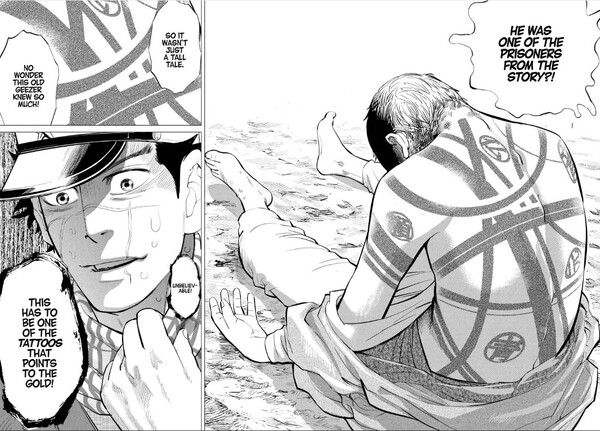
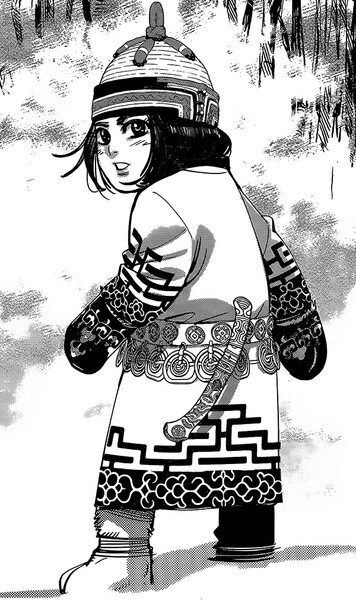
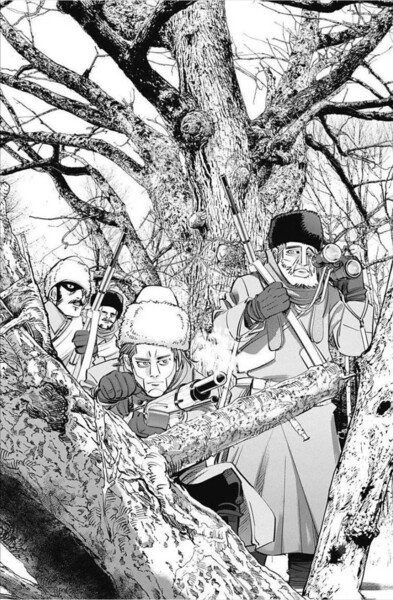
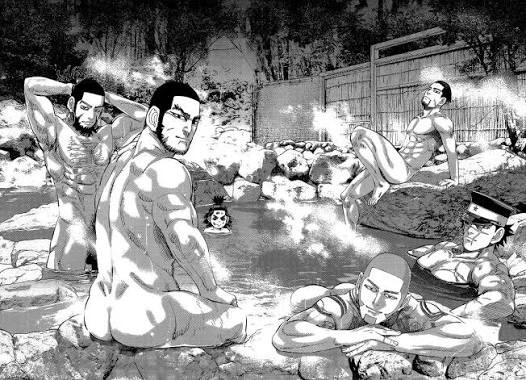
And if we're beginning to bridge into the more fictitious side of historical fiction, we've gotta talk about one of my absolute favorite entries in the genre, Golden Kamuy! Equal parts classical western and an exploration of Japan's tumultuous Meiji Era in the early 20th century, it's about a war veteran and a young woman from the Ainu people indigenous to Hokkaido and other islands north of Japan searching for a fabled hoard of gold.
I've genuinely learned more about Ainu culture from Golden Kamuy and the various writings it spawned than from any other source. And you know my ass is thinking "chitatap" whenever I mince something.
And I suppose, like Sitara and Biwa, having Asirpa be our main window into Ainu society sets Golden Kamuy even further apart from what might be considered a typical educational text.
God, the lengths this work goes to in expressing practices, belief systems, and textiles and craftsmanship of the Ainu people are nothing short of robust and should be the standard for all works that prominently feature marginalized cultural groups.
I especially appreciate how Asirpa isn't just an avatar of the community that she's from and instead has her own feelings about and connections to her culture, as well as opinions on how they should integrate into a rapidly industrializing world.
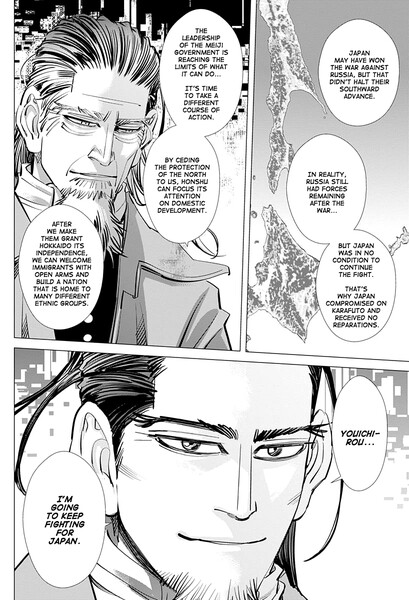
Of course, Golden Kamuy's depiction of the Ainu people in the Meiji era is just a small part of the history it takes inspiration from! It also features critical figures from the Bakumatsu period (basically the conflicts at the end of the Edo period that resulted in Japan no longer being an isolationist nation), like the Shinsengumi (basically secret police from the time that acquired enough power to have political influence), vice-captain Toshizou Hijikata, as well as Japan's ongoing land disputes with Russia at the turn of the 20th century.
It is shockingly informative and educational for a work that also frequently has its cast of mostly male and beautiful men posed as sexily as possible.
Satoru Noda is as serious about history as he is about gratuitously nude men. That's the Golden Kamuy guarantee. And legitimately, I think the series' grounding in historical fact is what helps it feel so consistently novel and weird.
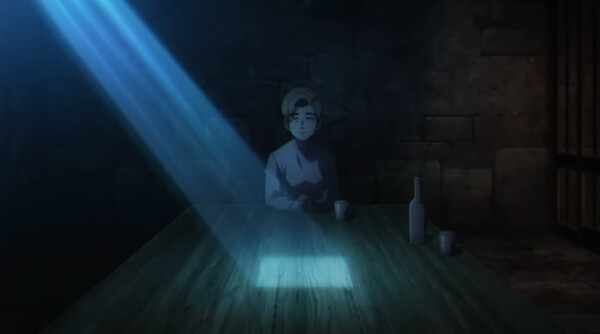
While it features much less male nudity, Orb is another recent sleeper hit that Jaadugar in particular reminded me of. Jaadugar touches on the importance of books in antiquity as repositories of knowledge that are not easily replaced, and Orb takes that idea into medieval Europe at the height of the Inquisition and the beginnings of heliocentrism's spread and acceptance.
While it doesn't feature too many actual historical figures, it eventually links its story to Copernicus in particular, as a means of making the audience think about how much history is actually preserved, and how much inevitably disappears through the ravages of disaster, censorship, and plain old time.
Orb was actually a tougher watch for me, as I was pretty familiar with the subject matter thanks to a "History of Science" class I took in college that extensively covered the actual history and politics of heliocentrism, though this is still a very good work about the ceaseless persistence of progress and discovery even in the face of suppressive organizations and ideologies.
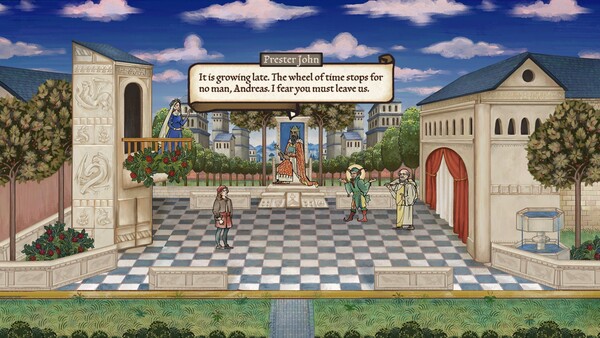
Though, for anyone who did click with Orb better than I did, I STRONGLY recommend playing the game Pentiment, which similarly explores and humanizes the life of those living through the incredibly regressive Middle Ages.
And I just want to throw this in here: just today I saw fanart shipping Sitara from Jaadugar with Jolenta from Orb. That is big-brained and beautiful. And it could only be a product of the wide net that historical anime casts.
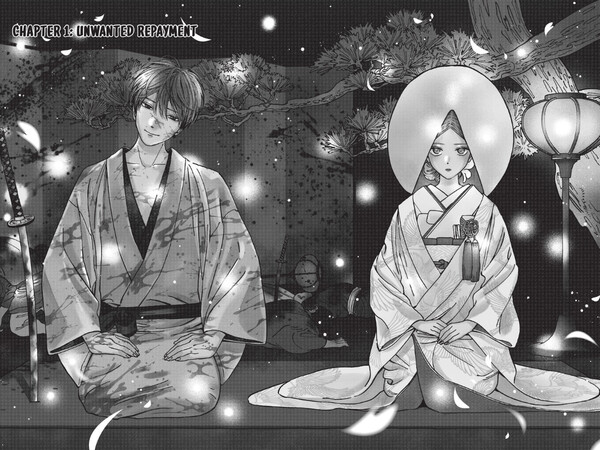
And if people like romance in their historical anime, they should get ready for Firefly Wedding next season! Another story taking place in the Meiji Era, outside of its central situationship, this work is very much about the different (though all similarly limited) ways women fit into this society and is a painfully honest portrait of the era.
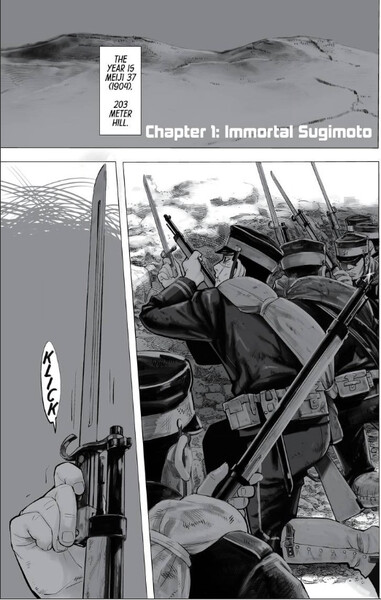
Look at me screencapping the second panel of the entire story because, again, it reminded me of Jaadugar's themes.
And yes, charismatic, sociopathic assassins aside, Firefly Wedding really puts into place how far women's rights and their personhood in broader society have come in the past 100+ years. That isn't to say that things are great for women today, but they used to be a lot worse a lot more recently than we care to remember.
Right, I should be careful to clarify that there is still some scheming to be found in Firefly Wedding. The first volume ends with Satoko having to pose as a prostitute to dupe a client into buying her and taking her off an island—an island that's a big red-light district, making sex work the only way women can survive and/or escape in this particular time and place.
It's striking how immediately Firefly Wedding comes off as pro-sex work just by the acknowledgment that, during this time period, it was one of the few means of monetary survival available to women, let alone any class mobility.
Even in the face of a lot of high-profile sequels hitting next season, I think this is going to be an anime to keep an eye on, as it's hitting that sweet spot of a historical story overtly informed by modern social politics.
I'm just hoping Firefly Wedding's adaptation fares better than Red River's. Which fits our criteria for historical fiction (even if that fiction is isekai), yet sadly drops the ball when it comes to making an anime that looks or moves pleasingly.
Ugh, I really wanted to like Red River and have another explicitly shojo series to recommend to people...but between the lead constantly being put in peril, apologizing to her family for her impending death, and then being saved at the last minute by a nearby man, it just does not have the juice in 2026 like manga may have in 1995 when damsel in distress tropes were less grating.
Luckily, if you do want good shojo historical drama (that, as a bonus, isn't isekai), you cannot ever go wrong with the classic Rose of Versailles! It looks incredible, has tons of gender, tells a rich narrative across a now-luxurious 39-episode run, and has yuri. Marie Antoinette yuri!
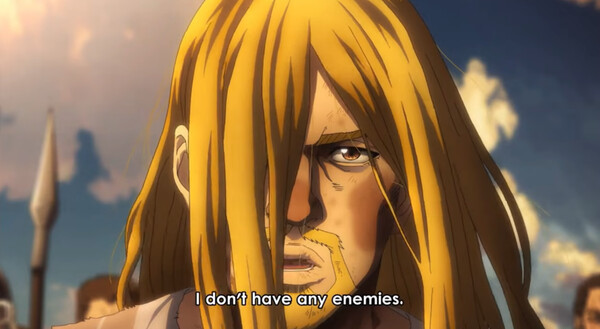
Oooooh~ great recommendation! And, if we're winding down this column with mentions of historical series that are rooted in their creator's political beliefs and activism, I'd be remiss if I didn't name-drop Vinland Saga!
Explicitly informed by mangaka Makoto Yukimura's experiences growing up during the Cold War and motivated by the September 11th attacks that would act as the catalyst for the next decades spanning global conflict, this adaptation of Nordic historical myth is as much a critique of tribalism and jingoism today as The Crucible was of McCarthyism when that play premiered in the 1950s.
Vinland Saga is a certified historical fiction banger. And I'm not just saying that because Leif Erikson Day happens to coincide with my birthday. It's definitely because of the smart politics, brilliant character writing, and all of that other important stuff you mentioned.
But seriously, I think that's why it behooves us to read, watch, and digest stories about our species' past. Just as science fiction often uses future scenarios to comment on present-day anxieties, so too can historical fiction draw on precedent and prompt us to extrapolate where we may be headed. Because there's nothing new under the sun. People have been here before. We can learn from their mistakes and from their successes. As long as we refuse to regress, we can hope that history won't repeat itself.
You're entirely correct, and nothing gives me more hope about our collective future than us having overcome so, SO MUCH in our collective past. All of the works we've talked about today are a terrific reminder of that, and I hope we can all take the learnings these works are based on and apply them to today's problems.
What makes this final batch of episodes so strong is that almost everybody gets a moment to shine or a moment of introspection.― It's wild how far Pokémon Horizons has come. This final batch of episodes feels like the climax of this time skip and the entire Pokémon Horizons series. While some things are glossed over or could've received more focus, I genuinely believe this might be one of the strong...
More details to be revealed at Jump Festa '27 event on December 19-20― The "NARUTO: What's Next?" panel at New York Comic Con announced on Saturday that Masashi Kishimoto will launch a new manga in his Naruto franchise. The below video teases the title as Naruto Shadow Rising. More details will be revealed at the Jump Festa '27 event, which will take place on December 19-20.Kishimoto launched the Na...
Boruto, Ninku director Noriyuki Abe directs crossover series― The "NA RUTO: What's Next?" panel at New York Comic Con announced on Saturday more information about the new television anime "limited" series teased last month. The new anime is a crossover anime with Koji Kiriyama's Ninku ninja manga titled NARUTO×NINKŪ.The panel explained that Ninku inspired Masashi Kishimoto to create Naruto, and as t...
Yuzu seems passive, but she's really a survivor stumbling her way into the light.― The Cinderella fairy tale often draws knee-jerk reactions about passive heroines. Even some of her arguably more passive fairy tale sisters, like Snow White or Sleeping Beauty, are afforded more grace than the woman who rises from the ashes to become a princess. She's painted as the ultimate in passivity, a girl who w...
Based on story in 27th manga volume― The "Stone Fes. 2026" event announced on Saturday that production has been green-lit on Dr. Stone Terraforming, a sequel to the television anime of Riichirou Inagaki and Boichi's Dr. Stone manga. The new anime will adapt the "Terraforming" sequel story, set after the main story, from the 27th manga volume. The first television anime premiered in July 2019. Crunch...
Atsushi Nishigori’s three-part anthology film crams all his otaku obsessions into a feast of wild eye candy.― At the U.S. premiere of GROTESQQQUE at New York's Japan Society, director Atsushi Nishigori warned the audience it might be hard to connect the different segments of this anthology feature. The one overriding theme, he explained, is “things I like” — whether that's cute girls, monsters, mech...
Torneko's Mystery Dungeon is not a game that is a roguelike; it is a game that is like Rogue - and that distinction is more than mere semantics.― Dragon Quest Heroes: Torneko's Mystery Dungeon - Classic HD is a great classic game held back by curiosities surrounding its release. The facts of the matter are quite simple. This is a rerelease of the 1993 original, the first time it has been released in...
A major Fire Emblem anniversary and the release of Dead of Brain are among the big topics this week!― Welcome back, folks! I don't pay much attention to Star Wars, being that it's never really been my thing. But the outright adulation that's been going around for Star Wars: Galactic Racer has my attention. Apparently, ex-Burnout devs worked on the game, which in and of itself ought to be encourageme...
Joo spoke with Anime News Network about his debut, the influences behind his work, the Netflix adaptation, and his latest series, Adonai.― Dong-geun Joo, the creator of the popular webtoon All of Us Are Dead, visited Los Angeles to participate in an event at the Korean Culture Center Los Angeles celebrating Korean webtoons on September 11. Joo made his debut in 2009 with All of Us Are Dead, which w...
During our conversation, Kimura spoke about how he landed the role of Chihiro as well as his experience working with Tomokazu Seki, the voice actor for Kunishige Rokuhira.―
Prior to an incredibly enthusiastic, full-room world premiere of the Kagurabachi anime series, Taihi Kimura sat down with Anime News Network to talk about his role as Chihiro Rokuhira. Before Kimura landed his role as the black-...
The Preview Guide marches on with episode two of Apothecary Diaries season three. Jinshi, how we missed you. Check out our reviews of over 50 anime in the Fall 2026 Preview Guide. Sponsored by Crunchyroll.― Welcome to Anime News Network's Fall 2026 Anime Preview Guide! Here's how it works: our team of critics writes up their impressions instantly, and we post them here as they go. Each critic will ...
Series centers on prince who secretly hunts, eats monsters to avoid assassination― Anime studio WHITE FOX announced on Friday it is producing a television anime adaptation of Daken's How I Became King by Eating Monsters (Monster no Niku wo Kutteitara Ōi ni Tsuita Ken) light novel series. The anime will debut in 2027. Original novel illustrator Shiba and manga artist Karin Suzuragi both drew illustra...
― Thursday, October 8 News Dark Horse to Release Gou Tanabe's The Outsider and Other Early Adaptations Collection Macross Frontier Anime's Blu-ray Disc Ships in 2027 Gundam Seed Freedom Zero Prequel Anime's Trailer Reveals Theatrical Release in Japan on January 15, N. America in February 2027 Here U Are Anime Reveals 2nd Teaser Trailer The Guy She Was Interested In Wasn't A Guy at All Anime's 1st P...
Yoko Hikasa, Ryōhei Kimura, Tomoaki Maeno, Reina Ueda star in Alphatart, HereLee, SUMPUL's romantic fantasy― Crunchyroll announced at New York Comic Con on Thursday a television anime adaptation of HereLee and SUMPUL's webtoon The Remarried Empress. (The webtoon is itself based on Alphatart's original web novel.) TROYCA is animating the project for broadcast next year. The main cast members are: Yok...
New Japanese anime studio breccia, Korean animation studio Studio Jemi to animated series― Crunchyroll announced at its panel at New York Comic Con on Thursday that JH's The Boxer webtoon is getting a television anime adaptation from new Japanese anime studio breccia and Korean animation studio Studio Jemi. breccia is a new anime studio founded by Kinema Citrus founding member and producer Muneki Og...
It’s a clever, entertaining, optimistic show that deserves an audience.― During a season that boasted the long-awaited return of Magical Girl Lyrical Nanoha after an eleven-year absence from our screens, and with an unexpected revival of Magical Princess Minky Momo (after 32 years!) announced as an upcoming fall 2026 OVA, the second season of the delightful Magilumiere Magical Girls Inc. seems to ha...


 @RiderStrike
 @BWProwl
 @LucasDeRuyter
 @vestenet