Just because it was animated in Japan, does that automatically make it anime?
Disclaimer:The views and opinions expressed by the participants in this chatlog are not the views of Anime News Network.
Tubi streams Transformers and Jem. Amazon Prime streams Tiny Toon Adventures and Batman: The Animated Series. Netflix streams Avatar: The Last Airbender and Transformers: War for Cybertron. Rainbow Brite and the Star Stealer is available for rent on Fandango.
Everything else is way harder to watch than old cartoons ought to be these days.
Chris
Coop, I think it's apparent to readers that we here at This Week In Anime aren't always about anime. We've got other stuff we'd like to talk about. Sure, you've somehow convinced the boss-lady to greenlight columns on Metal Cardbot and Baby Assassins, but then there's me with Transformers, of course. And editor Rebecca was regaling us with her love for the old Tiny Toon Adventures feature.
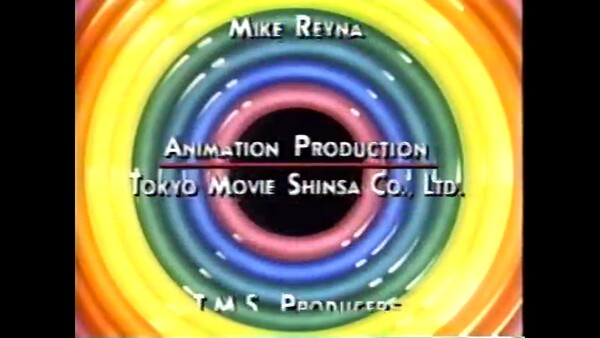
Seems that whenever they weren't busy with the latest Lupin the 3rd caper, TMS provided the animation manpower behind many cartoons of the 80s and 90s. They weren't alone at this either. For instance, Toei Animation was busy in the trenches of THE toy commercial shows—Transformers and G.I. Joe. In fact, Toei was the main muscle behind Transformers: The Movie, which just celebrated its 40th anniversary.
Thanks for everything, sir. The history of animated series like this pointedly comes up a fair amount over in discussions along my Transformers fandom fronts. I've heard it parroted in conversations and even at panels (not mine) that "The original Transformers cartoon is anime!"
But if you know me, you know I don't...necessarily agree with that. So in the interest of compelling column discussion, I think it makes sense to revisit our mate Lucas' irregular refrain: "Is it anime?" Who knows how opinions might...transform along the way?
Now, that's an evergreen question. A handful of months before Scott Pilgrim Takes Off hit Netflix in 2023, you and TWIA Alumnus Nicky Thomas chatted over the modern iteration of this question. I'd say that, for the most part, the two of you examined projects that were made within the production framework of these classic cartoons, but the lines became a little blurrier. It's only been three years since then, but I have a sneaking suspicion that many in the entertainment biz have even less of a clue as to what anime actually is. Especially with outlets like Varietyconstantly referring to KPop Demon Hunters as "anime."
Never mind Netflix's own inconsistent invocation of the term, which we can absolutely round back to before the end of this.
But in the case of the earlier examples, it's notable because a lot of these co-conspirators are shows the broader audience wouldn't normally think of as anime. Transformers was produced by Hasbro, Sunbow, and Marvel Productions, by and for a Western audience, and the animation was simply outsourced to Toei, among multiple other studios from multiple other countries. As you mentioned, several other shows were made this way, though for some reason I see a lot fewer people trying to argue that G.I. Joe: A Real American Hero is actually a Japanese cartoon.
But yeah, having some animation outsourced to Japanese studios does not cartoons like Transformers anime make, in my opinion. But it does still make them interesting to talk about from an anime perspective! For instance, I'll always be happy to point out that a young upstart named Masami Ōbari actually contributed to the original Transformers pilot miniseries!
Of course, there's no way to tell which specific cuts are his. Total mystery.
Not at all... Who would ever draw Optimus Prime walking pelvis first?
It's cool, but it also lays bare some of the other problems that can arise out of this practice. There are persistent rumors, based on style alone, that the third-season episode "Call of the Primitives" was directed by Obari...though it was directed by Eiji Suganuma. Meanwhile, the episode "Microbots" features some of the nicest animation in the whole, often otherwise uneven series, but who at Toei was specifically behind much of it is obscured by the crediting practice toward outsource-ers at the time.
Given the sheer number of shows that were made with said outsourcing, it can create issues with that aforementioned historical component.
The fact we even have specific names to juggle around speaks to how rarely (if ever) individual talents were credited. Most of the time, only the studios were credited, be it a TMS or Toei. This has gotten a little better over the years, but it's still a crapshoot on whether someone actually gets their name on the tin.
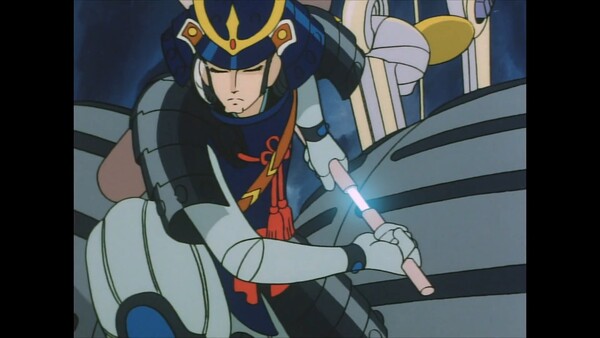
Then there are projects that have truly unmistakable talents, like Mighty Orbots. While this series was conceived stateside, TMS took the ball and tossed it into the hands of the one and only Osamu Dezaki. However, he wasn't the only star player on this team; Akio Sugino provided the character designs and Yuji Ohno popped in to score it. So, if you think this looks like "Cobra for kids," your thoughts aren't all that off the money. While the trio's involvement might not have been a big deal when Orbots' aired, the currently in-print DVDs make a point of it.
Mighty Orbots is only 13 episodes, but it's punching way above its 80s toy cartoon weight. Yes, the show is generally always this gorgeous.
It's so wild how 80s cartoons were outsourced to Japanese studios mainly as a cost-saving move, hardly ever giving them the time and resources to bring their A-game. Meanwhile, Orbots is out here with the mission statement of "What if we showed American audiences what these teams were capable of if they were unleashed?"
"DEZAKI WAS ABLE TO BUILD THIS IN A CAVE, WITH BOX SCRAPS!"
Blasted through its production so briskly they didn't even get to make the toys until forty years later. Though really, a lot of that was Tonka's fault (long story).
Now, Orbots being so closely a collaboration with the likes of TMS, Dezaki, and the gang does tilt it a bit more in the "Is it anime?" discussion, I'll concede. It at least earns the consideration of "collab," similar to the nature of what had been done between French companies and Japanese studios years earlier, with Ulysses 31 and Mysterious Cities of Gold...both of which would also be brought westward, just to mix things up further.
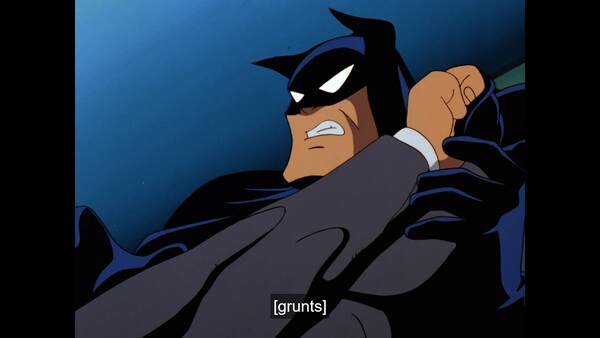
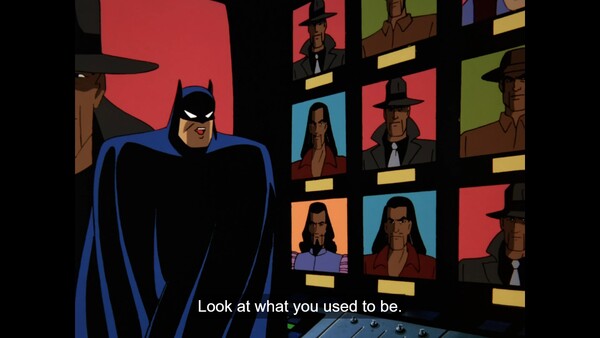
While I do love me some Orbots, it's hard to compete with TMS' greatest contribution to Western animation, Batman: The Animated Series. Over the course of its run, the series had its fair share of Japanese and Korean studios working away on the production end. A few years back, there was a particular commotion when it was discovered that a handful of Studio Ghibli staffers worked on the series. However, this excitement was quickly tamed by social media drama and classic fanboy arguing...which made it hard to nail down the exact details here.
This is what I'm talking about when I argue about the excitable fanboy urge to classify and hype things, overriding the actual details of how things are made. So "Japanese animators worked on Batman TAS" becomes "Did you know that STUDIO GHIBLI animated BATMAN?" when, like, no.
Never mind that specific crediting could still be inconsistent. For the Tiny Toons flick, WB gave full shout-outs to the TMS staff that worked on it. Batman? Less so.
Not to mention that there's probably a bit of nuance missing when going through the resumes of those who have been credited. For example, Atsuko Tanaka worked on a handful of Ghibli films in the early 90s (Pom Poko and Whisper of the Heart specifically), but she seemingly did that as part of her TMS workload. The TMS and Ghibli crews seemingly knew each other, given common projects, but this also means I'm making quite a bit of conjecture here. There are a lot of dynamics at play that can't be simply summed up as "GHIBLI DID BATMAN," and there's a lot of room for confusion and nitpicking in there.
Of course, that kind of granularity doesn't play as well as clickbait for pop-culture reporting sites. And it's why specific attribution is so important to hone in on these discussions when you can. It also reflects why I get punchy about any serious argument that these cartoons are "anime" in the first place. To wit: "Feat of Clay, Part 2" is always my go-to example of the power that TMS brought to Batman TAS when they worked on it...but it follows up "Feat of Clay, Part 1," which was animated by AKOM, a South Korean studio that, while not at the bottom of their game here (hello Transformers season 3!), is clearly just waiting to be outclassed by TMS.
So do shows like Batman, Tiny Toons, and Animaniacs only count as "anime" when they're the nice-looking episodes animated by Japanese studios? Shouldn't take the world's greatest detective to figure that out.
If we were living in Japan, I could understand the "it's anime" argument. However, that's because "anime" is shorthand for animation in general over there, according to my colleagues who've lived in the country for a good while. Heck, Disney movies are described as "anime." But when Japanese animation goes to the global stage, it's important to be clear with this distinction. Because when you start seeing headlines about every piece of adult or general-audience animation being referred to as "anime," the term loses all its meaning.
My gut tells me that we started having the "is it anime?" conversation a lot more once anime-inspired series like Avatar hit the airwaves. Honestly, I'd bet general audiences are more tuned into the aesthetics of anime, rather than whether actual Japanese creatives worked on it. Hence the baffling talk of KPop Demon Hunters as anime.
And admittedly we're not immune to this either, as we also visited K-Pop Demon Hunters ourselves. Though I like to think we're better about being up-front about things not being anime and the context we're discussing them in, in spite of that. Hence, this column.
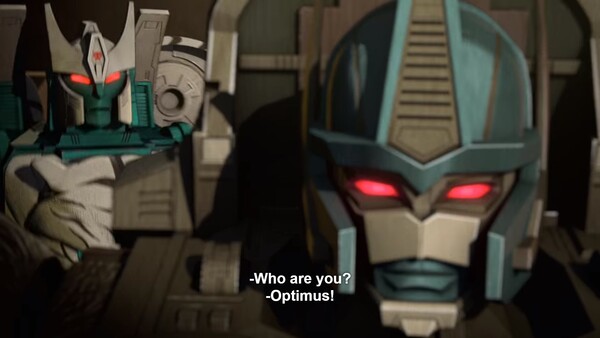
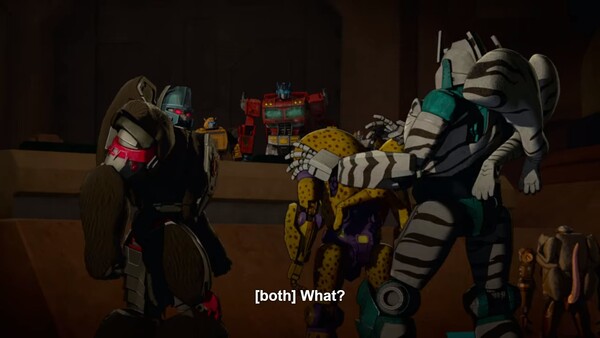
You also have companies like Netflix further muddying the waters by marketing shows that aren't necessarily anime as "original anime," which I alluded to with the Transformers: War For Cybertron shows...which did have their animation produced by Japanese studio Polygon Pictures, so hmmm.
Siege Optimus Prime is an all-timer though...
Photo by Coop Bicknell
The wrath of Lynzee Loveridge for invoking Transformers too much aside, I'm glad we've been able to discuss anime-adjacent topics. We've made it clear that Baby Assassins, K-Dramas, and Metal Cardbots are not anime, but they're all part of the larger anime conversation.
Oh yeah, to be sure, this is not the Transformers column. Even as I point out that other shows like Transformers Prime also got animated by Polygon, those just didn't get marketed as anime; I'm not marketing this as the Transformers column.
Seriously though, you're right about all this feeding into broader conversations. Going back to other 80s toy properties, this also allowed an outlet for Rebecca to get her own particular kicks in with a recommendation of the Rainbow Brite movie, which netted the extremely rare for the time on-screen, front-loaded credit for its Japanese director, one Kimio Yabuki of Toei.
Once again, I'm thanking Kurt! Rainbow Brite is an example of the anime heritage compelling a visit to a movie that would certainly be...interesting to visit on its own. A lot is going on here, from dialogue to a robot horse who feels like a decades-early Aqua Teen Hunger Force bit, to an evil Princess who styles on every other character in this movie, to another reason to pour one out for Peter Cullen.
And it also demonstrates how deep the rabbit hole can go when you get to investigate cross-cultural contributions in these kinds of productions. Holy crap, is that Dōga Kōbō in the credits?
It's also worth noting that Ozamu Dezaki directed the Rainbow Brite TV series over at TMS. Even if the movie was made elsewhere, we can't escape TMS.
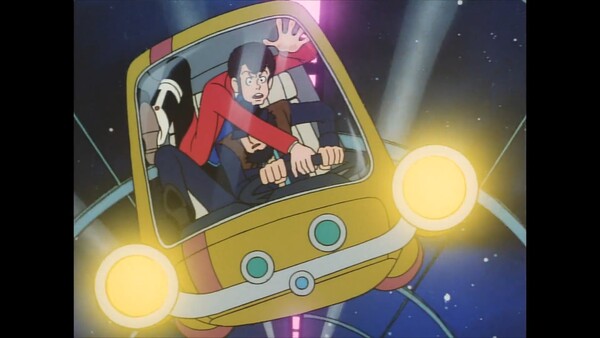
Toei and TMS being the big studios for this sort of outsourcing shows what big names they were back in the day (not that they still aren't big today). It makes sense that they were ripe for contributions and co-pros, as they were looking for ways into other markets. That probably explains Lupin VIII, a space-age Lupin spin-off TMS proposed with DIC that never fully got off the ground thanks to legal shenanigans.
But of course, if you know your history, you know that the partnership wasn't totally fruitless, and instead of Lupin, DIC went on to work with TMS to produce a cartoony icon all their own!
Sorry, I've gotten to deploy a lot of my favorite trivia pieces here, and "Inspector Gadget is descended from Lupin the 3rd" is another one of them.
I swear, it all goes back to Lupin in one way or another.
The progenitor of so many anime and cartoons. But not straight through any Ghibli connections, as we've discussed.
All that said, yeah, I think this helps show why following up on different productions outside of Japanese anime can be illuminating and valuable to the anime-fan experience. And sometimes you just get to watch some cool and interesting cartoons in general! It's why having a balanced media diet is important alongside knowing how your favorite material gets made, as opposed to searching for avenues to appreciate something simply because you can say it's "technically" anime.
Absolutely! The folks behind these classic cartoons weren't just watching other cartoons, oh no, they were loopin' in elements from their favorite works of fiction—from books to big-screen blowouts. Maybe they had to sell a toy or two while they were at it, but that didn't stop 'em from making some memorable moments along the way.
You had animators referencing classic noir cinema while using anime abilities to draw Batman. That's a soup of skill that makes for good viewing if I've ever seen it.
What makes this final batch of episodes so strong is that almost everybody gets a moment to shine or a moment of introspection.― It's wild how far Pokémon Horizons has come. This final batch of episodes feels like the climax of this time skip and the entire Pokémon Horizons series. While some things are glossed over or could've received more focus, I genuinely believe this might be one of the strong...
More details to be revealed at Jump Festa '27 event on December 19-20― The "NARUTO: What's Next?" panel at New York Comic Con announced on Saturday that Masashi Kishimoto will launch a new manga in his Naruto franchise. The below video teases the title as Naruto Shadow Rising. More details will be revealed at the Jump Festa '27 event, which will take place on December 19-20.Kishimoto launched the Na...
Boruto, Ninku director Noriyuki Abe directs crossover series― The "NA RUTO: What's Next?" panel at New York Comic Con announced on Saturday more information about the new television anime "limited" series teased last month. The new anime is a crossover anime with Koji Kiriyama's Ninku ninja manga titled NARUTO×NINKŪ.The panel explained that Ninku inspired Masashi Kishimoto to create Naruto, and as t...
Yuzu seems passive, but she's really a survivor stumbling her way into the light.― The Cinderella fairy tale often draws knee-jerk reactions about passive heroines. Even some of her arguably more passive fairy tale sisters, like Snow White or Sleeping Beauty, are afforded more grace than the woman who rises from the ashes to become a princess. She's painted as the ultimate in passivity, a girl who w...
Based on story in 27th manga volume― The "Stone Fes. 2026" event announced on Saturday that production has been green-lit on Dr. Stone Terraforming, a sequel to the television anime of Riichirou Inagaki and Boichi's Dr. Stone manga. The new anime will adapt the "Terraforming" sequel story, set after the main story, from the 27th manga volume. The first television anime premiered in July 2019. Crunch...
Atsushi Nishigori’s three-part anthology film crams all his otaku obsessions into a feast of wild eye candy.― At the U.S. premiere of GROTESQQQUE at New York's Japan Society, director Atsushi Nishigori warned the audience it might be hard to connect the different segments of this anthology feature. The one overriding theme, he explained, is “things I like” — whether that's cute girls, monsters, mech...
Torneko's Mystery Dungeon is not a game that is a roguelike; it is a game that is like Rogue - and that distinction is more than mere semantics.― Dragon Quest Heroes: Torneko's Mystery Dungeon - Classic HD is a great classic game held back by curiosities surrounding its release. The facts of the matter are quite simple. This is a rerelease of the 1993 original, the first time it has been released in...
A major Fire Emblem anniversary and the release of Dead of Brain are among the big topics this week!― Welcome back, folks! I don't pay much attention to Star Wars, being that it's never really been my thing. But the outright adulation that's been going around for Star Wars: Galactic Racer has my attention. Apparently, ex-Burnout devs worked on the game, which in and of itself ought to be encourageme...
Joo spoke with Anime News Network about his debut, the influences behind his work, the Netflix adaptation, and his latest series, Adonai.― Dong-geun Joo, the creator of the popular webtoon All of Us Are Dead, visited Los Angeles to participate in an event at the Korean Culture Center Los Angeles celebrating Korean webtoons on September 11. Joo made his debut in 2009 with All of Us Are Dead, which w...
During our conversation, Kimura spoke about how he landed the role of Chihiro as well as his experience working with Tomokazu Seki, the voice actor for Kunishige Rokuhira.―
Prior to an incredibly enthusiastic, full-room world premiere of the Kagurabachi anime series, Taihi Kimura sat down with Anime News Network to talk about his role as Chihiro Rokuhira. Before Kimura landed his role as the black-...
The Preview Guide marches on with episode two of Apothecary Diaries season three. Jinshi, how we missed you. Check out our reviews of over 50 anime in the Fall 2026 Preview Guide. Sponsored by Crunchyroll.― Welcome to Anime News Network's Fall 2026 Anime Preview Guide! Here's how it works: our team of critics writes up their impressions instantly, and we post them here as they go. Each critic will ...
Series centers on prince who secretly hunts, eats monsters to avoid assassination― Anime studio WHITE FOX announced on Friday it is producing a television anime adaptation of Daken's How I Became King by Eating Monsters (Monster no Niku wo Kutteitara Ōi ni Tsuita Ken) light novel series. The anime will debut in 2027. Original novel illustrator Shiba and manga artist Karin Suzuragi both drew illustra...
― Thursday, October 8 News Dark Horse to Release Gou Tanabe's The Outsider and Other Early Adaptations Collection Macross Frontier Anime's Blu-ray Disc Ships in 2027 Gundam Seed Freedom Zero Prequel Anime's Trailer Reveals Theatrical Release in Japan on January 15, N. America in February 2027 Here U Are Anime Reveals 2nd Teaser Trailer The Guy She Was Interested In Wasn't A Guy at All Anime's 1st P...
Yoko Hikasa, Ryōhei Kimura, Tomoaki Maeno, Reina Ueda star in Alphatart, HereLee, SUMPUL's romantic fantasy― Crunchyroll announced at New York Comic Con on Thursday a television anime adaptation of HereLee and SUMPUL's webtoon The Remarried Empress. (The webtoon is itself based on Alphatart's original web novel.) TROYCA is animating the project for broadcast next year. The main cast members are: Yok...
New Japanese anime studio breccia, Korean animation studio Studio Jemi to animated series― Crunchyroll announced at its panel at New York Comic Con on Thursday that JH's The Boxer webtoon is getting a television anime adaptation from new Japanese anime studio breccia and Korean animation studio Studio Jemi. breccia is a new anime studio founded by Kinema Citrus founding member and producer Muneki Og...
It’s a clever, entertaining, optimistic show that deserves an audience.― During a season that boasted the long-awaited return of Magical Girl Lyrical Nanoha after an eleven-year absence from our screens, and with an unexpected revival of Magical Princess Minky Momo (after 32 years!) announced as an upcoming fall 2026 OVA, the second season of the delightful Magilumiere Magical Girls Inc. seems to ha...
Muramasa is back and looking better than ever—literally.― 2009 saw the release of Muramasa: The Demon Blade for the Nintendo Wii. Born from the mind of Vanillaware's George Kamitani (Dragon's Crown, 13 Sentinels: Aegis Rim, Unicorn Overlord), this 2D metroidvania beat 'em up is set in a folklore-inspired feudal Japan and contains some absolutely wonderful colorful artwork. The upcoming Muramasa: Rev...


 @RiderStrike
 @BWProwl
 @LucasDeRuyter
 @vestenet