

(5 questions; 43s to answer on average
Yes I'll do it later No
The Summer 2025 Anime Preview Guide - Takopi's Original Sin
How would you rate episode 1 of
Takopi's Original Sin ?
Community score: 4.3
How would you rate episode 2 of
Takopi's Original Sin ?
Community score: 4.3
What is this?
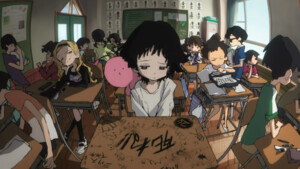
Takopi travels from his home of Happy Planet to spread happiness across Earth, but meets the unsmiling Shizuka upon landing. Her friends at school and home life seem to be the source of her somber expression—and the pure-hearted Takopi is determined to change things for the better.
Takopi's Original Sin is based on the manga by Taizan 5. The anime series is streaming on Crunchyroll on Fridays.
Content Warning: This series includes graphic depictions of bullying, child abuse, suicide, and (implied) animal death.
How was the first episode?
James Beckett
Rating:
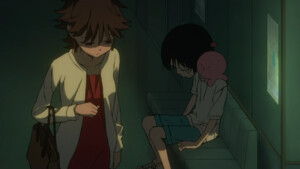
Thank God Takopi's Original Sin is only set to run for four more weeks. I genuinely don't think it would be possible to endure a show this adept at exposing the cruelty and suffering of neglected children for an entire season. While this second of six episodes isn't quite as shockingly graphic as the premiere was, make no mistake: Takopi's Original Sin is going to keep sinking its teeth right down to the bone. Much like a protective dog might do to his owner's tormenter.
What is clear at this point is how Takopi's Original Sin is going to center around the titular little octopus-thing's growing understanding of how goddamned messy and complicated it can be to try and improve the circumstances of just one child. Coming from Happy Planet, Takopi has had to run a crash course in comprehending what the concepts of pain and suffering even mean; now, Takopi is learning the harder lesson: There is no one “easy” fix that will make Shizuka smile. At least, not in the way Takopi is hoping. As a teacher who actually tries to empathize with his students and improve their lives to the best of his ability—unlike basically every adult in Shizuka's world—I can empathize with the desire to say the one perfect thing, or fix the one single problem, that will transform a person's life overnight for the better. It doesn't work that way, though.
With its careful and meticulous artistry, the anime continues to emphasize that Shizuka's suffering is the result of a thousand different factors borne from the mistakes, oversights, and selfish choices made by hundreds of other people. Her parents, Marina's parents, the school system, the government, the culture of the town—it's all rotten. To truly “fix” Shizuka's life, Takopi would have to fundamentally transform the very foundations of the world that she lives in.
That's a bit much for little Takopi to get at this point, so instead he uses his crazy space gadgets to violate the laws of physics and spacetime. However, this episode makes it clear that there is a reason why the show is called Takopi's Original Sin, and not “Takopi's Brilliant and Foolproof Plan.” Time travel doesn't work. Tricks and illusions do not work. So, poor Takopi makes the same exact choice that every scared and confused animal makes when it is out of options: He lashes out. He gets rid of the problem. Shizuka is smiling from ear to ear by the time the episode ends, and it's the most terrible thing that could have possibly happened. We'll just have to see how Takopi can make up for this sin as the series continues to dive headlong into its dark tale.
Rating:
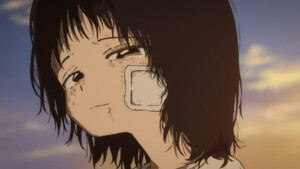
There's really no other way to begin covering Takopi's Original Sin without warning anyone who doesn't know what they are getting into. This is easily one of the most grim, harrowing, frank, and graphic depictions of childhood neglect and depression that I have ever seen in any medium, and all of it centers around a fourth-grader. This is a show that features nearly constant occurrences of violent bullying that make sure you can never ignore the despair etched onto Shizuka's face. At one point, after her pet dog is stolen from her and presumably euthanized, Shizuka goes so far as to take her own life, and the sequence forces the audience to linger in the aftermath. It does not cut away. It does not obfuscate any details. This is all before the premiere is even halfway over.
All of this, and we haven't even gotten to the part that will likely drive most viewers away within minutes of turning on the first episode. If you're wondering how an anime can even continue when its nine-year-old protagonist does not survive past the fifteen-minute mark, it's because the core premise of this story revolves around Shizuka's friendship with a cute alien octopus-thing that she names Takopi. Like many kids' cartoons before it, Takopi's Original Sin establishes a formula where Shizuka's magical friend will use his fantastical Happian Gadgets to solve life's problems and get into hijinks. The twist, as you will have guessed, is that Shizuka's problems cannot be easily squared away into simple conflicts like forgetting her homework or making up with the school bully. Shizuka lives an unbearably difficult life surrounded by cruel and vicious children who can get away with just about anything because the adults in her life simply cannot be bothered to care. So, even when Takopi uses time travel to undo the horrific final moments of Shizuka's life, the viewer must watch as Takopi runs a grueling Groundhog Day gauntlet of suffering in his attempts to “fix” Shizuka's life.
So, if the unflinching portrait of adolescent misery and suicide was not already enough to make Takopi's Original Sin nearly impossible to recommend without a list of caveats and content warnings a mile long, the show makes the incredibly bold decision to frame all of that misery within the clashing tone of silly tropes ripped straight out of a Doraemon adventure. Anyone who watches enough anime will know that Japanese art loves to meld seemingly incompatible moods together and switch between them at a moment's notice, but I don't think I've ever seen an anime that is outright fueled by violent tonal whiplash as much as this one is.
Yet, you may have also noticed my superlative score up in the “Ratings” section. This is because, for as unpleasant and upsetting as Takopi's Original Sin is to watch, I think it is trying to tell a vital kind of story. In my day job as a teacher, I cannot tell you how awful it is to work with children whose lives have been marked by tragedies and abuses that you could never even imagine suffering through. The entire gloomy world of Takopi's Original Sin may seem extremely exaggerated, bordering on exploitative, but that is all in the service of conveying the very real suffering that children all around the world experience every day. The show's rough-hewn but stylish animation contributes to this effect perfectly, so you can't accuse the show of being cavalier or tone-deaf. It knows exactly what it is doing, and I am honestly compelled to see how Takopi and Shizuka can possibly emerge from this nightmare unscathed, if that is even possible at all. I would tell almost every person I know to stay far, far away from Takopi's Original Sin at all costs. For those who are inclined to engage with art that forces you to explore some of life's darkest and most painful experiences, though, you might end up hooked as well.
Christopher Farris
Rating:
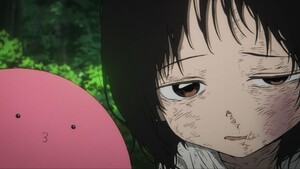
Horror famously works on the same principles as comedy, and so too, it seems, can misery porn. After almost three standard episodes' worth of run-time in Takopi's Original Sin, the titular shoe actually drops at the end of this episode. As a way to show that this series will have more to it than watching Shizuka continuously suffer, there couldn't be a better delivery of a punch-line. I'll get to it in a moment, but it's pitch-black and pitch-perfect for this series, showing the potential for Takopi to go places.
First of all, however, that necessitates spending just a bit of time marinating in Shizuka's Terrible Life, and boy, do things get even more terrible! The focus here, the crux that events crumble around and even motivate the big swerve at the episode's end, is Marina's machination to have Shizuka's dog, Chappy, taken away, rightfully recognizing the lovable mutt as the poor girl's lifeline. At first, the anime properly revels in the tense suspense of something not happening, as Shizuka and Takopi believe they might have a reprieve from Marina. But then she makes her appearance and her play, with the same kind of hammering hurtfulness that would drive some viewers to simply not want to handle this anime in the first place. The consequence: Chappy jumps to Shizuka's defense, bites Marina, and gets taken away, leaving Shizuka shattered.
Of course, this is Takopi's Original Sin, so even that tragic turning point is recontextualized by magic-gadget do-overs and a bleakly irreverent montage of Takopi trying and failing to prevent the event. Considering the nature of this story, the dog is essentially destined to go one way or the other. The desperation in Takopi's efforts here underscores just how much he's reaching for even the most baseline of a win. He can't even strive to make Shizuka happy at this point; he just wants to get her to a level where she's not so miserable that she kills herself. With Chappy blinking out of existence and getting a look at how dismissive and neglectful Shizuka's mom really is, it becomes clear just how much Takopi has stumbled into being the poor girl's sole supporting element and how wildly unprepared he is for that.
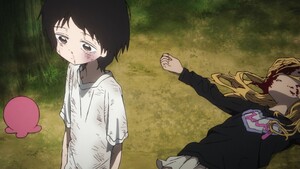
As Marina's last extreme lashing out at Shizuka in the woods demonstrates, these problems are dense and intertwined in ways that just make things worse for everyone. So, as a simplistic cartoon alien, Takopi's direct and to-the-point solution isn't going to be what's really needed to fix things…but it'll work out just fine as far as Shizuka is concerned. It turns out the real friendship was the murder we committed along the way.
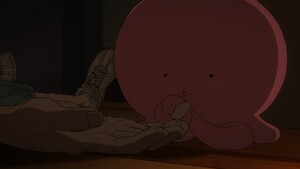
I'd read the original Takopi manga, so I knew it was coming, and yet the execution of the little octopus's indulgent, accidental bludgeoning to death of Marina still killed me nearly as much as it did her. Mostly, it's in Shizuka's reaction and the revelation that this is what it takes to finally make her smile, and the anime uses everything a production like this has to pull it off. The way the colors all warm up, the soaring classical music score, the art's rendering of the genuine joy on Shizuka's face. I'm sorry, but as an ultimate punchline, this was genuinely hilarious. If anything, this can come as a relief that Takopi's Original Sin can intentionally do black comedy as well as it does raw blackness. Now, the ride can truly begin, and I'm excited (and terrified!) to see what else this anime treatment has up its sleeve.
Rating:
At this point, anybody can tell you what to expect going into Takopi's Original Sin. This adaptation of Taizan 5's manga was primarily designed to generate word-of-mouth marketing. It hardly buries the lede with its harsh, scrungly art style surrounding the cuddly titular alien, making the tone come through even before the clear cruelties start manifesting on-screen. This is an anime concocted to have a bad time, which isn't necessarily a bad thing, as long as audiences have the proper content warnings to brace themselves.
What attending viewers might be less immediately aware of coming into Takopi, however, is that it does have a real range to show off. Even in this extra-long opening volley, it's not entirely designed as 37 minutes of misery. The opening eases audiences in, not shying away from the reality of the bullying Marina inflicts on Shizuka, but also lingering on moments when it's "not so bad," as Shizuka interacts with Takopi. The simple naivete of a happiness-driven alien learning to understand human sadness and suffering means that there's a purpose to this framework beyond the misery porn. And that veneer of amusement allows moments of reprieve and even mild entertainment in between said suffering. Much like dealing with real-world horrors, we relish the relief when we can get it.
That's the other secret about Takopi's Original Sin: depending on your tolerance for darkness, this story can provide moments of obsidian-black humor, highlighting the awfulness it depicts. The premise is basically, "What if Doraemon tried to help with all his gadgets, but things were way more messed up than he was prepared for?" which lends itself to some seriously screwed-up sketch comedy vibes. It is objectively funny to watch a split-screen montage of Marina's bullying attempts fail to land, thanks to Takopi's gentle interventions lifting Shizuka back up. There are funny reaction-face shots and cutely animated physicality in the characters as they go about this sort of business.
Then, the show unflinchingly shifts to a violent depiction of Takopi experiencing Marina's brutal bullying firsthand. People get so depressed that they can't ask for help? People get so depressed that they die, Takopi.
Between all that, including the magical-tool-assisted suicide that prompts the time-rewind, which sets the full plot in motion, Takopi is an anime that knows how it wants to pace out its problems, even as audiences wonder how much of this is for them. Already familiar with the manga's horrors, I think it's worth revisiting for the adaptation, myself. The team at Enishiya has devised a beautiful treatment for the unappealing world depicted in this story, one that complements the material's lingering quality. This is a brutal story, not a brutally efficient one. I think it's worth watching out of dark fascination if you've got the stomach for it, and with the benefit of knowing it does go multiple places apart from simply marinating in misery all the way through. There will be bright spots, there will be very, very dark spots, and this treatment of all of that has thus far justified its purpose.
Richard Eisenbeis
Rating:
This anime makes me sick. I'm both enraged I had to watch this and happy that I'll not have to watch the remaining four episodes. My fruitless hope now is that I'll somehow be able to push this anime out of my head and never think about it again… but first, this review.
Two episodes in, and it's clear to see that this anime is fantastically written, paced, voice-acted, and animated. It is built around the dichotomy between the innocent world Takopi believes exists and the grim darkness that is the reality of the human world. It is comical and horrifying—and often both at the same time.
All that is to say, my complete and utter aversion to this show is by design. This anime wants you to feel horrible while watching it. However, I wouldn't call it misery porn exactly. This isn't some sadistic creator reveling in making people feel vile by torturing a fictional girl—there is a purpose behind it. And that purpose is not to shy away from real-world child abuse—to show it in all its graphic detail and dive into why it happens.
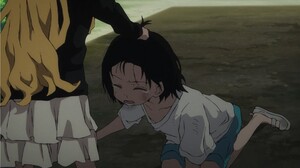
Marina's actions are objectively horrible: she kills a dog and tortures a girl to suicide for the actions of their parents. Worse still, in her mind, she thinks she is the good guy—that she is supporting her grieving mother and fighting to repair her broken home.
But did she deserve to die?
That's what this episode specifically wants us to think about. How much of Marina's bullying actions and subsequent death were caused by the abuse she had at home—from her mother whispering in her ear and making this little girl her sole emotional support? How much of it is the fault of Shizuka's mother and Marina's father? How much of the fault lies with Shizuka's absentee (deceased?) father for the mess he left behind? And how much of the fault lies with the actual killer, the all-too-innocent Takopi, who was just trying to help out a girl who so desperately needed it?
And in the end, we're not given any answers. We're left with an unsettled Takopi and a jubilant Shizuka. Yet, as horrible as the situation is, it feels like it was always destined to end this way—with a dead kid, be that Marina or Shizuka. All the people who could have stopped this—the parents, teachers, and other adults—failed to do so. And now, most likely, it will be the still-living girl that pays the highest price.
Rating:
I don't want to continue watching this show. And believe it or not, that's a compliment. This show wants you to feel uncomfortable and rethink your perspective on the world—even if it alienates you in the process. It does this damned effectively.
Takopi is the story of a Doraemon-esque alien who meets an elementary school girl named Shizuka. But rather than problems like not wanting to study for a test (or some other Nobita-style problem), Shizuka faces real issues, like a neglectful mother and extreme bullying at school. Unfortunately, due to his unbelievable level of innocence, Takopi is unable to understand this.
On a metaphorical level, Takopi is a stand in for all those people out there who have never experienced being bullied—along with those who have never dealt with domestic abuse and suicidal depression. While well-meaning, his reactions to her obvious troubles are naive in the extreme. Flying in the sky means nothing to a kid being tortured each day—and she sure as hell doesn't need a magic ribbon to understand why Marina is trying to make her life a living hell. And, most importantly, none of his gadgets (read: quick fixes) will solve any of the actual problems in her life.
Takopi is fundamentally unable to see the world through any lens but his own—even when he finds her dead body. He thinks what happened is his fault for breaking the rules and letting her use a tool without him alone. So time travels and tries again. It's only at the moment that he experiences Shizuka's pain firsthand that he starts to understand the fear, shame, and utter helplessness that comes from being bullied. Those in authority (namely, teachers) do nothing unless directly asked (and even then, it's the bare minimum)—and peers who offer help have no idea what they're suggesting and can't be relied on.
And to cap things off, we learn in the closing moments of the episode that Marina is lashing out at Shizuka not because she's a “natural bully” but rather because she's facing emotional abuse at home—that her bullying Shizuka is her way of both supporting her mom and lashing out at someone at least tangentially related to the broken state of her own family. It's the cycle of abuse. Hurt people hurt people—and no amount of pretty platitudes is going to fix the situation.
Subscribe to Crunchyroll here!
discuss this in the forum (364 posts) |

this article has been modified since it was originally posted; see change history
back to The Summer Anime 2025 Preview Guide sponsored by Crunchyroll
Season Preview Guide homepage / archives