

The Summer 2026 Anime Preview Guide
The World Is Dancing
How would you rate episode 1 of
The World Is Dancing ?
Community score: 3.8
What is this?
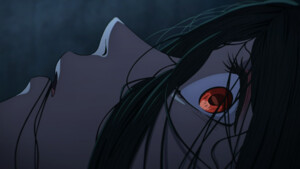
In 1374, amid the turmoil of the Northern and Southern Courts' long-running conflict, a boy named Oniyasha was born into a family of sarugaku theater performers. He spends his days in a kind of quiet gloom, wondering why people dance. Then, one day, he witnesses a dance that he feels to be "good"—and everything begins to change. This is the story of the beautiful young boy who would one day shape the art of Noh and be remembered as Zeami.
The World Is Dancing is based on the manga series by Kazuto Mihara. The anime series is streaming on HIDIVE on Mondays.
How was the first episode?

Rating:
Every so often, we get a show that could really benefit from footnotes. The World Is Dancing is one such, although viewers who remember The Heike Story will have a leg up on everyone else. That's in part because Noh actor and playwright Zeami, the protagonist of this show, took a lot of his inspiration from Heike Monogatari, but also because this is set in 1374, which is not exactly one of anime's more common time periods. In any event, a shirabiyoshi is a male-presenting female performer, dengaku is a style of theater based on folk traditions, and sarugaku is a sort of vaudeville-esque style of theater. These are very basic definitions, but they may help contextualize elements of the episode.
Even without that knowledge, however, this is a fascinating debut. Yes, to a degree that's down to the Muromachi-era setting, but it's really the way it's presented that makes it special. The underlying story, thus far, is relatively common: Oniyasha (later Zeami) feels out of place in his father's sarugaku troupe. He doesn't connect with the dance style and believes he's a disappointment to his father, something none of his dad's actions can assuage. He spends most of his time trying to avoid practice and his father, playing with a village boy by the river and making his own observations of the world. But one day on his way home, he ends up near a decrepit hut, inside which is a shirabiyoshi lost in her wild dance. It's like nothing he's ever seen before, and we can guess that it's the formative moment in his life.
The animation for this scene is nothing short of spectacular. While the rest of the art and animation is excellent, this scene is liquid, like a frenzied orgy of movement barely contained by the screen. It writhes and swims across our vision, like dance in its most abstract, powerful form. Martha Graham wishes she could capture this feel, and it's not just a revelation for Oniyasha; it's one for anyone watching the episode. The closest I can relate it to is the moment I saw modern dance (the Martha Graham company, actually) after only seeing classical ballet. It's simply breathtaking.
Its power is doubled by the fact that everything else we've seen in the episode is relatively staid. Dance is sober and almost plodding. Derelict villages ringed with skulls define the landscape; every detail of sandals and straw horseshoes (basically sandals for horses) gives a view of what everyday life entails. The shirabyoshi's dance is the first free thing Oniyasha has ever seen.
This is, hands down, a show to keep an eye on. It's a shoo-in for historical fiction lovers or Noh enthusiasts, but don't let the subject matter keep you away. It's a bit of a slow start, but once it gets going, it will take your breath away.

Rating:
The World Is Dancing is another series that has come completely out of nowhere and really impressed me. This is a period piece set in the 14th-century Muromachi era of Japan, and our hero is a well-meaning young lad named Oniyasha, who runs a sarugaku theatre troupe and tries to live up to his father's expectations. From the very opening of this premiere, it is clear that we're experiencing a lush and vibrant production from Studio Cypic with plenty of personality etched into every frame; it reminds me a lot of the exemplary work that CloverWorks has put out with its adaptation of The Elusive Samurai.
I'm always down for anime like Akane-banashi that explore the specific culture and craftsmanship of a uniquely Japanese art form, and The World Is Dancing has the bonus of presenting Oniyasha's exploration of sarugaku through the lens of the Muromachi era. The bones of the story are familiar to anyone who has seen a show or film about a kid with family ties to show business. Usually, the protagonist has an outsized passion for the art or feels completely out of place within the traditions of the family work, and Oniyasha falls into the latter camp. The boy wants to please his old man and help the troupe succeed, but he doesn't feel a connection to the work they do onstage that would allow him to truly excel. To Oniyasha, dance feels too removed from the lives of everyday people to be meaningful and vital.
His attitude changes when he stumbles upon the isolated forest hut of a mysterious shirabyoushi, a kind of specialized female dancer who performed in men's attire. This entire sequence is just absolutely incredible, a dark and moody glimpse into a stranger performing entirely for themselves, evoking the expressionistic and aggressive linework of surreal dreamscapes like what we saw in Dan Da Dan's landmark episode about the history of the Acrobatic Silky spirit. I was already having an amazing time with the premiere, but this scene alone elevates the show into the tier of anime that I absolutely have to see more of.
The premiere concludes with a montage that previews the greatness to which Oniyasha will rise as he incorporates this newfound appreciation for human expression into his work, revealing the anime to be a fictionalized account of the life of the real-world playwright Zeami Motokiyo. By blending pastoral historical fiction with gorgeously rendered anime phantasmagoria, The World Is Dancing has made a hell of a first impression. Given that it is streaming on HIDIVE, I worry it will fly under the radar compared to other shows on more popular streaming services, but I am telling you this one episode is worth the price of a subscription alone. Here's to hoping that future episodes of The World Is Dancing can live up to the excellent standards set by its premiere.
Rating:
So, with The World Is Dancing, airing the season after Akane-banashi, are we just going to get one new gorgeously animated and stylishly directed anime based on traditional Japanese art forms every season? If so, I am very okay with that, as The World Is Dancing caught me completely off guard with its absolutely striking animation and visual creativity that I'm more used to seeing in theatrical animation than in weekly serialized works.
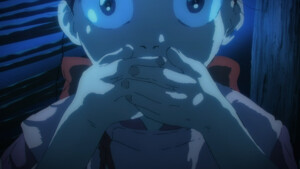
Based on the life of the 14th-century actor and playwright Zeami Motokiyo, this is set to follow the life of one of the most influential figures in Japanese dance and theater, and the first episode explores how Zeami, currently known as Oniyasha in this episode, came to fall in love with the crafts. Most of this episode establishes Japan at the time of Oniyasha's childhood and his personal circumstances: a war-torn nation rife with starvation and limited economic opportunities, with Oniyasha as the son of the head of a performance troupe. Like any child forced to learn their parent's trade rather than come to love it on their own, though, Oniyasha hates dance and cannot see the value it brings to those who attend his father's performances. This changes when Oniyasha witnesses more raw, expressionistic dancing while returning home one night and becomes obsessed with discovering new ways to express emotion with the human body.
While the pacing of the first episode of The World Is Dancing is a little slow, it looked good enough to hold my attention for its entire run. Even outside the fluid, more abstract scene where Oniyasha discovers the breath of creative expression in dance, this episode is filled with sequences of contorting bodies and sweeping camera movements that draw more attention to them. In an age when “hype animation” is often conflated with “excessive layers of After Effects,” the way The World Is Dancing captures the beauty within the movement of the human form feels like a breath of fresh air. I don't know if I connect with this subject matter enough to keep coming back to this show week after week. Still, the visuals are captivating enough that I'm almost certainly going to be thinking about this premiere for a long time to come.
The World Is Dancing is way too good to languish in obscurity on HIDIVE (as many great anime do every season), and I cannot recommend this anime enough to people who appreciate animation or the myriad of art forms and artistic crafts expressed through the human body.
The views and opinions expressed in this article are solely those of the author(s) and do not necessarily represent the views of Anime News Network, its employees, owners, or sponsors.
discuss this in the forum (11 posts) |

back to The Summer 2026 Anime Preview Guide
Season Preview Guide homepage / archives