

The Fall 2025 Manga Guide
Gran Familia
What's It About?
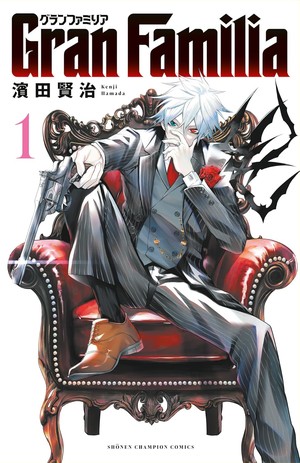
Leo, the young heir to the Grand Familia, dreams of a future where both humans and demi-humans can coexist peacefully. However, when a violent turf war erupts between rival factions, the fragile peace between the two worlds is shattered, and Leo is thrust into a dangerous conflict that could have devastating consequences for everyone involved. As Leo grapples with the legacy of his powerful family and his own ideals, he must confront a world filled with betrayal, shifting allegiances, and moral dilemmas.
With each faction seeking dominance, the underworld becomes a battleground of supernatural forces, where loyalty is tested, and the line between right and wrong becomes increasingly blurred. Amidst the chaos, Leo faces the most pressing question of all: can peace truly be achieved, or is war the inevitable price of survival?
Gran Familia Volume 1 is written and drawn by Kenji Hamada. English translation by Motoko Tamamuro and Jonathan Clements. Lettered by Skylar Rutan. Published by Titan Manga, September 30th, 2025.
Is It Worth Reading?
Kevin Cormack
Rating:
Generally, I'm not a huge fan of fiction about organized crime. I find it difficult to empathize with criminals, no matter how charmingly or nobly they may be portrayed, so I approached Gran Familia with some trepidation. Set in what looks like mid-20th-century New York City, several criminal gangs vie for influence and control of society. Most feared of these is “Gran Familia”, an organization made up of the hated “demi-human” underclass of humans with animal characteristics.
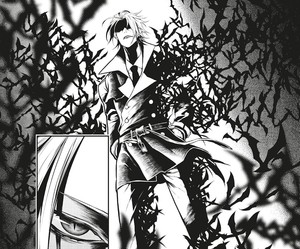
Protagonist Leo works in a restaurant with his friends, who, like him, are demi-humans of varying types. Leo is vampiric, in that he can control blood external to his body, yet despite his apparently monstrous nature, he yearns for lasting peace and acceptance between humans and demi-humans. Sometimes these ideals get him into trouble.
Gran Familia's first volume includes six mostly stand-alone chapters involving several different demi-humans whom Leo tries to help. More often than not, these are cute animal-girls being mistreated by horrible humans, and Leo helps them escape or punishes their abusers. He portrays two personas – one, a happy-go-lucky doofus during daytime, another at night, an intimidating, imposing figure unafraid to use his supernatural powers in the face of injustice.
With expressive and evocative art, Gran Familia looks very good, with effective use of solid blacks for night-time scenes, and plenty of detailed backgrounds during the day to help ground the setting. The many animal girl characters are sweet (and sometimes feral, if need be), while Leo himself is alternately goofy or mysterious.
I'm not completely sold on the story, which I admit struggled to keep my attention, and it took me a couple of attempts to get through this relatively slim book. The plot does start to pick up in the last couple of chapters, so it may be that the series is really only getting started just as its first volume concludes. Despite the decent art and cute girls, I'm not convinced I'm invested enough to read any more, though.
Rebecca Silverman
Rating:

Ah, the noble mafioso – ruthless only in the pursuit of a worthy goal. It's a pretty tired trope, and not necessarily one of my favorites, either, although I don't dislike it as a rule. And I have to give Gran Familia credit for going one step further than most of these stories do: our noble don isn't just a gangster, he's also a vampire.
The most interesting element of this book is the worldbuilding. In Kenji Hamada's world, demihumans, known as “demis,” aren't specific races in opposition to humans. They're genetic mutations, typically born to human parents, and it's fear and prejudice that have put them on the outside of human society. Their names might be familiar to us, but the lore that goes with them isn't playing it strictly by the book. For example, protagonist Leo may be a vampire, but we never see him drinking blood. (There's just one crack about him being anemic.) Instead, “vampire” means that he can turn into a cauldron of bats and control blood, whether his or someone else's. He's also stronger (and hotter) at night, which doesn't seem to be the case for his compatriots, golem Zack (who's more like The Thing than a folkloric golem) and mandrake Rose, who has plant-based powers. Within this volume we also meet an ifrit, werewolves, and lizardmen, so the story's not hurting for interesting and wide-ranging supernatural creatures.
The story itself is a little shakier. With demis having been pushed to the fringes of society, they've formed gangs to attempt to fight back, which, unsurprisingly, has stoked the animosity even further. Leo just wants everyone to get along (although there are hints that such wasn't always the case), and so his main objective is to fight other demi gangs to protect humans…which may not be working out for him, since there's at least one highly placed cop who thinks that the only good demi is a dead one. Each chapter in this volume is largely standalone, which doesn't add much to the sort of scrambled feel of the plot, but it does give a decent sense of how Hamada writes. And apart from one image with the IBIS Grocery is accidentally written as the IBS Grocery, the art's solid. I'm not fully sold on the series, but it's largely unobjectionable and likely to be more appealing if you're a fan of mafia tales.
The views and opinions expressed in this article are solely those of the author(s) and do not necessarily represent the views of Anime News Network, its employees, owners, or sponsors.
discuss this in the forum (22 posts) |

this article has been modified since it was originally posted; see change history
back to The Fall 2025 Manga Guide
Seasonal homepage / archives