

(5 questions; 34s to answer on average
Yes I'll do it later No
The Fall Anime 2025 Preview Guide - Let's Play
How would you rate episode 1 of
Let's Play ?
Community score: 3.6
How would you rate episode 2 of
Let's Play ?
Community score: 3.6
What is this?

She's young, single, and about to achieve her dream of creating incredible video games. But then life throws her a one-two punch: a popular streamer gives her first game a scathing review. Even worse, she finds out that the same troublesome critic is now her new neighbor.
Let's Play is based on the webtoon by Leeanne M. Krecic. The anime series is streaming on Crunchyroll on Wednesdays.
How was the first episode?
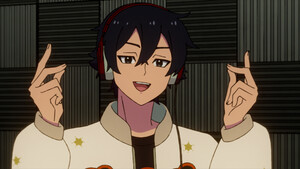
Episode 1 Rating:
Let's Play's first episode sent me on a veritable roller coaster of feelings…just not necessarily about the actual content of the show. It's a fascinating, mixed bag of plot points that range from infuriating to baffling, hitting many points in between. I think, in the end, I come down on the side of liking it, but I'm definitely going to need a second episode to fully decide. That is not, in itself, a bad thing.
Among the positives here, the heroine, Samara (Sam), is very well drawn. Sam has some respiratory condition and combines that with a whopping dose of anxiety; at one point, when her boss Charles Jones is making her uncomfortable, she pictures a toothy monster labeled “confrontation” looming menacingly behind her. Her anger and upset often manifest in an asthma attack, and there's a strong implication that her over-protective dad may be part of the problem – he really can't leave her alone, even when that would be the right thing to do for her. Sam rarely speaks up in this episode, and the one time she does isn't for herself, but for her friend Lucy.
I'm torn on the entire office politics aspect here. Lucy is the administrative assistant, and while she may be perfectly fine at her job (which, honestly, I'm not sure about), the situation where Charles was about to potentially ream her out isn't one where Sam should have interfered: Lucy's behavior with the delivery man was inappropriate, because her obvious flirting was making him very uncomfortable. Meanwhile, Charles always asks Sam to do Lucy's tasks when Lucy's not around and never lets her sit in on meetings…but then he literally offers her the shirt off his back when she gets coffee spilled on her? It's uneven characterization and what feels like awkward ideas about office culture, although the latter could be outside my wheelhouse.
In any event, the inciting incident of the story doesn't happen until the end of the episode, when a popular streamer pans Sam's indie game because he couldn't be bothered to read the directions, and her world comes perilously close to crashing down. It's relatable to anyone who's ever put creative content out into the world, and the fact that this Marshall Law guy can destroy years of her hard work because he thought he knew what it was all about is maddeningly real. This is where I want to see Sam find her voice and/or sic her dog on him. If the story shifts its focus away from questionable (and dull) office politics, I think it could be good.
I'm not sure why this show annoys me so much, but I somehow found the second episode even more irritating than the first. My main gripe in the first episode – or at least the bit that's stuck with me over the last week – is the situation with Lucy, the administrative assistant at Sam's job. Lucy's not in this episode, but now there's a new side character who gave me a similar case of rage, Miss Whipple. Apparently the landlady of the building where Sam and Marshall live, she first carries off Sam's dog then barges into Marshall's apartment, despite him very clearly not wanting her there. Like with Lucy, it's played off as something silly, but it just rubbed me the wrong way. I suspect this is an indication that Let's Play's sense of humor is not one that I share.
That's a shame, because I can relate to Sam's crippling social anxiety. Her dreams of telling Marshall off for eviscerating her game via misunderstanding its point are good, and he really does need someone to say something. While it's possible that he doesn't fully understand his reach and popularity (although, since he seems to be making a living as a livestreamer, that doesn't seem likely), he still has tons of people to jeopardize Sam's future as a game designer. Even if he's streaming for the approval factor, to make him feel better about himself, he still needs to be aware of what that means for other people. Games aren't made in a vacuum, and neither are ViewTube videos.
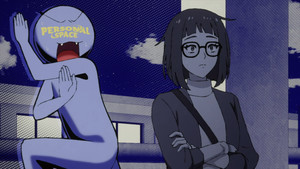
Based on the opening theme, it looks as if all of the main players in this series are going to be grappling with their mental health. I applaud that, and I do like the way those issues are illustrated this week with Sam's Personal Space self having a freak-out beside her. Sometimes that's really how it feels, like your anxiety or panic is an entirely separate being that hijacks your body. But I'm not enjoying this series despite that, and in both episodes, it has had a character who seems to undercut that laudable idea. So I'm out. This just isn't working for me.

Episode 1 Rating:
A Western, woman-focused romance webcomic is theoretically a unique source material for an anime. Not that Let's Play is playing in wholly uncharted territory, as the vibe of this idea recalls series like Recovery of an MMO Junkie or My Love Story With Yamada-kun at Lv999. However, the vibe of it all is a bit distinct, from the colorful, comical character designs to its particular flavor of office politicking. It's got an earnest energy to it, even as I know I'm someone who's simply never going to be on board with the "gamer who approaches everything in life in gaming terms" character framework.
The interesting elements that frame Let's Play paint a story with potential: leading lady Sam's struggles with chronic illness, how that informs her engagement with playing and developing games, and how it continues to affect her office work. There's something there. Similarly, the conflict that emerges by the end, in Sam's game being slandered by a streamer looking for reaction bait, is ripe for the particular kind of story this setting and setup could follow. There's plenty to explore about unconventionality and friction in game design, and I'm curious to learn what the 'proper' way Sam meant for her game to be played was. And hey, indie platforms delisting games due to bad-faith complaints is a pretty timely topic these days!
Unfortunately, that's all just teasers of the plot framing and an introductory storyline in this episode that is…a pretty basic daytime drama about Sam navigating the everyday interactions of her spreadsheet job. It even undercuts opportunity for heavier conflict in the name of, seemingly, not getting too melodramatic at the start. Sam's not actually being excluded from work based on sexism—she's actually a nepo hire being primed to take over the company! Her supervisor isn't harassing her with power or sexual coercion—he's actually just testing her to see if she's got leadership potential. It helps communicate the ups and downs of being Sam to the viewers functionally enough, but it's so boilerplate as an introduction and has little enough to do with the characteristic gaming plotlines that it feels overextended. It's a work meeting that could have been an email.
It means that Let's Play is left coming off like it's barely just started, before Sam's eye-rolling, coincidental encounter with the reaction-bait streamer kicks things into…what the plot might actually be about? This gets filed under the dreaded "wish I liked it more than I did" category. And maybe it will improve as the plot actually gets underway and some of those themes I highlighted are explored. But what's here really isn't going to hook anybody unless they're especially interested in American-style office drama in an anime or a noticeably high quotient of attractive blonde dudes filling out the cast.
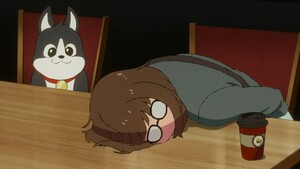
Any tentative hope I had had for Let's Play to find its footing has gone nowhere as of this second episode. Astoundingly, even less actually happens this week than the office-drama distraction that kicked off this so-called story. The sum total of the "conflict" explored in this second episode is Sam getting up the nerve to confront Marshall about how his stream affected her. By the end, she still hasn't—and has instead been interrupted by a new surprise, probably-misunderstood character introduction. It makes the episode feel exhaustingly over-long, with a sense of little forward momentum—like it's just wasting the audience's time.
The anime tries to mask the lack of proceedings by dressing up Sam's stress in different setpieces against Marshall. She gets pulled into visiting his home after he moves all his stuff in. She bumps into him while he's out jogging. She exchanges notes with him about the loudness of his streaming. But this amounts to little more than changing out the background of a level that's otherwise identical to the previous one—each situation is simply Sam getting nervous about talking to Marshall, questioning herself about whether she might actually like him despite the issues he's caused her, and shirking off to swear she'll do better next time. Rinse and repeat. It means there's not even any real drama apart from that baseline stress, so viewers are simply stuck watching the riveting action of Sam flitting between her work and personal life while worrying about interacting with this one particular person.
It's not like Let's Play is offering any salient commentary on the simmering gamer culture allegedly powering these problems anyway. There's that momentary point about how annoying it might be to share a wall with a loud gaming streamer, but that's resolved as Marshall graciously confirms he's going to be soundproofing his room. The narrative also seems to argue that creators like streamers—who command large, impressionable bases of fans—don't have to assume any responsibility for said fans' actions when they go off on targeted raids of other people. (At this point everyone knows that's patently not true, and pretending it's not is disingenuous.) And speaking of fans, I can't even let myself think too hard about the anime showcasing a popular streamer like Marshall getting cozy with a couple of clearly infatuated underage fangirls, letting them hug him while he's shirtless and sweaty. "He looks so kind," Sam says, taking this as a sign of his decency. Girl, no.
Two episodes in, Let's Play can't even get past its first level. It's stuck relitigating a five-minute conflict multiple times over the course of a full time-slot, not even actually advancing it before the end. I wanted to give this show the benefit of the doubt at first—and I can sympathize with the sorts of real-world anxieties that would make Sam drag her feet like this in a situation that didn't also purport to serve as a compelling narrative. And on that note I do appreciate the accuracy in showing how getting bombed with a mob of negative reactions, however bad-faith, can make you truly doubt the quality of your own creations. But any good will the show had built up for its relatability has soundly been exhausted by this absolute drag of a second episode.

Episode 1 Rating:
The very first thing you will notice about Let's Play is that its production values are…not great. It would be one thing if the show dialed things back in the visual department for the scenes that take place in the real world that our heroine, Sam, occupies when she's not gaming, but the sequences of spell casting and dragon fighting are just as flat, stiff, and lifeless as every other sequence in the episode. It's a bad first impression, that's for sure, and I would be lying if I said that the show manages to find its footing again after stumbling so hard out of the gate, at least so far as its animation is concerned.
It's a real shame, too, because the story and characters of Let's Play show a lot of promise, even if they're not likely to blow anyone away, either. I'm always a fan of getting romances about real adults with real jobs, and I'm doubly a fan when those jobs involve the ins and outs of the gaming industry. Plus, Let's Play is attempting to tackle some resonant issues of gender and life as a modern salary worker in the tech industry, which could add some much-needed dimension to the traditional rom-com tropes (especially when we're not going to be getting any of that extra dimension from the actual artwork anytime soon).
Sam is a perfectly fine leading lady; her pal Lucy adds some comic energy to the scenes that she is in; and Sam's sexy blonde boss Charles is good for dealing with crises that specifically involve inviting Sam into his office while taking off his shirt, and I promise that this is actually one of the very few instances in which that situation doesn't automatically classify as workplace harassment. At least, I think we were supposed to take that scene as being sexy and genuine? The whole sequence kind of gets derailed when Sam has to lecture Charles about trying to fire Lucy, if I'm being honest.
This actually highlights another issue I had with Let's Play, which is its inconsistent tone. I do not mind that it tries to go from a saucy rom-com contrivance to an opportunity for Sam to get on a soapbox about Charles' managerial practices and then straight into a comedy bit about Sam's cartoonish CEO dad being incredibly overprotective—I just wish that the show did a better job of making me feel the different emotions I think these scenes are trying to convey. If the shirt exchange scene was meant to be steamy, it merely came across as mildly awkward in a vaguely cute but mostly muted way. Likewise, Sam standing up to Charles and defending Lucy was framed as being a somewhat climactic moment of our heroine standing up for herself and speaking her mind, but we barely know any of the characters enough to be moved by this development, and the art is so dark and plain that nothing is inspiring to look at, either. At the very least, the gag where Sam's dad imagined getting arrested for murdering Charles almost made me chuckle out loud.
In the end, I think Let's Play is going to occupy the regrettable territory of “A mediocre anime that might convince me to read the source material someday.” Maybe the next episode will pick up now that we've been introduced to the streamer who clowns on Sam's game that she will inevitably fall in love with, but I don't know how much higher this show can score with such bland and often ugly visuals.
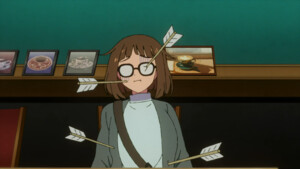
When it comes to romantic comedies, a show has to get both halves of the equation right to really work. The premiere wasn't especially funny, but it was also so preoccupied with just establishing Sam as a main character that it didn't really have time to get into the romantic material, so I was willing to give it the benefit of the doubt and wait for the other half of our leading duo to arrive. Even if Let's Play has a weak hit-to-miss ratio when it comes to the jokes, it could at least do better at getting us invested in Sam's inevitable relationship with gaming ViewTuber Marshall Law, right?
Unfortunately, as of Episode 2, Let's Play is now struggling on both the romance and the comedy front, which is not a great sign for the series. It isn't just the weak writing that is holding the show back, either; its biggest issue by far is its generally flat and lifeless animation. Every time I have to cover a romance anime, I always go back to how important it is to establish chemistry between the leads, which is an especially difficult feat to pull off when you aren't working with flesh-and-blood humans. In Let's Play's case, there simply isn't enough life in this anime's artwork or character animation to even convince me that these are real people we're dealing with, much less people who I want to see smooch and go on dates.
The show's lighting is strangely underbaked, giving every scene that takes place at night the look of something that was filmed through a screen door. The facial animations are only accomplishing the bare minimum of depicting the emotions Sam or Marshall are feeling, which leads to critical scenes like their very first meeting, where “cute” comes across as clumsy animatics that you might find on an amateur YouTube channel. It's even worse when we're stuck with exposition and dialogue-heavy scenes featuring Sam's crew of friends, who all sit around smiling like eerie mannequins. At the same time, they dispense cheap platitudes about how awesome Sam is and explain to the audience what her internal conflicts over game development are.
When it comes to adaptations, I usually try to stay away from the source material if I am already unfamiliar with it, since I want to give the anime a chance to stand on its own two feet. I was so flummoxed by Let's Play's utter lack of vivacity, though, which led me to check out the same scenes from this week's episode on the Tapas website, where the Let's Play comic is hosted. Readers, let me tell you, this was both a very good and a regrettable decision on my part. The benefit of reading a few pages of Leeanne M. Krecic's original comic is that I can absolutely see why this story took off, since the art is so much more unique and interesting than the sanded-down, generic vision that the anime represents. The sequences play out mostly the same, but Sam and Marshall are so expressive and human-feeling that the jokes land better, the chemistry actually resonates, and the product as a whole works.
The downside, obviously, is that it is now impossible for me to unsee how dirty this anime has done the source material. I would go so far as to say that this production drops the ball so much that it doesn't even really represent the same story at all. I cannot say I will be watching any more of the show any time soon, but its failures inadvertently made me more interested in reading the comic. That may be the Let's Play anime's one and only true success.
Subscribe to Crunchyroll here!
The views and opinions expressed in this article are solely those of the author(s) and do not necessarily represent the views of Anime News Network, its employees, owners, or sponsors.
discuss this in the forum (261 posts) |

this article has been modified since it was originally posted; see change history
back to The Fall 2025 Anime Preview Guide summoned by Crunchyroll
Season Preview Guide homepage / archives