

Summer 2026 Manga Guide
Secondhand Sisters
What's It About?
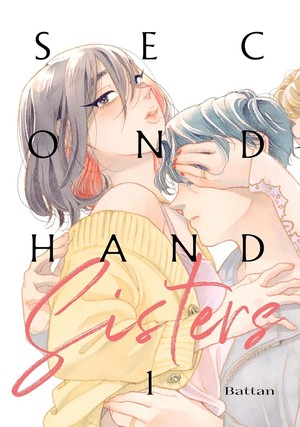
Ever since they were little, Jun's charismatic younger sister Ran has had a habit of “borrowing” her favorite things and making them her own. It always annoyed Jun to lose her toys, clothes, and other belongings, but she saw it as just part of having a younger sibling-until the day Ran claimed her boyfriend, too. The two haven't spoken in eight years when they're reunited at their mother's funeral. Ran and her husband-Jun's ex-want to move into the house their mother left behind, but Jun will be damned if she lets Ran take one more thing away from her. With neither side willing to budge, the three find themselves living under the same roof, and it's not long before old resentments, secrets, and passions threaten to unravel their lives.
Secondhand Sisters has a story by and art by Battan. English translation is done by Mei Amaki and lettering by Kate Blakeslee. Published by Kodansha USA (June 2, 2026). Rated T+.
Is It Worth Reading?
Rebecca Silverman
Rating:
Sisterhood can be difficult, not the least because every sibling has a different set of parents. I don't mean that genetically, although in the case of sisters Jun and Ran, they do have different fathers; rather, I'm talking about how each sibling is the product of their parents' parenting in the moment. I'm the eldest daughter; my experience with my parents is drastically different from my youngest sister's and still substantially different from my middle sister's. Our parents are the same two people, and they didn't mean to treat us differently – it's just the way it goes based on age and a variety of circumstances.
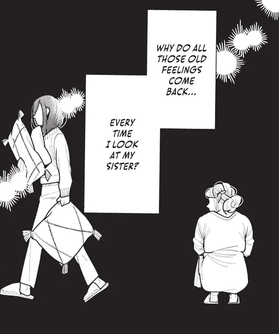
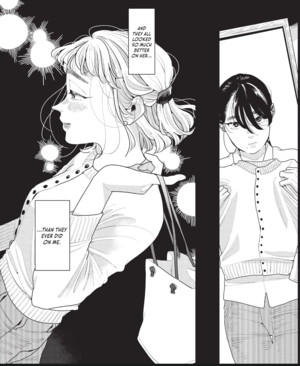
Jun grew up always feeling – with real justification – that her younger sister Ran stole everything from her. This isn't in her head: the opening scenes of the manga show Jun looking for her favorite toy only to find Ran has taken it, and years later she unearths it in a box marked “Ran, Attic.” Ran takes her clothes and eventually her boyfriend, and from Jun's perspective, she's always been allowed to do so. And honestly, it's hard not to take Jun's side, because between flashbacks and present-day scenes, it's clear that she's not making this up.
Interestingly enough, getting Ran's perspective towards the end of the volume doesn't actually help. It does explain why she is the way she is – she's punishing Jun for what she sees as their mother's favoritism (and she might be right) – but it doesn't excuse it. Are these my feelings as the oldest sister talking? Possibly, but I think that's a strength of Battan's work here: she gives us a story that can change depending on our own position in our families, offering evidence that both sisters have at least one leg to stand on without forcing us to take sides. If we do, that's on us. It's a remarkably effective way to write this kind of story, and it's backed up by Battan's delicate, grounded artwork that simultaneously shows us more realistic human body shapes than most manga and wispy, surreal curls of cigarette smoke stretching through the house's rooms.
Is the real person to blame here the sisters' mother? We'll never know; the story starts with her funeral. I'm currently more inclined to blame Jun's ex-boyfriend/Ran's current husband, who had to know that he was in the wrong getting between the two sisters and clearly is unhappy with his choices. He's ripe for Jun to prey on to get some kind of revenge on her sister, even as Ran holds him like a spider in a web. The aunt who (I suspect) deliberately didn't tell either sister that the other was planning to move into the old family home may come to regret her actions. But at the end of the day, Jun and Ran will only have themselves to blame as this engrossing trainwreck slides further and further off the rails.
Lauren Orsini
Rating:
If I had to pick one word to summarize Secondhand Sisters, it would be “juicy.” Every page of this story oozes with hot gossip, unhealed wounds, and bubbling rage that can hardly be said to be below the surface. From Battan, the creator of the equally turbulent manga Run Away With Me, Girl, this new title offers even more of the cat-eyed homewreckers we can't help but root for. Sisters is just as sapphic as her previous works, but its focus on family members makes it even more chaotic. It's so deliciously messy that each of the dual protagonists can be read as both a heroine and a villainess. The girls are fighting (complementary)!
Jun is the quintessential big sister: serious, straitlaced, and responsible. Her little sister Ran is the fun one, the sexy one, and (in Jun's opinion) the selfish one. The curtain rises on their mother's funeral, the perfect occasion to force these estranged sisters into proximity once again. Of course, Jun has organized the entire thing, and of course Ran arrives late with her eyeliner intact and her handsome husband in tow. Jun has decided to move back into their childhood home, and, unbeknownst to her, Ran has made the same decision. The reasonable thing to do would be to just let Ran have it. But Ran has a habit of “borrowing” Jun's things and making them her own—and Jun will be damned if she lets Ran take one more thing that belongs to her. This impulsive decision is the impetus for some truly delicious drama as these two sisters who hate each other begin cohabiting under one roof, compelling them to finally examine their oldest hurts and the inciting events that led to their schism in the first place. Like Battan writes in the epilogue about her inspiration for the story: “Sisters are great… So are women fighting… And so this manga was born.” And it gets even juicier with Ran's husband in the mix, treating both women like his personal harem (apparently, he is also a fan of sisters and women fighting).
Just like in Run Away With Me, Girl, Battan demonstrates her prowess at telling a provocative tale that feels like something you'd hear from your most outgoing friend spilling the tea at girls' night. Battan has returned to the types of heroines she and her readers love the most: Jun, the uptight librarian type who is reduced by fury and passion to her base instincts; and Ran, the flawlessly cat-eye-lined social butterfly whose flirty nature conceals her pain. Both characters are lovingly rendered with all their vulnerabilities and loose ends, in a way that makes me want to root for them, even as they continue to swap heroine and villainess roles. Battan's affection for these characters is contagious, and I will gladly read as many stories with these same archetypes as she is willing to write. I think Secondhand Sisters has the potential to be even messier than Run Away With Me, Girl, and I can't wait for Volume 2.
Kevin Cormack
Rating:
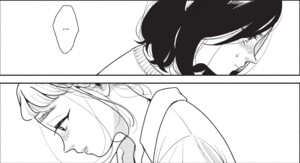
Sibling relationships can be difficult and complex. In the case of Jun and Ran, toxic. This manga from the author of the excellent three-volume yuri manga Run Away With Me, Girl is an often difficult read, as the relationship between the two sisters is so difficult, buried beneath years of unspoken resentment. Neither Jun nor Ran is completely innocent of wrongdoing here, and they're both flawed, stubborn human beings.
Initially, we see events mainly from Jun's point of view. It's easy to judge Ran through her eyes: selfish, entitled, tone deaf. Understandably, Jun hates the sister who not only used to steal her possessions without asking but also stole – and married – the love of her life. Jun can't stand to even be in the same room as her sister, so the prospect of them living together in their deceased mother's house seems almost unthinkable.
Jun's nothing if not pathologically stubborn, while Ran seems to make decisions that affect other people without a moment's thought. It's hard to gauge whether she's thoughtless or just scatty, or perhaps both. In later chapters, we begin to understand Ran's point of view and her tortured relationship with the mother who rejected her and favored Jun instead. Neither sister seems able to communicate their true thoughts to the other.
In the middle of all of this is Rikkun, Jun's ex and Ran's husband. What responsibility does he bear in this mess? He's almost certainly not innocent, and although sparks haven't quite begun to fly before the conclusion of this first volume, I wonder if he's heading towards committing infidelity with his former lover. Ran certainly seems insecure around him, so their relationship doesn't seem rock-solid.
I don't really like any of the three main characters in this drama, as none of them can be at all honest with one another; they seem wrapped up in their own worlds. This is likely the point. There's no one I'm really rooting for; I think they should each get a lawyer and divide up their mother's estate and probably go their own separate ways. That probably wouldn't be much of a story, though. I'm unsure if I want to read any more of this, as deep-seated familial resentment isn't generally what I want to read about for fun, though I commend author Battan for their realism.
The views and opinions expressed in this article are solely those of the author(s) and do not necessarily represent the views of Anime News Network, its employees, owners, or sponsors.
discuss this in the forum (23 posts) |

back to Summer 2026 Manga Guide
Seasonal homepage / archives