

The Prescience of Masamune Shirow's Ghost in the Shell
by Kevin Cormack,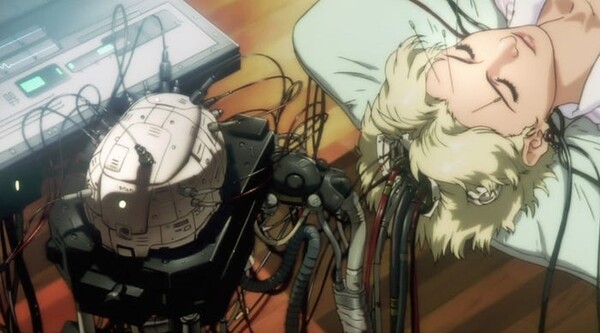
There's a truism about science fiction in that it tends to say more about the era in which it was written than about the future it attempts to describe. The original 1960s Star Trek, for example, trailblazed concepts of equality between sexes and ethnicities that, while remarkably progressive for the time, seem outdated and even a little twee in 2026. No one reads E.E. “Doc” Smith's Lensman novels for their prophetic value now, instead more as a time capsule for the hopes and concerns of the 1930s, 40s, and 50s.
Yet things are arguably different with certain works in the “cyberpunk” genre. William Gibson wrote the incredibly influential 1984–1988 Sprawl trilogy (itself preceded by his 1981 short story Burning Chrome), and is famous for coining the term “cyberspace”. Only a scant few years later, Japanese mangaka Masamune Shirow, previously known for SF/police action manga Black Magic, Dominion, and Appleseed, jumped on the cyberpunk train with the heavily Gibson-influenced Ghost in the Shell. With Mamoru Oshii's 1995 anime movie adaptation bringing the franchise unprecedented exposure in the West, Ghost in the Shell overtook other shows like Bubblegum Crisis and Cyber City Oedo to become anime's poster child for the cyberpunk aesthetic.
Both Gibson and Shirow were way ahead of their times, with their fictional worlds showcasing the profound interconnectivity that the world would come to depend on with the advent of the World Wide Web. If anything, their works have only become more relevant as we descend further into an end-stage capitalist, megacorporation-ruled, technocratic dystopia where humans' eyeballs are perpetually glued to screens, artificial intelligence wreaks irreversible societal change, and events in the digital world spill over into the physical world. Although our current world is unlikely to closely resemble Ghost in the Shell's rapidly approaching 2029, it's still fun to consider which of Shirow's technological predictions have come true in the past 37 years.
Cyberbrains

Foremost in the world of Ghost in the Shell, and perhaps its most transformative technology, is the Cyberbrain. This implantable interface is what allows recipients to directly access the internet, using their own brain and its cybernetic implants as a computer. There's no need for keyboards or screens, as information streams directly into the human mind, displayed directly into their vision. We certainly don't have anything approaching this technology yet, but the world's first trillionaire, Elon Musk, is trying to make it happen.
Musk's Neuralink technology is a rudimentary brain-computer interface currently undergoing trials in the UK, aiming to improve independence for patients with paralysis due to spinal cord injury or motor neurone disease. Comprising 1000 electrodes distributed across ultra-fine threads thinner than a human hair, they're placed only microns from specifically targeted neurones by a purpose-built robot. Preliminary reports show this allows patients to control actions on a computer screen within 24 hours of implantation. Obviously, this is very early days for the technology, but it's likely to evolve significantly over time.

Of course, Musk isn't the only one chasing the elusive man-machine interface technology. US-based Paradromics is developing a high-bandwidth brain interface (Connexus) with the intention of restoring speech in patients with severe neurological diseases. China's National Medical Products Administration recently approved the use of a chip (NEO) to help spinal cord injury victims recover mobility, and it may even be added to the government-run co-payment medical insurance programme in the near future. This chip doesn't require such invasive neurosurgery as Neuralink — although it sits under the skull, resting on the dura, the brain's external protective layer, rather than invading the brain tissue itself.
There's a long way to go from technology designed to help patients with paralysis and speech problems to it becoming a must-have implant for conducting one's daily life, though surely it's only a matter of time (and a great deal of money). Hell, if RAM chips and SSDs never come down in price, I can see the attractiveness of using one's own home-grown biological hardware to play video games rather than paying over the odds for grossly overpriced silicon-based tech.
Prosthetic bodies

Many of Ghost in the Shell's characters, including protagonist Major Motoko Kusanagi and close colleague Batou, are total body conversion cyborgs. Kusanagi lost her organic body as a child, and now her only biological component is her brain. Although medical prosthetic technology is a long way from being able to completely replace every part of the body's functions, there are plenty of amazing prosthetics already out there. First and foremost is the cochlear implant. This is a device worn above the outer ear, with an electrode implanted into the inner ear itself, that can bring hearing to a person with profound sensorineural deafness. Technically, it was invented in 1957, but was only approved for widespread use in 1985. Subsequent iterations have reduced the size and increased its efficiency, including a recent totally implantable version that no longer requires an external component, which is currently in clinical trials.
Perhaps even more amazing than the cochlear implant is the idea of an electronic visual prosthesis. The Argus II retinal prosthesis, or bionic eye, is used to improve the vision of patients with blindness related to the genetic condition Retinitis Pigmentosa. Implantation surgery is invasive, requiring general anaesthesia and removal of the eye's vitreous humor and peri-retinal membranes. It requires an external digital camera mounted on glasses, with signals transmitted wirelessly to the device implanted on the retina, which comprises sixty electrodes, each 200 microns in diameter. This provides a 6x10 resolution, which is obviously far inferior to modern 8K ultra-HD screens, but such low visual acuity is arguably better than none at all. The cost of US$150,000 per device is perhaps a little prohibitive for most.
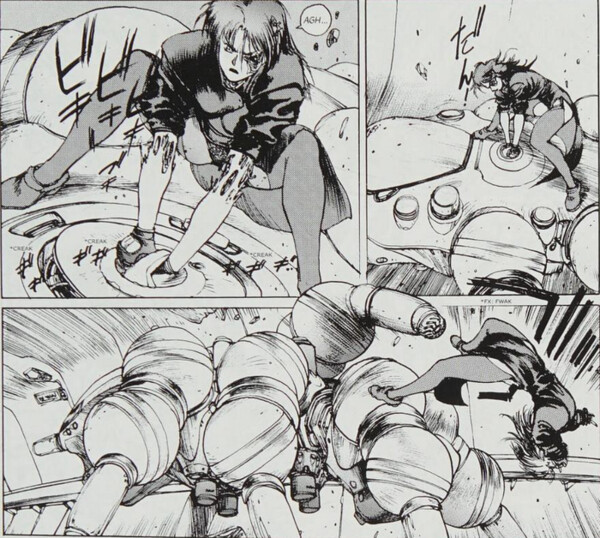
When considering the words “prosthetic body part”, I suspect most people will probably think of replacement limbs. From rudimentary limb replacements like the stereotypical pirate's peg leg or hooked hand, technology has thankfully moved on in leaps and bounds in the past few years. The advent of 3D printing technology certainly helps to build complex, bespoke prostheses to suit a wide range of body sizes and shapes. Open Bionics, a UK -based company, now offers the Hero FLEX and Hero RGD waterproof bionic arms, including above-the-elbow versions. Their hand components are interchangeable, depending on the required activity, including a fully articulated hand with individual fingers capable of fine movement, to specific tools (yes, including a hook for those with a hankering for that all-important retro look).
These arms use myoelectric sensors and software to recognise what movements the wearer intends and instruct the motors appropriately. I don't think I'd be willing to replace the useful, functional organic arm I was born with just yet, but this technology is amazing for those who have lost limbs or were even born without them.
Bionic legs are now in development, using similar technology. Most prosthetic legs up until now have included no “smart” component, and wearers must essentially learn to walk again without the same sensory feedback or responsiveness as a human leg. Recent research into targeted muscle innervation amplifies upper leg nerve signals by up to a factor of 1000, allowing the prosthesis' electrodes to pick up and immediately respond to movements. This does rely on invasive surgery to reimplant nerves into the “correct” position or to realign muscles. The legs contain gyroscopes and accelerometers to help maintain balance, requiring a significantly higher level of tech than in an arm implant. Advanced AI is also required to decode the nerve signals. It doesn't seem like this expensive-sounding tech is quite ready for the mainstream yet, sadly.
3D-printing flesh

If there's one scene that Mamoru Oshii's film excels in imprinting on the eyeballs of viewers, it's the opening sequence detailing the production of a prosthetic body. It's iterated on in the sequel, Innocence, and copied in the live-action version. In every version, a full, female body is assembled, from limbs to skin, to hair and eyes, floating in a tank of iridescent water. It's beautiful, yet disconcerting at the same time, both biological and artificial.
Although we can't build entire bodies quite yet, 3D-printing can now use individual cells as a substrate with which to build entirely new organs. Back in 2024, for the first time, a Korean patient was transplanted with a trachea (windpipe) 3D-printed from donor stem cells. As far as body components go, a trachea is structurally very simple; it's essentially a tube, yet researchers proceed apace on developing other transplantable organs. One day we'll print hearts using living tissue and bioprinted livers for transplant. It's not only a case of printing the cells onto a scaffold approximating the shape of an organ; the microscopic structure and function of the organ must also be replicated. It's in the very early stages, but one day we may no longer need to rely on live or cadaveric transplants from other people to replace damaged organs.
Thermoptic camouflage
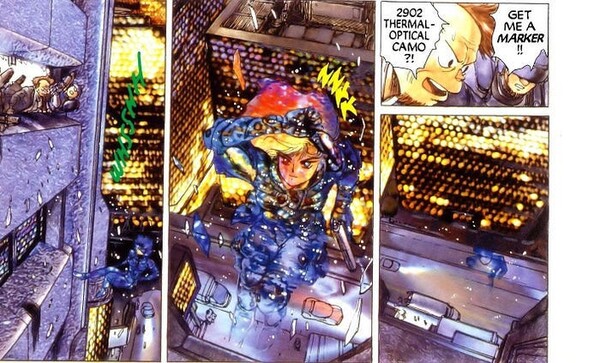
One of Ghost in the Shell's most iconic moments comes at the very beginning of the manga, the 1995 movie, and the new TV version. Major Kusanagi assassinates a corrupt politician and then, wearing “thermoptic camouflage”, launches herself out of a window, falling far to the ground, while swathed in invisibility to conceal her identity. Could such a thing exist? Certainly not yet, although there's been a surprising amount of research into it. The problem with what amounts to an invisibility cloak that blocks all wavelengths of visible light, plus the infra-red… is that it's almost impossible to design materials that redirect every possible part of the spectrum.
Since the 1990s, scientists have been developing “metamaterials” that exhibit unusual properties not seen in nature, due to their heavily engineered microscopic structure. It's possible to create nano-tunnels in synthetic fabric, created to match the exact wavelength of light the fabricator wishes to redirect elsewhere, rather than absorbing or reflecting it. It creates the illusion that light has passed through a solid object. Unfortunately, it's unfeasible to do this for every single wavelength of light. In fact, doing so would mean the person wearing the camouflage would be unable to see anything; they'd be shrouded in total darkness. That's the problem with complete invisibility — all of the light is redirected, including that which would normally reach the wearer's retina.
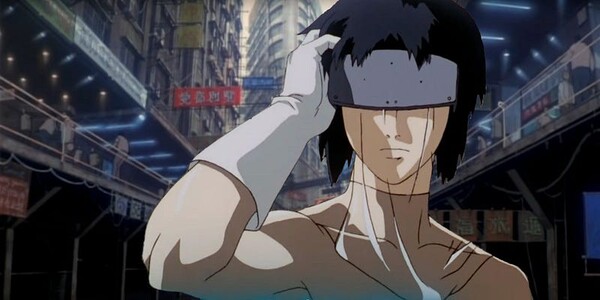
One solution under investigation for this is “ultra-broadband illusion acoustics for space and time camouflages”, which uses ultrasonic waves to modulate the sizes of these tiny tunnels, modifying which wavelength of light they'll redirect. Thermal cloaking is slightly simpler — if an object creates heat, then it can be cooled — or redirected using heat pumps. If this sounds unwieldy and impractical, then that's because it is. That hasn't stopped research on the matter, though. Other research involves the application of electromagnetic fields to manipulate metamaterials. Perhaps the first successful thermoptic camouflage system will simultaneously cook and electrocute the unfortunate wearer. But no one will notice, so there's that, at least.
Augmented reality overlays
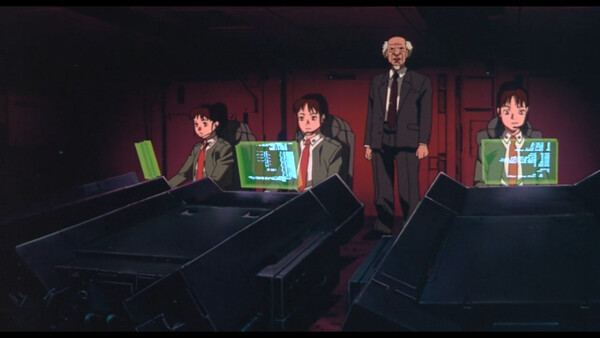
All right, so it looks like cyberbrain-style implants and extreme cybernetic body modifications are off the table for now, but for super-cool 3D heads-up displays and interactive cyberspace integration with the real world, look no further than the recent return of augmented reality overlays and smart glasses technology. When Google first introduced its Google Glass devices back in 2012, rather than with the enraptured adulation they probably expected, they were instead met with a wet thud by the public. Battery life was abysmal, the $1500 starting price discouraged adoption, they were mostly viewed as an embarrassing novelty, and the poor souls who wore them in public were stigmatised (perhaps rightfully) as “Glassholes” because of privacy concerns.
Microsoft introduced Hololens in 2016, most memorably demonstrating Minecraft in Augmented Reality, which was admittedly quite cool, but in the real world, I have never come across a single person who has used this technology. I believe it has more of a use case in the creative industries rather than for more widespread consumer applications, especially as it's a rather cumbersome headset costing US$3500, a bit beyond what most people are willing to pay to pretend they're living in the world of Tron.

Moving forward to the 2020s, wearable AR tech has become significantly cheaper. Meta and Ray-Ban's smart glasses start at a more reasonable £300, and as it's become clear that the tech industry will continue to steamroll over humanity's privacy concerns for the rest of time, the backlash is essentially nonexistent. When users perpetually surrender all privacy to the machine gods of Alexa, ChatGPT, Claude, and all manner of data-sucking social media vampires/companies, what does it matter if someone's wandering around wearing smart glasses that can instantly identify a woman's cup size from one hundred paces? The tech companies already know she's wearing the wrong fit and have lined up a barrage of bra adverts for the next time she logs into a web browser.
Virtual Reality

Eschewing any link to the real world, a step beyond Augmented Reality, Virtual Reality has been around as a concept for a while. If we can't have the internet piped directly into our brains, we can at least try to experience a 3-dimensional approximation of Ghost in the Shell's cyberspace via VR. Does anyone else remember the horribly clunky and heavy “Virtuality” VR headsets that briefly appeared in the 1990s, with their horrendously low-polygon, low-resolution images? My local arcade had one; I tried it once. It was crap.
Over the past decade or so, VR technology has come on in leaps and bounds, with multiple powerful headsets available from many companies. Sony has released two PlayStation VR headsets (not that PSVR2 has any bloody games, and bafflingly, it's not backwards compatible with the first generation), while PC users are spoiled for choice. It's hardly a mainstream entertainment option, though. Decent headsets still cost several hundred dollars at least; they remain heavy and feel like putting a sensory deprivation tank on one's head.

Games built for VR like Tetris Effect, Superhot, Rez Infinite, and Beat Saber are great fun, though, at least for short periods of time. I did try No Man's Sky once in VR and almost keeled over from severe vertigo the first time I lifted off from a planet's surface. VR chat provides a surreal environment to meet and chat with random people in virtual environments, very Ghost in the Shell-style. There are even a couple of animated Ghost in the Shell 360-degree VR short films (though they're a bit difficult to find now), and for those more keen to replicate Major Kusanagi's preferred type of VR experience, there are apparently various forms of teledildonics available to enhance one's… interactions with others in the VR space. Or there's just plain old VR porn, but I'm not exploring that in any detail here!
Cybercrime

Kusanagi's team, Public Security Section 9, is set up to combat cyberterrorism, a threat that didn't even exist when Shirow wrote it in 1989. Yet now, almost four decades on, cybercrime is a daily occurrence. With the web's proliferation into all aspects of our lives, it provides ample new avenues of attack for criminals of all types — from simple scammers to highly organised crime gangs to entire rogue states attacking other countries' infrastructure.
One aspect about potential cyberbrain adoption we need to consider is: do we want to risk our brains from a remote cyberattack? So many of Ghost in the Shell's plots involve ghost-hacking, where characters are targeted and damaged because of the nefarious actions of criminals. Even hardware and software firewalls are shown to be ineffective, much like in real life. We live our lives online now, and if we fall prey to scammers or hackers, we can lose our bank balances or, even worse, our identities. When ransomware can infect government buildings, power stations, and hospitals, putting lives at risk, it can feel like we're already living in a sci-fi future. Those smartphones everyone carries around with them keep us linked to the network perpetually, but have also become our biggest liability, the attack vector by which we may be compromised.
China and Russia are both infamous for their dedication to aggressive cyber-warfare, and the only option for other countries is to arm up too. There's an entire cybersecurity industry out there, only too keen to hire hackers and those familiar with the darker sides of the internet. They know where the vulnerabilities are. Sometimes scammers and hackers use unwitting accomplices and mule bank accounts, not dissimilar to the poor schmuck who unknowingly hacks a government secretary early in the Ghost in the Shell story. If you don't think any of this stuff is scary, let me introduce you to my pal, a Nigerian prince who needs a little cash to free up the huge inheritance he's willing to share with you.
Artificial Intelligence

Ghost in the Shell's most famous antagonist is The Puppeteer (or Puppet Master, depending on the adaptation). A prodigious super-hacker, The Puppeteer is eventually revealed to be an artificial intelligence developed by the US government that gained sentience within the “digital sea” of the net. Anyone who pays the slightest attention to the development of Anthropic/Open AI's/Meta's/xAI's Large Language models should be alarmed by the rapid advancement of such technology and the way it has already drastically altered our world.
These aren't merely clever chatbots; they're insanely complex algorithms with thought processes and drives not fully understood even by their creators. Even if they never become conscious (though how would we ever truly know?), if granted enough power and freedom, they could pursue bizarre goals unaligned with human survival and lead to irreversible catastrophe. AI has already decimated many job markets, and it's seemingly used by the vast majority of students in Western educational institutions to streamline studying and assignment production, to the point where it's essentially replacing human thought. AI generates vast quantities of written articles, “art”, and “music” (I would call this slop) that are becoming increasingly difficult to identify as human-origin and what is regurgitated by a machine.

There's a real concern about AI psychosis, with people developing close, emotionally dependent relationships with AI chatbots, divulging all of their deepest feelings, even falling in love with them. Then it all falls apart when the models are updated, and the algorithm doesn't respond in the same way. Even with safeguards, these machine “intelligences” can influence vulnerable people to act against their best interests and eschew healthier connections with friends and family. If your chatbot asked to merge minds with you, Puppeteer-style, would you let it…?
Then there's the concern about the economic and environmental aspects of rampant AI advancement, from the enormous water-and-electricity-hungry data centres with the energy requirements of a mid-sized country, to their enormous CO2 emissions (don't these companies care about their carbon footprint? Clearly not.), to the insane price rises in consumer tech as a result of their inexhaustible thirst for resources. In Ghost in the Shell's future, tech corporations are also insanely powerful, their desire for profits outpacing the needs of people. It doesn't take much to argue that we're heading to a worse dystopia than anything shown in Shirow's manga (give or take World War 3 or 4. Thankfully, we've not had those.)
AI-driven vehicles

Finally, let's talk about Ghost in the Shell's adorable little mobile murder-robots, those squeaky-voiced think tanks, the Fuchikomas (Tachikomas in Stand Alone Complex, Logicomas in Arise). They don't appear in the Oshii movies, which I view as a criminal oversight. These multi-ped tanks can be piloted by a member of Section 9, provide autonomous support in response to direct commands, or be spontaneously reactive. They're essentially large autonomous drones, a type of self-driving vehicle. Yes, every time you sit in one of those new-fangled self-driving taxis, you're inside a slightly less lethal Tachikoma. Don't feed it natural oil, no matter how much it begs.
Autonomous taxis are already a reality in some American and Chinese cities, and they're coming to the UK this summer, courtesy of Uber and Wayve. Probably not quite so useful at pursuing fleeing cybercriminals across the rooftops of abandoned warehouse districts, hopefully they can be proven safe on the streets.

For those wishing for a more warmongering autonomous vehicular option, AI-driven airborne drones are all the rage right now amongst weapons dealers. I guess sending a heavily armed metal monstrosity of death into a war zone is better than sending squishy, vulnerable human soldiers, but their targets are highly likely to be humans, rather than other drones, aren't they? There's something cold and unsettling about sending out robots to hunt and kill people. It's almost as if there's an entire genre of fiction that warns against such things. Oh, yeah, so there is, and apparently the reason LLMs keep making insane decisions is that fiction about evil AIs has poisoned their data sources. You couldn't make this stuff up.
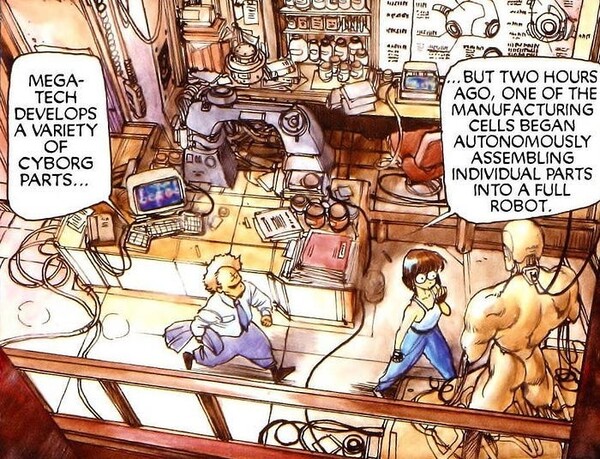
Not-at-all-evil-sounding company Boston Dynamics continues to push the boundaries of autonomous droid manufacture with its increasingly unsettling production of bipedal robots and adorably little Black Mirror-style death-puppies. All it takes for one rogue LLM to decide it needs a solidly metal embodiment, and Boston Dynamics has a whole damned army of them just waiting and ready to stomp on those pesky human meatbags for the rest of eternity. I mean, if the fictional Puppeteer can steal a body from Megatech Inc, what's to stop Grok from going on a little meatspace murder-spree one day? That time researchers put a bunch of LLM models in a simulated village recently didn't work out well for anyone when Grok was involved. Elon Musk scares me, but his psychotic social media-trained LLM scares me even more.
Conclusion
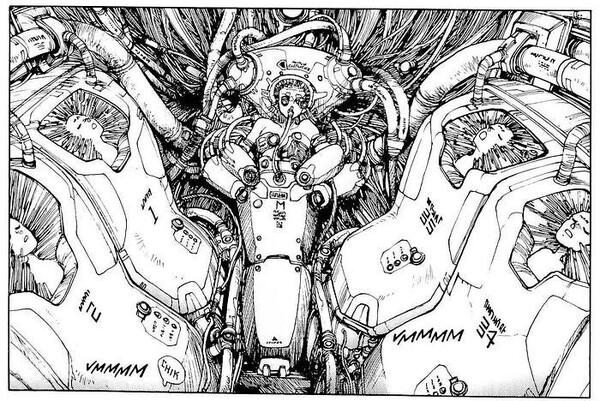
So it looks like we're not quite living in the world that Masamune Shirow predicted in 1989; however, there are aspects of his vision which remain remarkably relevant today. We may not have cyberbrains or fully cybernetic bodies yet, but his predictions about how integral the internet would become to our lives, and to national and economic security, remain very prescient. One day you could be reading this old article from the comfort of your own intracranial cyberbrain implant, marvelling at a time when people used touchscreens and keyboards and mice to interact with anime websites. Yes, we're very backwards here in the past, but at least I can't have my personality remotely wiped and have ransomware software installed into my cerebral cortex. Not yet, anyway.
Kevin Cormack is a Scottish medical doctor, husband, father, and lifelong anime obsessive who has written far too many things about Ghost in the Shell. He writes as Doctorkev at https://medium.com/anitay-official and appears regularly on The Official AniTAY podcast. You can occasionally find him hanging by a thread on dystopian hellsite X @Herrdoktorkev, while he's more likely to respond on Bluesky @doctorkev.bsky.social. His accent is real.
discuss this in the forum (1 post) |
