

The World is Dancing and the Oldest Performing Art in Japan
by Marcille Donato,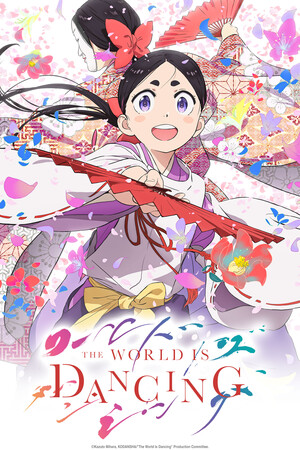
What Exactly is Noh?
Noh (Kanji: 能) holds the record for being the oldest performed art form in Japan since it began in the Muromachi period (1336 to 1573), starting in the 14th century and having maintained active productions and practitioners ever since, although not without potential threats to that livelihood coming from Japan's own modernization and Westernization. Perhaps the most well-known aspect of Noh is its masks, which, combined with elaborate costuming, music, and measured choreography, would tell stories of legendary deities, supernatural beings such as Oni and Tengu, and similar folktales. If you've ever come across a clip of a Noh performance in a cultural studies video, classroom, or documentary style setting, perhaps the most notable thing often observed are the masks, which have become somewhat iconic and ubiquitous even outside of Noh performances; chances are if you've ever watched a period piece anime or played a Japanese horror game, you're likely familiar with the Oni, Onna, and Tengu masks that Noh plays are generally responsible for making recognizable.
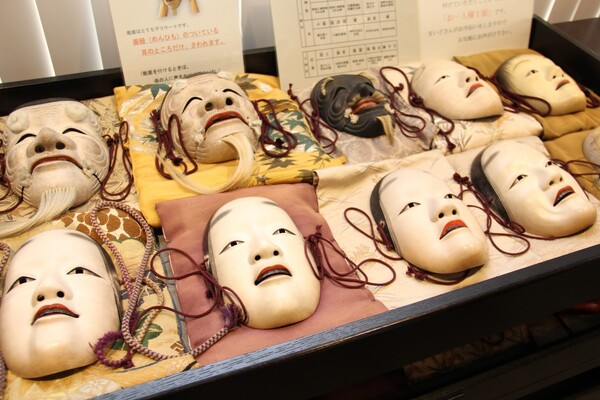
Noh masks (能面) are works of art, generally crafted from Japanese cypress trees and treated with lacquer that can make them nearly immortal iconic pieces, and if you ever get a chance to travel to Japan, you can even see some of them displayed in various museums as cultural heritage pieces. Noh masks are worn primarily by the main actor of the play only, used to allow the performer to embody various important roles in the story and draw the audience's attention to them while the other performers and musicians sink into the background; a performance trick of the art form involves tilting the performer's head to various angles or positions while wearing the mask, which can create the illusion that the mask has changed expression due to how the viewer perceives the mask.
If you're somewhat familiar with ancient plays from Greek culture, some of this may start to sound familiar: the performers wear elaborate masks, accompanied by music and singing from a chorus, in a generally open stage that allows the audience a modicum of participation by being close and involved with the performance. In Noh, this stage is called butai (舞台), and has a few things that make it stand out to the casual observer: the entryway, or hashigakari, is a long diagonal walkway through which the actors enter and leave to the main stage. This bridge serves a metaphorical purpose and a physical one: Metaphorically, the bridge is a connection between the world of myth and the real world of the audience, and in practice, it connects “backstage” to the mainstage, or honbutai. As Noh uses no curtains or other dividing items to obstruct the audience's view of what is going on and who is about to come on (or off) stage, the stage allows them to see or anticipate what is about to happen next in the play, assuming they are familiar with the story being told. The other thing that usually stands out to someone looking at a butai is the roof, which very much looks like a Shinto shrine roof; just as Noh masks are a key aspect of the performance, Noh plays also take place underneath the imagery of a shrine to evoke the spiritual sanctity of what is taking place underneath it; the pillars that support this roof also have a name, or more specifically, four names: shite-bashira (the main character's pillar), metsuke-bashira (gazing pillar), waki-bashira (secondary character's pillar), and fue-bashira (flute pillar) that go clockwise from upstage; the pillar closest to the hashigakari is the shite-bashira, with fue-bashira behind it, metsuke-bashira to the left, and in the far back corner, the waki-bashira. A traditional butai is made of the same wood as Noh masks, Japanese cypress, connecting much of the tradition and minimalist nature of Noh.
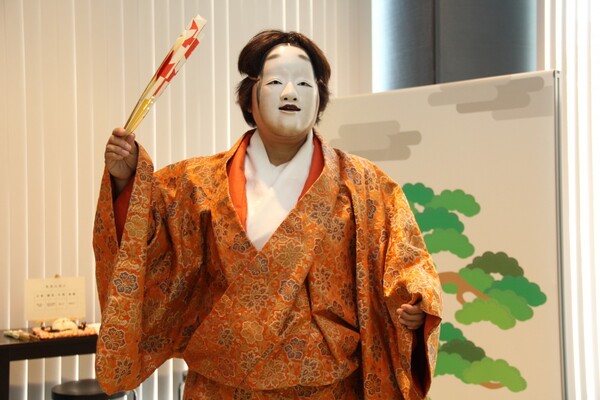
We have established that Noh is a traditional performance style that combines dance, costuming, and stage design in telling folktales, but what exactly happens in a Noh play? That generally depends on the story, and there are hundreds of them, but the general types of plays are Kami, Shura, Katsura, and Kiri, which (respectively) center around Gods, Warriors, Women, or Supernatural entities like Oni, Tengu, or similar. These plays can be further divided by moods and styles; mood tends to refer more to the passage of time than “happy” or “sad”, with Mugen (夢幻能) mood focusing on non-linear or huge leaps of time in the spiritual world, while Genzai (現在能) mood plays follow mundane life and have a more normal passage of time. In terms of style, Noh plays are either Geki, focusing very heavily on narrative, or Furyu, which emphasizes dance and other aesthetic elements. Once those things have been determined, Noh plays primarily follow the main actor (Shite) as they usually embody the titular main character of most plays, with the other main actor (Waki) playing some form of foil, all while the choir (Kyogen) and musicians (Hayashi) accompany the story in the background. Perhaps the biggest confusion point here, though, is “dancing”, because unlike more energetic styles of dance, or even the far more boisterous Kabuki (歌舞伎), Noh dancing is often very minimalistic and slow paced, with much of the emphasis being placed on the extremely slow and flowing motions of the performers to the point that at times it may seem like they are barely moving at all.
The Legend of “Oniyasha”, Zeami Motokiyo
The upcoming The World Is Dancing focuses on a fictional retelling of the life of Zeami Motokiyo, who would go on to be perhaps the single most influential person in the history of Noh. The series refers to him as “Oniyasha”, a name that he used in his youth, and the manga that precedes the anime has focused primarily on the evolution of Noh out of Sarugaku (猿楽) or “monkey music” that was a far more acrobatic and comedy-focused form than the seemingly serious and refined Noh. The manga is a bildungsroman, presenting Oniyasha's journey into Noh as a form of self-discovery and forming his own identity, but the real Oniyasha was less concerned with coming out of his father's shadow than he was with following and improving on his contributions to Noh. Na'ami Kiyotsugu was Zeami's father and had made quite a few contributions to Noh on his own; Zeami would spend most of his professional life defining what we today know and understand as Noh, both as an academic contributor and a creative one.
It is not as bombastic a claim as it might seem to try and contextualize Zeami's importance to Noh as similar to that of William Shakespeare's influence on Western theatre. Both inhabit a somewhat mythological position atop the artform that they worked in, and Zeami's long influence and conceptualization of Noh were key to defining the theatrical artform as culturally important as it ended up becoming; both men also found themselves involved in situations far beyond those of the stage, as the shogunate's interest (and disdain) for Zeami over time had similar influence on him as England's Catholic and Protestant royal turmoils had on Shakespeare's own works. While Noh has outlived Zeami, it is perhaps due to his endeavours and his writing that the works of art created on stage that Noh itself became recognized in the 20th century, following periods in which it faced potential extinction. While it remained popular throughout the Edo period, Meiji Japan's disinterest in classic things over modern sensibilities saw the art form fending for itself financially; it wasn't until 1957 that Japan recognized Noh as “Intangible Cultural Property”, or Mukei Bunkazai (無形文化財), alongside Bunraku, Kabuki, Kumiodori, and other cultural performances. Interestingly, during Oniyasha's life, boys, women, and men were allowed to participate in Noh, but the tighter moral and patriarchal mores of later periods saw the expulsion of women from the stage; it was not until the 20th century when the Tokyo Music School allowed women that women were allowed to begin joining again, although those numbers are still pretty small; sadly, it's hard to undo hundreds of years of patriarchy, turns out!
Noh Around the World
Perhaps due in part to the nearly 1000 years of history behind it and the designation as a culturally important art form, it should come as little surprise that Noh has had a fairly long life as something of note by other cultures. Unlike Rakugo, which until recently has been something considered “too Japanese”, Noh has at least had the cache to be recognized for its aesthetics if little else by non-Japanese observers and scholars; in fact, Noh has numerous books, journal articles, and other scholarly publications available to those curious about its lineage, history, style, and impacts, and there are even numerous Noh plays uploaded to YouTube for curious viewers to see a play in action without having to buy a ticket to Japan to do so.
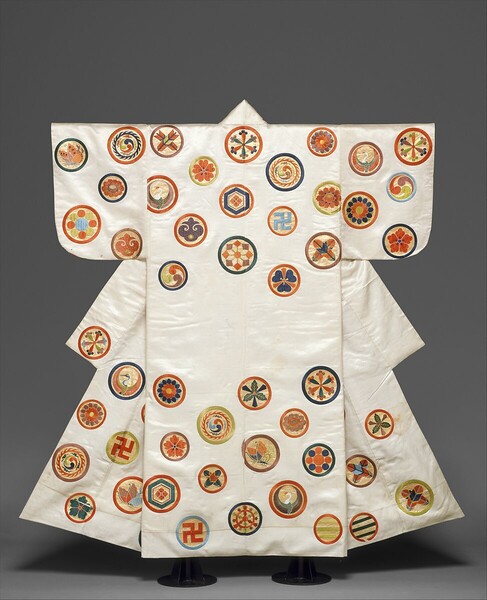
Of course, much of this talk makes Noh sound stuffy and boring, steeped in tradition but lacking in entertainment, levity, or mirth, the sort of thing one often thinks about “classical” forms of art after being lectured at school. But in reality, Noh is diverse and expansive, with tragedies, horrors, comedies, and romances, and that influence has helped it spread throughout the world from those who view or see it live. Although there are numerous ways to see the effect of Noh in popular cultures, I'll simply discuss my favorite one of all for a moment.
Are you familiar with The Talking Heads?
The Talking Heads were a band headed by David Byrne, alongside Jerry Harrison, Tina Weymouth, and Chris Frantz who have become somewhat iconic representatives of 80s music, specifically with hits like Burning Down the House, Psycho Killer, and Once in a Lifetime, whose live performances and music videos often featured somewhat avantgarde visuals and stylings that certainly made the band iconic for numerous reasons. If you are familiar with the band, perhaps you know where this is going, but if you're not, one of the longest-living oddities of the Talking Heads was David Byrne's insistence on vastly oversized suits worn during live performances.
In an interview with Entertainment Weekly, Byrne noted: “I'd been in Japan recently and had seen a lot of [Noh], and I realized that yes, that kind of front-facing outline, a suit . . . looked like one of those things, a rectangle with just a head on top”. Perhaps attributing the universal appeal of theater and dance to the human condition, it can be fun to see the influence of Noh outside of Japan in places we might not usually expect!
The World Continues to Dance
Although there are, supposedly, around 2000 Noh plays, only 240 of them are performed across the various Noh schools, and many of those schools fiercely guard their own specific performances, masks, and unique flourishes. If you're interested in learning more about Noh, or perhaps specifically Zeami Motokiyo, his works are widely available in English, particularly in Zeami's Style: The Noh Plays of Zeami Motokiyo translated by Thomas Blenman Hare, which is absolutely worth a read if you are curious to see Zeami's work in English, as well as a detailed and thoughtful discussion of the author by Hare; meanwhile, Shelley Fenno Quinn's Developing Zeami: The Noh Actor's Attunement in Practice is a complimentary piece for those looking for less about the biography of the man, and more about his philosophical thoughts on Noh. Mikiko Ishii's The Noh Theater: Mirror, Mask, and Madness is an accessible article devoted to helping dispel the myth that Noh is anything but a living art form, and the success of The World Is Dancing speaks to the fact that interest and passion for the theater will continue far beyond its 13th century roots.
discuss this in the forum |
