

(5 questions; 35s to answer on average
Yes I'll do it later No
KAIJU GIRL CARAMELISE Anime Team Discusses How Love Makes Monsters of Us All
by Rebecca Silverman,When someone says "kaiju," chances are you immediately picture a giant, rampaging monster. KAIJU GIRL CARAMELISE, based on Aoki Spica's manga of the same name, is fully aware of that - and it does still provide that rampaging monster. But this kaiju has heart, both in its design and in the fact that it's really a teenage girl named Kuroe who transforms into a kaiju when she's overcome with her feelings for her crush! KAIJU GIRL CARAMELISE is a new spin on an old genre, and we sat down with the anime series' director, designer, and the voice actor for Kuroe to find out how they created monster magic.
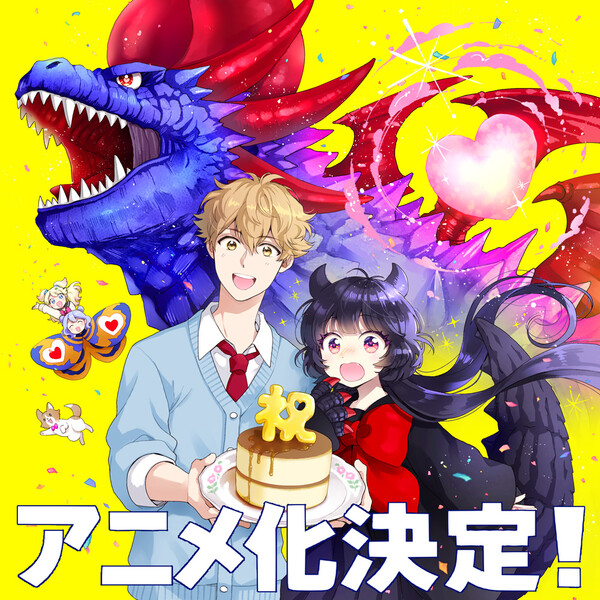
Kuroe's transformation into Harugon happens when she falls in love with Minami, and her kaiju form has a lot of hearts on it. I felt that this novel "kaiju x heart" design represents how puberty or adolescence can make us all feel like monsters. Could you tell us about your approach to constructing Harugon's visuals for the anime adaptation and your interpretation of this theme, which lies at the core of the work?
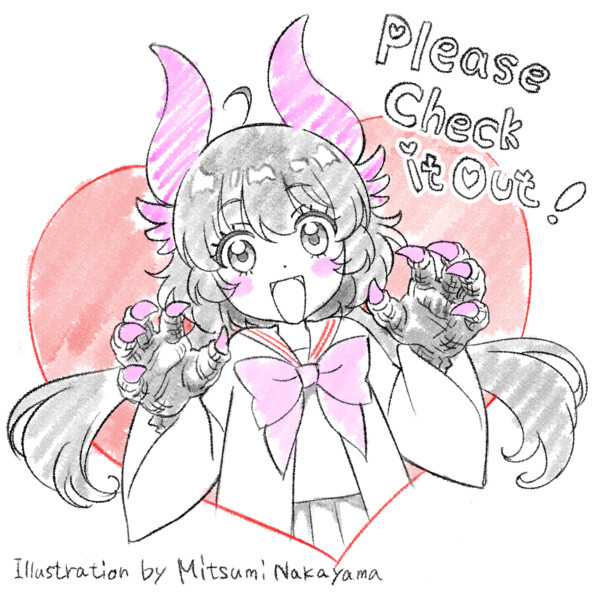
Mitsumi Nakayama (NUT): I designed all the human characters myself, but the design of Harugon was primarily created by the kaiju designer and the 3D team. That said, I did make a few minor adjustments to Harugon's eyes myself. Even though she takes on the form of Harugon, she still harbors the emotions of a girl in love deep down, so I felt it was crucial for this work that those nuances not be lost.
Teruyuki Omine: I know not everyone views themselves as being completely different from others, but I believe everyone has some kind of insecurity. Then we keep it hidden inside and endure as we go on living. But do other people really care about that as much as we think they do? Even if many people care about [our insecurities], is there really no one who would accept them? Perhaps someone might find that attractive.
When you first read the script, how did you feel about this unique concept of "turning into a
kaiju when falling in love?"
Hikari Senga: Before reading the original manga, I had heard that it was a story about a high school girl who turns into a kaiju when she falls in love. So, I imagined she would stay human-sized and just grow horns or a tail. But when I actually read it, I was genuinely shocked to see her transform into an incredibly powerful, massive giant kaiju!
I am sure many people have experienced the struggles of navigating love during their teenage years. I feel what makes this series so brilliant and interesting is how it expresses that chaotic feeling through the unique concept of "turning into a kaiju."
There are many "transforming heroines" in the world, but did you feel that Kuroe is a kind of "magical girl"? Or do you think she is a completely unique existence that doesn't fit into any pre-existing genre?
 |
 |
 |
Senga: When people think of "magical girls," they usually imagine them transforming to fight evil or to achieve some kind of grand mission. But I feel Kuroe's kaiju transformation is something completely different.
Many of us have personal insecurities that we want to hide from the world, and I see Kuroe's monster form as a visual, highly relatable expression of those exact insecurities. In her case, falling in love triggers a drastic physical change, creating an insecurity about her appearance that forces her to shut herself off from other people.
Her outer appearance has a massive, shocking impact, but deep down, she is just a relatable, everyday girl. She is constantly worrying, thinking things like, "What if people hate me?" "What will they think of me?" or "There is no way the person I love could ever accept someone like me." I truly love how grounded and human she is!
Kuroe's transformation scene is depicted very memorably in the original manga. How do you handle her transformation in the anime? Did you take inspiration from any magical girl anime, or were you thinking more about something close to super sentai transformations?
Nakayama: I don't really have the so-called “magical girl” or “Super Sentai Transformation” series in mind. I haven't really seen this in other works: a beautiful girl transforming into a giant kaiju that looks completely different as her emotions run high. I think the key to this series lies not so much in depicting the transformation scene itself, but rather in the process and emotions leading up to it.
Although it is a story about turning into a giant monster, I feel it is a remarkably human tale. What do you think is appealing about Kuroe/Harugon's story? Also, what do you hope viewers will take away from this work?
Omine: This may overlap with what was said earlier, but I'd be happy if, through all the other characters as well as Kuroe, you could find it in yourself to view your own flaws and weaknesses not with pessimism, but with a little positivity.
Nakayama: Kuroe has insecurities about her appearance and background, but I think those are feelings that everyone experiences to some extent. I'm sure there are moments when everyone empathizes with Kuroe. I imagine Harugon as the form taken by the complex romantic feelings of adolescence, the frustration of being unable to express those feelings properly, and the passionate surge of emotion that accompanies them. I hope you'll enjoy this series from all sorts of angles, whether it's feeling a pang of nostalgia as you see Kuroe's clumsy attempts to navigate her first love, chuckling at the comedic scenes, or getting excited by the kaiju's coolness!
Senga: For me, the real charm of this series is watching Kuroe accept herself and grow through her connections with others.
And it's not just Kuroe—every single character, including Minami-kun, Manatsu-san, and Rairi, has their own struggles, and they are all trying to grow by opening up to the people around them. Seeing them try so hard really made me reflect on both how difficult and how beautiful it is to truly face yourself.
I hope this message reaches everyone who watches the show and connects with your heart!
For you, what is the appeal of kaiju stories in general? Also, what do you think this work brings to the table that others may not have, in terms of its unique strengths and charm (such as the balance between scariness and cuteness)?
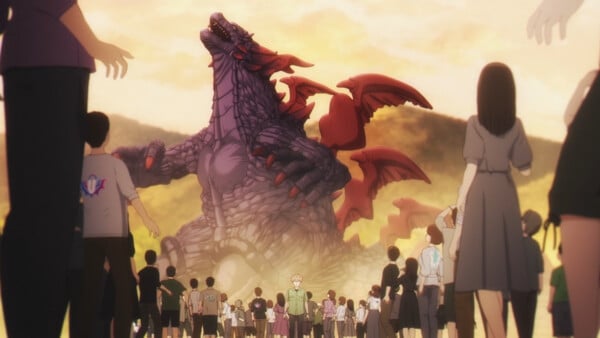
In this series, even though she takes the form of a kaiju, at heart, she is a high school girl in love. Even after becoming Harugon, she still worries about her reflection in the mirror and looks for the person she likes. Despite being a giant kaiju, traces of her perspective as a girl remain evident throughout. I think that gap is precisely what makes this series so attractive.
Omine: I think many kaiju characters possess a certain distinct personality, and audiences find them cool or cute because of that. In this series, Kuroe is placed inside kaiju, embodying its unique personality. I feel that the girl's circumstances, which can't be fully captured by terms like “cool” or “cute,” are intertwined with these elements, adding depth to the story.
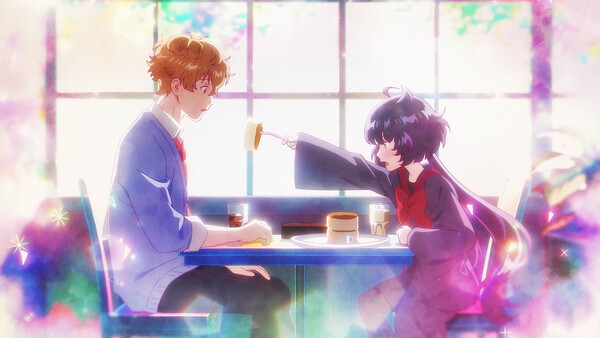
What makes this series so unique, though, is that it takes that fear and adds an element of sweet romance to it!
The two genres of "giant kaiju" and "romantic comedy" coexist so beautifully. Being able to experience the thrills, the suspense, and the heart-fluttering butterflies all in a single story is a fresh, unprecedented strength of this work!
Even though kaiju stories are uniquely Japanese, do you think this will be easily grasped and enjoyed by audiences around the world? Nakayama-sensei, during Harugon's design process, did you consciously think about or try to visually reflect the universal human theme that "everyone becomes a clumsy 'monster' when they fall in love?" Omine-san, just like the depictions in the work, are we all uncontrollable monsters when we fall in love? Senga-san, from a cast member's perspective, what do you see as the charm of Kuroe's character and transformation?
Nakayama: I'm sure everyone worldwide will enjoy it!
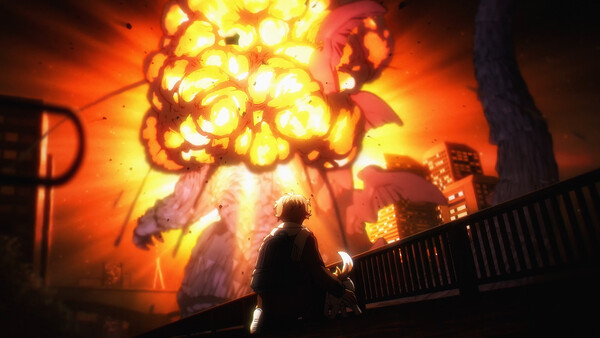
While this may overlap with my previous answer, the appeal of this series lies in the fact that, despite the seemingly unusual combination of "a cute girl and kaiju", it actually encompasses universal themes. Regarding Kuroe's design, as depicted in the original work, even when she is in her human form and has not yet transformed into a kaiju, we've incorporated a visual element in which her hair stands on end like a kaiju's during scenes where her emotions run high. I hope you can sense, through the characters' visuals, the overflowing emotions that come from the exhilaration of being in love and the frustration of things not going as planned.
Omine: The story's core revolves entirely around a girl, Kuroe, so I think you'll enjoy the series if you empathize with her. I'm sure many of you empathize with the feeling that when you fall in love, you lose control of yourself, don't you? When Kuroe finds herself in a state where she can no longer contain her emotions and feels like screaming, she transforms into a kaiju. Perhaps we, too, become kaiju when we direct that aggression toward others.
Senga: I feel that since kaiju-themed movies are also made outside of Japan, and because I hear the original manga is already popular with international fans, I believe the concept of "kaiju" is something that people all over the world can embrace.
Also, even for regular people, when you love someone so intensely, there are times when you feel like you are losing yourself. When we are head over heels in love, aren't we all a bit like kaiju in a sense? (laughs)
Even when she transforms into a giant kaiju, her heart remains that of a high school girl. I think you will really enjoy the show by looking at it from the unique perspective of: "How would a lovesick human actually behave if they turned into a monster?"
What was the process for translating Aoki Spica's art to animated format? Manga Kuroe and Harugon are pretty complex with a lot of details to their designs; was it a challenge to animate them? Also, did you take any inspiration from classic kaiju films?
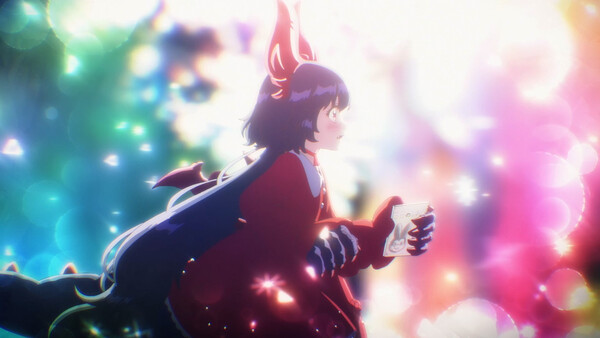
After giving it a lot of thought to see if there was any way to balance both “appeal” and “efficiency,” I came up with a design, “Special Cut-Exclusive Eyes.” This eye effect is reserved for the most dramatic moments in each episode; it features a high resolution and rich color palette, and the post-production processing is exceptionally elaborate. I thought that deliberately creating special scenes would help give the story more rhythm and contrast. I really hope you'll check out the finished look in the animation! It's absolutely stunning!
How do you want to show viewers that, despite her transformation, Kuroe is just an ordinary teenage girl?
Senga: To feel as close to Kuroe's emotions as possible, I actually visited a Tokyo river—the real-life setting of the story—several times while we were recording.
I tried to experience everything I could from the scenes in the manga, wondering things like, "Does Kuroe live around here?", "Did she look at these cherry blossoms?", or "Is she eating this melonpan?"
Even though she turns into a kaiju from time to time, I made sure never to forget that she has an ordinary daily life—falling in love and hanging out with friends as a normal high school girl. I kept that in mind throughout my performance, so I hope her down-to-earth, relatable nature comes through to all of you in the anime!
Did you take any inspiration from classic kaiju films when translating the story to anime? For example, do you want viewers to watch KAIJU GIRL CARAMELISE and think of Godzilla or Gamera? Or would you prefer that the series stand alone as its own independent work with its own artistic vision?
Omine: Since the original work is brimming with respect and homage to kaiju movies, I don't think it's possible to escape those associations. Although Harugon seems huge and clumsy, she's also comical and, in a way, cute. As long as you feel that this element is expressed, I don't have any specific preferences.
Nakayama: Since the original work contains numerous homages and parodies of kaiju movies and tokusatsu series, I felt that rather than simply drawing inspiration from them, I needed to understand the source material and the respect embedded within it for myself, so I've watched my way through all the classic kaiju films. While this series isn't primarily intended to evoke specific films directly, we do hope you'll appreciate the cool aesthetic of classic kaiju movies. We also hope you'll enjoy the synergy between that classic style and the unique elements of KAIJU GIRL CARAMELISE, the adolescent romances of high school girls and the charm of our sparkling, adorable characters, making this a truly one-of-a-kind experience!
discuss this in the forum |
