

(5 questions; 35s to answer on average
Yes I'll do it later No
Advertorial
How BanG Dream! YUME∞MITA Uses Shoujo Tropes to Tell a New Kind of Girls' Band Story
by Bushiroad (Paid Advertisement),
The BanG Dream! franchise is one that has regularly referenced a variety of genres. Obviously this largely refers to the musical acts, where the catchy rock of Poppin' Party will play alongside the heavy electronic sounds of RAISE A SUILEN. But the tenor of the storytelling in the anime pulls from just as much in BanG Dream!. This is clear simply in comparing the raw emotion of It's MyGO!!!!! to the dramatic psychological horror of Ave Mujica - The Die Is Cast -. Now, this season's BanG Dream! YUME∞MITA exploring even more new frontiers. While its virtual band framing and electronic city setting offer their own additional seasoning, YUME∞MITA is also pulling from a perhaps less-expected influence: shoujo.
What Is Shoujo?
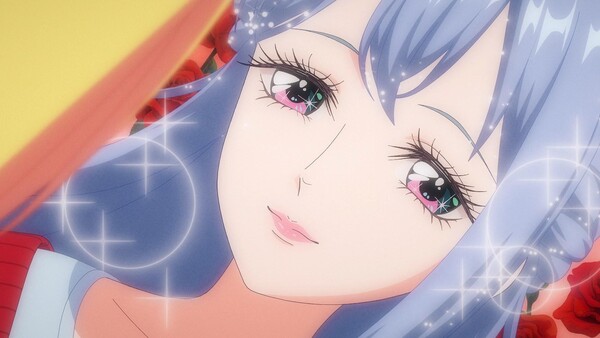
Typified as "girls' comics"—the demographic counterpart of boys' comics in shonen, shoujo is but a jumping-off point that appeals to wide ranges of audiences across generations. That generational appeal speaks to eras of appreciation as well. Shoujo manga and its anime adaptations have been stalwart standbys of the world of these mediums for ages, with long-runners like Glass Mask setting the standard for dramatized stories of the performing arts, while entries like Rose of Versailles, Aim for the Ace!, and Dear Brother are pillars that are still called back in references today. YUME∞MITA itself cuts to a recognizable riff on the signature style showcasing the emotions of the genre in its third-episode exchange between Arale and Nonoka.
Of course, given that the examples rattled off there encompass such varied genres as historical drama, sports, and schoolgirl-angst-simulator, it goes without saying that shoujo is much more than a stylistic signifier. The detailed history of the label is rich enough that it would do a disservice to delve into all of it in the space of a comparison like this, but suffice to say: just as shonen has its own tropes and building blocks its iterating on, so to do shoujo stories have their own language. And so BanG Dream! YUME∞MITA contains its own takes on those components within.
Our Harrowed Heroine
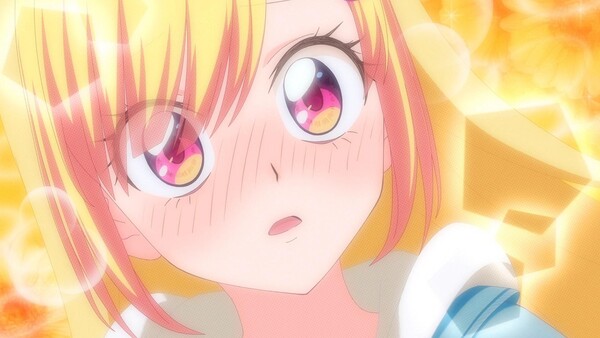
Befitting the initial target audience of young girls, the heroines of shoujo series are frequently apparently "regular" girls. They are themselves thrust into situations they feel they aren't prepared or qualified for, despite the fact that the narrative, and more specifically some mentor figure, knows they are capable of so much more potential. In BanG Dream! YUME∞MITA, that girl is Arale Nakamachi, and her extraordinary placement is starring as vocalist in the new virtual band MewType. Now, fitting with the other layers that shoujo often saddles onto its heroines, Arale is shouldering some formative trauma that informs her lack of confidence in her new role. In Arale's case, she theoretically has talent as a performer in the group, but she can't bring herself to actually perform at first. This is a result of experience she had previously with her peers and audience—more on that in a minute. What's important in this case is that the mysterious manager of MewType selected Arale for her role based on more than mere presence and reputation. Arale has that intangible "something" that makes a shoujo heroine stand out despite her apparent struggles just to fit in and get by as a normal girl at her new school.
Arale's refusal to perform thus fits with other shoujo signifiers: just as Hiromi in Aim for the Ace! initially retreated from her role, breaking down at the thought of even trying in her new role, so too does Arale experience crises in the face of performing. She panics both within the confines of her own home and while interacting with the girls from her previous group. Her shattered self-worth makes her instantly relatable and sympathetic to anyone who's experienced stage fright in a performance or choked in an important match. As in so much of shoujo, her emotions rule so much of what she's trying to do.
The flipside of that, however, is that as much as Arale seeks to run away, she still knows she must do her best. Her emotional ruling allows her to connect with her band-mates, and those bonds build scaffolding she might yet climb to the heights of success. She's proven immediately able to connect with the emotional rollercoasters of Nonoka and Miyako—in their own ways of course. The fact that these girls have their own hidden sides and agendas they're pursuing, but still find connection with Arale—or at least are approaching that at this point—highlights the emotional focus that drives MewType even as they haven't actually performed together yet. Shoujo characters regularly contend with the enemy within—but they must also compete with the enemy without.
Mean-Girl Machinations
There are regular, expected obstacles causing complications for Arale and the rest of MewType. The stress of the position was already mentioned, but that's detailed even further in the case of Miyako in the second episode. She embodies her own version of the prestigious position role that would be wish-fulfillment in a shoujo story on its face: she's a musical performer virtual content-creator manga-illustartor. But mashing all those hyphens together highlights the impossibility of the task. Miyako has her own emotional overloading, and the comfort of her cute plushies and puppets is obviously not going to be enough to relive that. She needs the genuine connection (over a shared love of magical-girl anime or otherwise) that the likes of Arale is providing.
The problem for Arale, of course, is that her own reliable friendliness might be called into question. Characters like Nanako in Dear Brother have to deal with the unforgiving views of school-wide opinion tanking their reputation. In the arena of content creation, the girls of MewType have to grapple with the gaze of global viewership seeking to tear them down, and Arale has already experienced that. As revealed in BanG Dream! YUME∞MITA's second episode, Arale was forced from her previous group after a leaked video painted her as insensitive and even cruel to her previous cohorts. However, just as rumors in an academy can be spun and exaggerated, it's obvious that evidence on the internet can be taken out of context or manipulated wholesale.
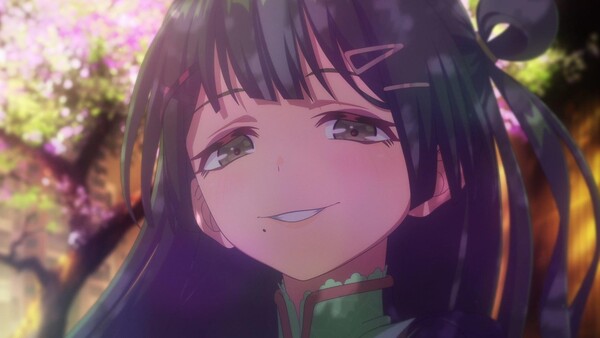
This brings us to an actual, tangible antagonist menacing MewType, and an embodiment of the "mean girl" role that so commonly makes life difficult for the heroines of shoujo stories. Viola of Fairy Bouquet spends the first two episodes of the YUME∞MITA acting cagey in a way that makes clear she's concealing her true face, and when said face is revealed at the end of the third episode, it's a strongly shoujo-seasoned swerve. It's made apparent that Viola is the one who manipulated that video that led to Arale's initial cancellation, and she's threatening again to attack her in the arena of social media. As with so many antagonists in shoujo, the motivations for Viola's machinations are currently opaque, though they seem to come partially from a place of possessiveness for fellow group member Clematis, aka Ritsu Minetsuki. This too calls to mind the toxic pursuits of so many shoujo antagonists, such as Kyoko's feelings of entitlement to a place next to Reika in Aim for the Ace!, and her resultant efforts to ruin Hiromi. Viola is clear as a dangerous presence, but she arrived there by disregarding the emotions of both her fellow and rival performers. In shoujo, this signals how she can never reach the heights of the others hanging on via their careful connections.
Embracing the Emotion
The girls of MewType inhabit a musical world already built up around girls bands to measure their success against. As with the many oujousamas and Madame Butterflies of shoujo settings, the era of the girls band has known quantities like Poppin' Party and Ave Mujica standing out on stage. Yuno even glibly remarks that there are too many bands already, in her opinion. While those other bands have yet to directly appear in the YUME∞MITA anime to be directly compared as with those shoujo forebears, their presence still looms large. What MewType has to let them stand out, regardless, is their strides on the emotional side to overcome these kinds of shoujo-coded obstacles.
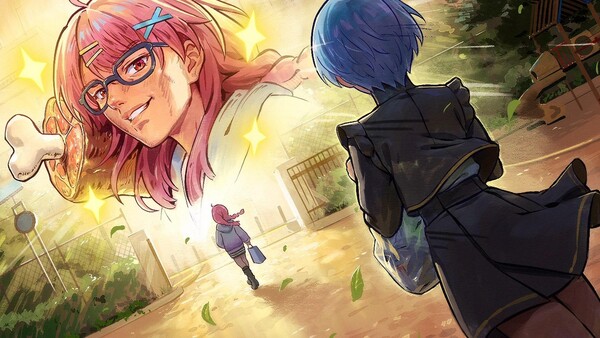
As described in our earlier look back at the history of BanG Dream!, entries like It's MyGO!!!!! did deal with heightened emotional storytelling. By allowing itself to be informed by shoujo, YUME∞MITA keeps up with that, but explores new corners. The relationships between group-mates new and old are complex, and come with built-in backstories that infuse a messiness in their interactions. Shoujo regularly frames its heroines as newcomers to a school or team seeking to fit in, and the likes of Arale not only is attending said new school, she's seeking to re-enter an entire virtual performing realm she's learning to navigate after feeling like she played the villain herself once before. As seen in the third episode, Yuno has to find a way to enter society itself, barely functioning outside as she is now, making herself ripe for the emotional outreach of her fellow performers. Seeing those emotional connections is the main action of the anime so far—just as Aim for the Ace! could go episodes without a proper tennis match, YUME∞MITA doesn't focus on including a new musical performance every week—it instead showcases the connective tissue that transforms MewType into the group it was meant to be.
It's a deliberate, detailed journey. Series like Glass Mask have had famously long runs. While YUME∞MITA is currently only scheduled for its single cour this season, its shoujo-influenced approach still reflects those sort of long-game sensibilities. The world of cyberspace allots an arguably infinite amount of breathing room, after all. Arale and the girls of MewType have wide-ranging emotions that owe so much to the rich history of shoujo, and in return the YUME∞MITA anime has been infused with its own uniquely appealing flavor for fans of both shoujo and BanG Dream! entries alike.
discuss this in the forum |
