

(5 questions; 35s to answer on average
Yes I'll do it later No
The Spring 2025 K-Comics Guide
The Villainess is a Marionette
What's It About?
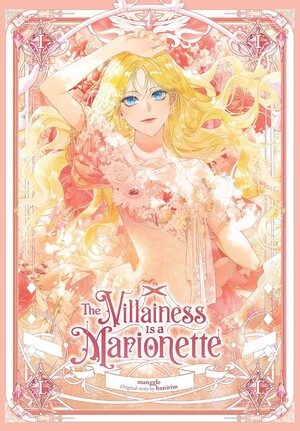
Kayena Hill, the imperial princess and most beautiful rose of the empire―and the novel's villainess, used as a pawn in her brother's schemes and left to die. Except this isn't just some novel to her, not when she already lived her first life as the foolish Kayena herself! When she wakes up as Kayena Hill once more in her third life, she's now armed with the knowledge of how her dreadful future unfolds. In order to rewrite her story and win her freedom, she must learn to puppet the puppeteer―this time, she'll be the one pulling the strings!
The Villainess is a Marionette has a story by hanirim and art by manggle. English translation and lettering by Kakao Entertainment. Published by Ize Press (May 20, 2025). Rated T.
Is It Worth Reading?
Rebecca Silverman
Rating:
Villainess transmigration stories, otherwise known as villainess isekai, have truly developed into their own genre in the past few years. That means that passing few of them feel truly unique anymore, although “uniqueness” isn't necessarily a mark of quality. Unfortunately for The Villainess is a Marionette, even its twists on its genre and theme can't quite make up for what feels like a meandering flow, making the story far less interesting than it ought to be.
Taking a page out of Doctor Elise's book (at least in terms of when things became available in English; I'm not sure which series' source material came chronologically first), The Villainess is a Marionette is a double-isekai. Heroine Kayena lived first as Kayena, then as an unnamed South Korean woman, only to return as Kayena again. In both of her first lives she was murdered, but now with her memories intact, she's ready to be a better, more politically savvy princess and to find a way to tame her dangerously temperamental brother and generally not make the mistakes she once did. There's a real attempt to make things interesting and to dole out information in a slow, intriguing way – the situation with the siblings is particularly interesting, even if it leaves me wondering if this isn't Ize Press' second foray into incest K-comics this season. (Lady Devil is the other.)
Regrettably, there are simply too many balls in the air and too many points of view being thrown at us to make this feel cohesive. The various machinations of myriad political figures hampers the storytelling, and most damning, I never really got a feel for who Kayena is as a person. I know she used to be awful and that she saw herself as a marionette dancing to others' whims in both her first and second lives, but her determination to be in charge of the strings in her third feels a bit shallow. It doesn't help that everyone feels very surface-level in terms of characterization, too; the most interesting discussion I had with myself was whether the original author really meant that Rafaello was mysophobic or if they were conflating mysophobia with asexuality. (Mysophobia can lead to sex-aversion, but that's different and not really mentioned.)
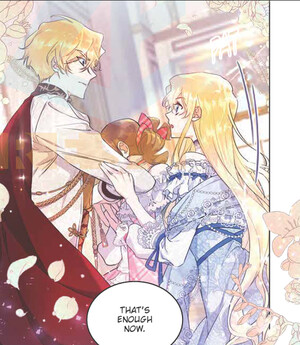
The art here is the main draw. It's beautiful, and has a real way with flowers and floral decorations; a few look very much like Alphonse Mucha's work. But the story isn't keeping up with the art, and I think there are more interesting villainess stories to read.
discuss this in the forum (3 posts) |

back to The Spring 2025 K-Comics Guide
Feature homepage / archives