

A League of Heels - The Spices Behind Sports' Best Baddies
by Coop Bicknell,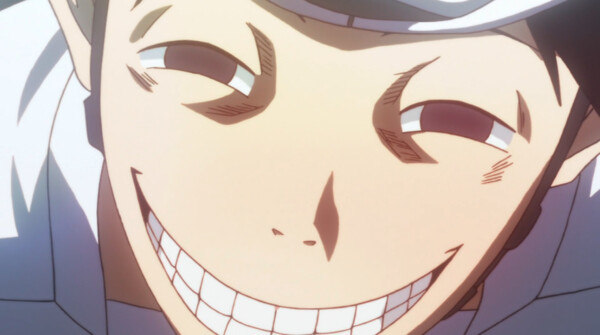
If you've ever watched sports, an action film, or the occasional episode of anime, I'm fairly sure you've heard the term “heel” thrown around. Instead of describing a part of your foot, this bit of professional wrestling parlance refers directly to the bad guy—those who'll stop at nothing to reach their goals while being a thorn in their enemy's side. Some of these characters even take a bit of pleasure in their bad behavior. In the world of sports manga and anime, specifically, the heel often functions as the wall for our protagonist to overcome. But these characters aren't always written as simply the villain—they could be an old rival, a teammate, or even the hero. I've assembled a team composed of the genre's greatest and most popular heels to examine just what makes these sports obsessives tick. Most of these characters elevate their series on the whole, but others might be more wisely placed on the bench. Discussion and spoilers ahead for Slam Dunk, Run with the Wind, Aim for the Ace!, Teppu, Hanebado!, Yowamushi Pedal, BLUE LOCK, and Haikyu!!
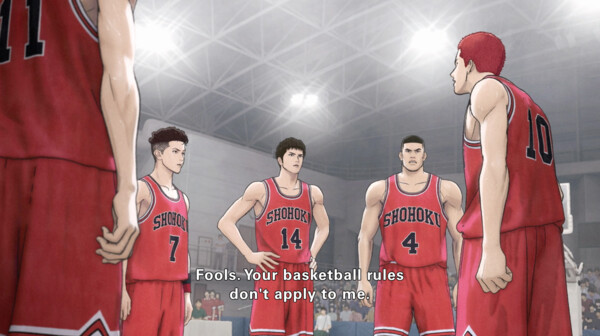
Basketball is a sport packed with heels from basket to basket. As documented in The Last Dance, Michael Jordan demonstrated during his run with the Chicago Bulls that he was the wall for all challengers. He'd ripped apart his body, his mind, and his own teammates to achieve his legendary status. Additionally, a good collection of his peers were of a similar mindset. Now, while the cast of Slam Dunk never pushes to those lengths for victory, the Shohoku boys aren't exactly known for their sterling behavior either.
Seen as a two-bit team of punks while entering their final game against Sannoh Kogyo High, Captain Akagi pushes the starting lineup to fully embrace their inner heels. If they're going to be seen as the bad guys, then let it happen. It's a tone that reverberates throughout the game, especially when series' protagonist Hanamichi jumps on top of the referee's table to declare that Shohoku will win the game—all the while referring to himself as a genius and constantly mispronouncing Sannoh's name as “Yamaoh.” A little while after this lofty proclamation, the motley band of underdogs ended up winning over the crowd and the game itself. Somehow, they managed to turn that perception of themselves into a boon—even if it's not exactly true.
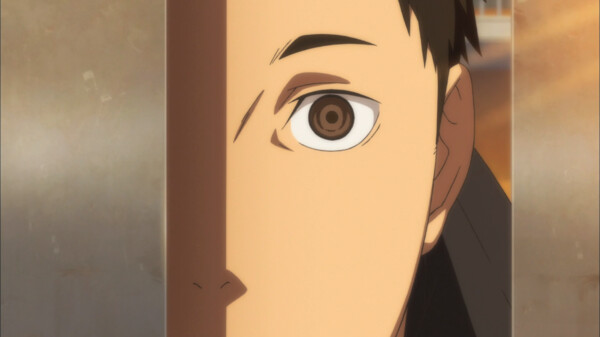
In the case of similarly grounded sports titles, most heels aren't portrayed so intensely. These characters might have their edge, but it's dulled in comparison to more elevated series. In fact, some of the best heels in these more grounded series tend to be the team captain. Within the opening episodes of Haikyu!!, Daichi establishes himself as a force to be reckoned with almost immediately. After he throws Hinata and Kageyama out of the gym for their unwillingness to work together, Daichi proclaims that they're not joining the Karasuno High Volleyball team until they can prove him wrong in a game. Through this act, he pushes the pair to become stronger and overcome the obstacles he's imposed. He's leaned into playing the villain for a greater purpose than just pushing their buttons.
Much the same could be said for Run with the Wind's Haiji, who more or less cons everyone living in his dorm into joining the university's track team. This coach, captain of sorts, is keen on twisting every dial he can find to realize his dream of running in the Hakone Enkiden. While he comes across as friendly and knowledgeable once the guys start training, his reasons for doing any of this quickly fall into question. Is he selfishly pushing his dream upon others because his injury won't let him do it alone? Or is he perhaps earnestly trying to enrich the lives of his peers? The answers to those questions are somewhere in the middle, and wildly fascinating to figure out for yourself as a viewer.
Moving into titles with slightly more elevated realities, I can't think of a better example of the classic jealous mean girl than Aim for the Ace!'s Kyoko Otowa. This ribbon-adorned terror has Hiromi locked in her sights from the moment the freshman is put on the tennis team. Otowa firmly believes that Hiromi's spot should've been hers, and she'll go to any length to make her point—from stealing rackets to sabotaging reputations. But when she's finally put in her place, Otowa comes to terms with the fact that her tennis career has been winding down for a while now. She's not the brilliant player she once claimed to be, but chooses to mend bridges with Hiromi by actually helping her for once—even if many of her earlier actions went beyond the pale. Otowa's not only a perfect example of a mean girl, but of a heel turned ally. Though charged with far less animosity, Apollo Creed's face turn in Rocky III comes to mind.
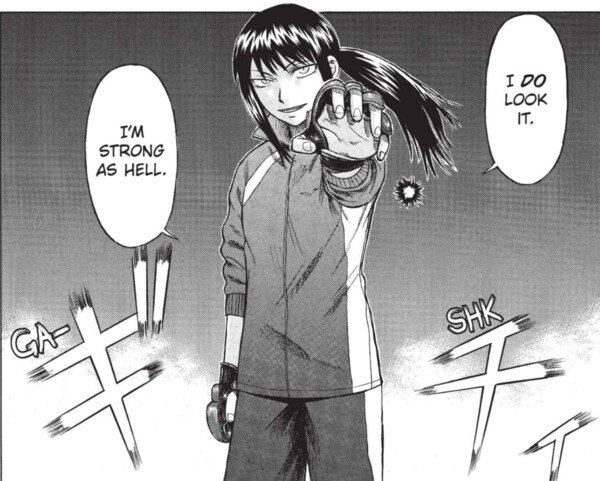
Revisiting a question from earlier, what happens when a sports title firmly centers itself around its heel? Teppu is one of the few successful answers. Dragged into the world of mixed martial arts by the arrival of a spunky girl from Brazil, Natsuo is constantly drawing frustration, jealousy, and boredom. She's been athletically gifted for as long as she can remember, but when she comes up against a challenge that makes her try for once, it pisses her off to no end. And instead of taking up anyone on their offer to help her learn the ropes, she'd rather figure it all out by herself—even if that means coughing up a little blood. As a reader, you want to root for Natsuo because she's so close to breaking through her prickly veneer, but then she'll throw it all away for her foolish pride. She eventually does find her people, but it's not easy...and it takes a while.
On the flip side of the Teppu coin is Hanebado!. While our heroine Ayano struggles to hold back the toxic behaviors she's cultivated on the badminton court, the regular parade of antagonistic rivals who egg her on into fully embracing this side of herself tends to disrupt the stakes at play. Ayano's core conflict is fascinating when contrasted with that of the hardworking Nagisa, but loses its way when she's surrounded by heels—all of whom have the same unhealthy attitude about the sport. Ayano's mother being the source of all these behaviors is a fascinating wrinkle, but it just serves to dilute heel effectiveness here.
BLUE LOCK's premise suffers from much of the same problem, because a cutthroat mad dash to become the best isn't what makes the sports genre great in my eyes. It's about how our characters grow and change as people over the course of their sporting endeavors. The heel is meant to be an exacting tool in the writer's playbook to push the growth of their characters even further. Like a good seasoning, the heel is best used sparingly
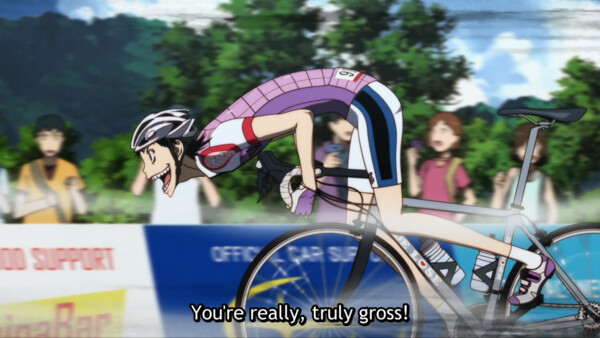
That said, Yowamushi Pedal is a series that knows how to cook with those spices. Almost from the jump, viewers are introduced to Akira Midousuji—a sketchy bean sprout with the most sinister smile known to high school cycling. Unconscionable tricks, stripping his teammates of his names, and a willingness to throw people else aside in pursuit of victory have earned him the ire of everyone he's met. Sohoku's Shunsuke Imaizumi is at the top of that list, desiring revenge for the horrific lie Midousuji spewed aloud near the end of a previous race. But over the course of the Inter-High race, everyone on the road finds themselves having a bone to pick with the smiling creep and his team's underhanded tactics. The viewer gets a hint or two behind the reason for his behavior, making it even more heartbreaking that he'd stick to his nasty guns on the road. Midousuji is a perfect example of the heel done right and sparingly. There may be other eccentric rivals on the road during the Inter-High, but they're Boy Scouts by comparison.
But in sharp contrast to Midousuji, Yowapeda features a wonderful example of a fakeout heel in Sohoku's Yuusuke Makishima. When he's first introduced, the series' protagonist Sakamichi is terrified of Makishima. He's always scowling or acting standoffish around the rest of the team. Sakamichi even discovers he'd punched a hole in the locker room wall that he's kept hidden with posters. The viewer lulled into expecting that this green-haired cyclist would be trouble, until Sakamichi realizes that Makishima is just a really awkward dude. He wants to be helpful, but his resting jerk face and nerves don't exactly help the situation.
That's just a sampling of the many, many heels present throughout sports manga and anime. As we've covered, these bad guys can elevate the drama of a story and push its cast to their limits. But other times, too many heels can spoil the broth. Again, whether they're simply an obstacle, an ally, or even the hero, a good heel can go a long way. And we've all got to admit, it's fun to have a character you love to hate on occasion.
discuss this in the forum (4 posts) |
