

Summer 2026 Manga Guide
Crybaby Mermaid
What's It About?
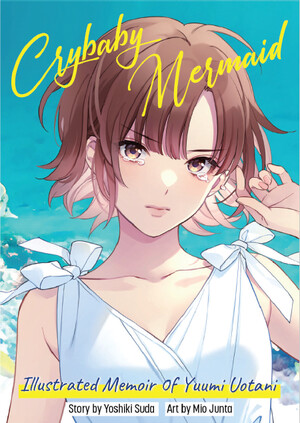
The Crybaby Mermaid: An Illustrated Memoir of Yuumi Uotani is about the quiet difficulty of continuing when doubt never fully disappears. It follows Yumi Uotani, a professional mahjong player, through the uncertain early years of a public career, where each setback lingers, each success feels temporary, and the question of whether she truly belongs never quite goes away.
Rather than a story of sudden breakthrough, the story focuses on the emotional weight of performance: the pressure of expectations, the anxiety that follows setbacks, and the quiet effort required to continue despite uncertainty. Uotani's progress unfolds through everyday moments of practice, reflection, and gradual change, presenting achievement as something built over time rather than defined by sudden success.
Crybaby Mermaid has a story by Yoshiki Suda and art by Mio Junta. The English translation is by Minna Lin, and the lettering is by Skylar Rutan. Published by Mahjong Pros (July 7, 2026). Rated T.
Is It Worth Reading?
Rebecca Silverman
Rating:
Do you know who Yuumi Uotani is? I didn't before reading this, and I'm left feeling I might have enjoyed the book more if I had. Or possibly if I knew more about mahjong in general and professional Japanese mahjong specifically, although that's the sort of specialized knowledge that you don't typically need to enjoy a series on a specific sport or topic. I knew nothing about volleyball when I picked up Haikyu!!, and I still loved the series to pieces. So what makes Crybaby Mermaid different?
Broadly speaking, it's because this isn't just about pro mahjong: it's a lightly fictionalized biography of a specific mahjong player. That means that's it's largely written for fans of Uotani or those who follow the league she plays for. Mahjong Pros very kindly provides detailed information about the game, along with the usual cultural notes and glosses (though not why Uotani is called a mermaid, which feels like a major oversight). If you're into other tabletop games, this information will be sufficient to help you navigate the games Uotani plays during the book. On the other hand, if game rules rarely make sense to you, the included information doesn't help all that much. (I'm assuming I'm not the only person who struggles with this.) Fortunately, the tension Uotani herself feels while competing comes through clearly; otherwise, this would be something of a lost cause for general readers.
One of the strengths of the volume is how well Uotani's drive to compete comes through, alongside the way it contrasts with her natural anxiety. Uotani's original dream was to be a jockey; after failing to make the cut, she finds a similar outlet in mahjong. The game makes use of her intellectual strengths and competitive streak, and the quick way she seizes on this new outlet and utterly devotes herself to learning and improving is impressive. While it can come across as a fixation – something I'm not sure is intentional – it's easy to see how she internalizes each win, loss, and piece of advice she's given, synthesizing all of them into an improvement or adjustment to her playstyle.
While I'm left with questions about the mahjong scene – why on earth is it sometimes segregated by gender? Is it a vestige of the bad old days of men wanting to think women aren't smart? – I do think this is a decent depiction of one woman's mahjong journey. The issue is that I had a hard time caring about it because I know so little about the game. If you're already a riichi mahjong player or fan, though, I think you'll find more to enjoy than I did. This is a book for a specific audience rather than a general one.
Erica Friedman
Rating:

Are we blatantly being played by Mahjong Pros, who choose to profile popular, attractive women who are into mahjong? Yes, obviously. Is the manga they are putting out actually really good anyway? Also yes.
Of the two biographical mahjong manga I have read (the other is Vermillion Stella), this one is much more about mahjong. Details of the game are discussed in the storyline, in the discussion notes between chapters in which author Suda and Uotani discuss specific plays, and finally in the end notes that explain mahjong terms and play.
And yet, despite all of this technical detail, Crybaby Mermaid: An Illustrated Memoir of Yuumi Uotani is actually an interesting book on its own. More so, I imagine, if you understand mahjong, but you do not need to understand the game to be excited for Uotani's journey from failure to success.
The art in this manga is very good, and the story—while focusing heavily on the pros and cons of Uotani's playing—is dynamic and fun. I have to give it to Mahjong Pros, the details of the game slide out of my brain as soon as I read them, but I find myself looking up the stars they write about, just to see what they've done, because the manga is just so interesting!
The views and opinions expressed in this article are solely those of the author(s) and do not necessarily represent the views of Anime News Network, its employees, owners, or sponsors.
discuss this in the forum |

this article has been modified since it was originally posted; see change history
back to Summer 2026 Manga Guide
Seasonal homepage / archives