

Summer 2026 K-Comics Guide
Lovers of the Empire
What's It About?

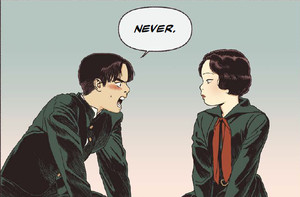
South Korea, 1929. Arisa Jo, the daughter of a wealthy merchant, is the most eligible bachelorette in all of Gyeongsung (the capital city). With her Western dresses, movie star hairstyle, and assertive attitude, she embodies bold “Modern” values. Meet her opposite, Jun Seomoon, a young man from the countryside deeply rooted in tradition. When Jun is charged by Arisa's father to be her escort in the big city, these opposing forces create sparks. Through this unlikely connection, these teenagers open their eyes to new perspectives amidst the rapidly changing world they live in.
Lovers of the Empire has a story and art by Yudori. English translation is done by Chloé Vollmer-Lo. Published by Fantagraphics (July 28, 2026). Rated OT.
Is It Worth Reading?
Rebecca Silverman
Rating:
Yudori's last English-language release, Raging Clouds, immediately rocketed her to the top of my list of creators to pay attention to. While I didn't love Lovers of the Empire quite as much, that's not because it isn't still excellent – it's because Yudori is playing a longer game this time. Where Raging Clouds was complete in one volume, Lovers of the Empire is a multi-volume work, and this first book, while not strictly set up, is still largely giving us the lay of the land.
The story takes place in 1929 in what today we'd call Seoul, South Korea but at the time was Gyeongseong, Joseon. It was a Japanese colony, and the colonizers were clearly doing their level best to convince Joseonians that their country was backward and vile. People were encouraged to wear Japanese or Western clothes, speak Japanese, and the traditional Korean ways were generally discouraged. One element of Korean culture that vanished was the yangban classification – the nobility. In its place, a merchant class arose, and the protagonists of this story each hail from one of the two: Arisa Jo is the daughter of a wealthy shop owner, and Jun Seomoon is an impoverished former noble. After his father is murdered by the police (implied to be Japanese), Jun and his mother are taken in by Arisa's father, who had been one of Jun's father's old students.
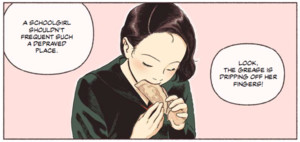
The drive of the story is the way these two worlds collide, neither of them feeling comfortable or right. Arisa, whose real name is Aeryeon, is a “modern woman” – she bobs her hair, prunes her eyebrows into thin, Clara Bow-style lines, and wears skirts that show her ankles. She's outspoken and doesn't defer to men, and she clearly wants more out of her life than what she's being taught in school, where humanities classes have been replaced with homemaking. Jun, on the other hand, feels caught between worlds. He knows his father was proud of their yangban status, and he feels ashamed that he's now beholden to someone else, with his mother essentially working as a servant. He's attracted to Arisa and horrified by her at the same time, fascinated by the modern world and made wildly uncomfortable by it. There's a sense that he's not opposed to modernization, but he's also not sure about the way it's happening: at the hands of oppressors who seem hell-bent on destroying his culture.
Yudori's art does a phenomenal job of showing all of this, from the colors Arisa wears to the art deco details on buildings. (Her butter yellow lingerie is particularly wonderful.) Jun's feeling that Arisa is a “liar” because her eyebrows aren't naturally thin is used as shorthand for both his naiveté and his confusion about the way things are changing, and the insertion of Alexandre Dumas fils' novel La dame aux camélias hints at potential tragedy in the future.
Don't sleep on Yudori's books. Raging Clouds is still my favorite, but this is more than worth your time.
Erica Friedman
Rating:
A magnificent, evocative setting, a frustrating clash of cultures, a tale of contradictions. A young man with a tragic backstory, whose fortune is low, but whose pride is great…but never as high as the young woman whose house he shares. Lovers of the Empire is about coming of age in a colonized country, as the 20th century unmoors traditions—both good and bad. Country vs city, nobility vs commoners, Japanese vs Korean, Korean vs Korean…and always, in every time and every place, rich vs poor and men vs women.
This book is gorgeous. The full-color art reflects the art of the age in which it is set. Arisa's “modern girl” is looked down upon by nearly everyone, despite her wealth and beauty. Only one westerner teacher sees her for the free soul she is, a woman of the 20th century. She alone gives Arisa advice that we can sympathize with, while around her, Arisa is resented for her wealth, beauty, modernity, and cosmopolitan perspective. I know we're supposed to be watching Arisa through Jun's eyes and seeing something seductive and alluring, something he resents while desiring it, but all I wanted to do was pluck Arisa out of the story and set her down somewhere where she'd be free of her society's bullshit.
Yudori's story and art are absolutely breathtaking. I'd call this a must-read comic for 2026.
Bolts
Rating:
Being a young adolescent is not always easy. Being a young adolescent in a specific period piece is even less easy depending on where you live. Lovers of the Empire seems to be a bit of historical fiction that takes place in the capital of Korea during the 1920s, but is shown from the perspective of two young teenagers. This whole volume is structured like a sort of coming-of-age love story that isn't afraid to get a little bit edgy about some uncomfortable subject matter that comes with teenagers going through particular changes. However, I do appreciate the fact that the viewpoint of these children doesn't diminish some of the harsh realities that they need to deal with regarding the setting.
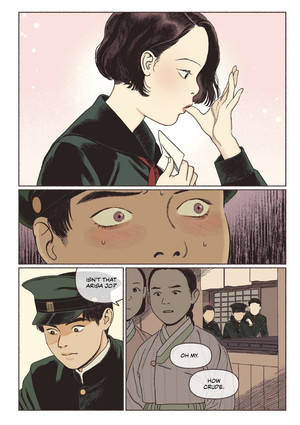
There was a lot here about classicism, subtle racism and sexism. Arisa Jo in particular gets a lot thrown at her that she is both aware and unaware of, but her standoffish attitude does feel like a breath of fresh air. It's a double-edged sword because she is in a lot of ways not typical of women in this setting, which allows her to stand out and be desired, but it also causes her to be despised. Then there was Jun Seomoon, her childhood friend who also seems to look after her, but he has to wrestle with the complicated feelings of his growing affection clashing with all of this talk that surrounds her. It is ultimately still a light story that will occasionally get overly mature in an immature way, but I like how it still ties back to the way that these characters are perceived given their positions. For example, there are moments where teenagers will openly lust over Arista, but in that dumb way you would expect teenagers to do.
What helps elevate a lot of this book is its presentation. This is one of the most gorgeous books in the entire guide. Not only are the characters very expressive, but everything from the backgrounds to the panel layouts to the impressive use of color makes me feel like I am reading a book. Almost every page itself can be considered a painting. This world feels very lived in and full of life strictly off the back of its art direction. In fact, despite the fact that this is a very wordy volume, I would go so far as to say that a lack of dialogue would not distract me from recommending or following this story. Definitely a highlight when it comes to the Korean manga on this guide and definitely something that you should check out should you have the time, even if you're not particularly interested in historical fiction. I wasn't, and I still found myself completely enthralled.
The views and opinions expressed in this article are solely those of the author(s) and do not necessarily represent the views of Anime News Network, its employees, owners, or sponsors.
discuss this in the forum |

back to Summer 2026 K-Comics Guide
Seasonal homepage / archives