

Game Review
by George Yang,Blue Reflection Quartet Game Review
PlayStation 5
| Description: |  |
||
Blue Reflection Quartet is four games in one big bundle. It includes both 2017's Blue Reflection and its sequel, 2021's Blue Reflection: Second Light. The two new games in this collection are an interactive retelling of the Blue Reflection Ray anime and an offline version of the Blue Reflection Sun mobile game. |
|||
| Review: | |||
The first Blue Reflection game follows a young girl named Hinako Shirai. After suffering from a leg injury, she's forced to quit dancing, but two magical girls named Yuzu and Lime give her powers, making her a “Reflector.” Hinako then travels to an otherworldly area called the Common, which is a manifestation of humanity's collective unconscious. She's told that if she defeats all of the enemies, called the Sephira, a wish of hers can be granted. 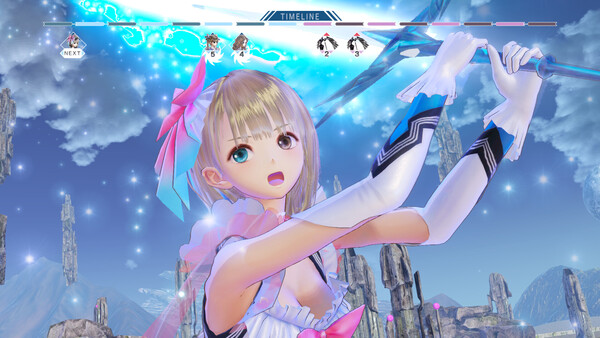 © KOEI TECMO GAMES CO., LTD. All rights reserved. ©2021 EXNOA LLC / KOEI TECMO GAMES CO., LTD. All rights reserved. ©KOEI TECMO GAMES/AASA Of course, she initially wants to wish for her injury to disappear, but she eventually learns that there are more important things in life. Blue Reflection doesn't have a particularly deep story, but its common themes of friendships and bonds make it a cozy ride. Hinako's journey is emotional, yet heavy. Blue Reflection borrows familiar elements that were popularized by franchises like Persona. Outside of Yuzu and Lime, Hinako can also hang out with her classmates during school, who make up the game's supporting cast. If Hinako becomes close with them, she can use their support abilities during boss battles. It's pretty hilarious to see Hinako call up the school's tennis captain against a demonic entity. Surely smacking a tennis ball in its face will teach it a lesson. Another classmate can give your team a back massage for full-party healing. Blue Reflection isn't afraid of leaning into the whole magical girl concept, being both cute and imaginative. The battle system *ahem* reflects the traditional Atelier games, consisting of pure turn-based RPG combat that's reminiscent of the original Final Fantasy VII. Turn order is shown through a moving timeline, and once a character's icon reaches the middle, they're allowed to act. Battles are a balancing act between spending MP to unleash skills and also increasing your Ether percentage. Once your Ether gets high enough, you can activate Overdrive, which lets you fire off multiple skills consecutively. While regular battles end too quickly, boss battles are where the combat shines. Strategizing when to activate Overdrive to buff your allies or do extra damage can mean the difference between victory and defeat. In the Quartet upgrade, the visuals have been improved. Additionally, quality-of-life features like auto-save and faster movement speed for Hinako out in the field have been added. While no new actual content has been added, these new features are appreciated. While you can jump into Blue Reflection: Second Light right away, it makes more sense to experience Blue Reflection Ray and Blue Reflection Sun first from a story standpoint. 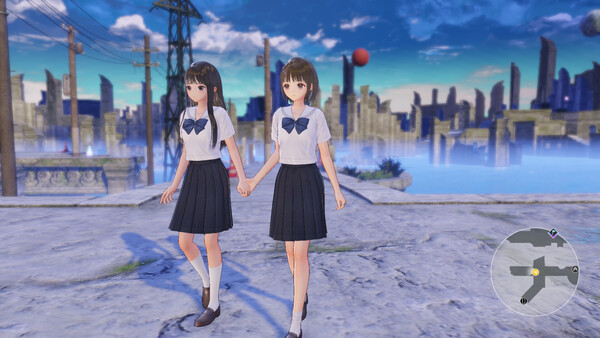 © KOEI TECMO GAMES CO., LTD. All rights reserved. ©2021 EXNOA LLC / KOEI TECMO GAMES CO., LTD. All rights reserved. ©KOEI TECMO GAMES/AASA Ray's implementation is…odd to say the least. It focuses on the closing act of the anime, and basically all you do is control Hiori and Ruka as they run around past areas of the Common from the first game. By collecting memory fragments, you'll get a CliffNotes version of the anime with Hiori and Ruka reminiscing before the final confrontation against Shino. Don't go into this thinking you'll get a comprehensive breakdown of all 24 episodes. You'll need to have watched them to understand any context here. Sun's is a more fleshed-out addition to Quartet. It follows the first man seen in this series full of magical girls, simply named “The Leader.” He's devoid of any real personality, and only speaks when a dialogue choice comes up. It's a bit of an awkward transition from its mobile game origins, but a self-inserted protagonist like this isn't uncommon in JRPGs, so it's not completely out of place. Gone are the microtransactions and gacha elements—this version of Sun uses a more watered-down version of Second Light's turn-based action combat. The combat basics are still the same, but there's less customizability. You can't craft items or food. You can't equip Fragments that boost your party members' abilities either. It seems like everything is fixed. It's not nearly as engaging as the first game's combat, and it feels really weird having played Second Light years ago with its more robust battle system. At the very least, Sun's story is a little more cohesively told than Ray's was in this collection. Basically, a giant tower called the Cosmic Fang has appeared, along with a new enemy faction called the Testa. A poisonous substance called Ash has also fallen from the sky, with prolonged exposure leading to transformation into a Testa. As the leader, you're expected to uncover the secrets behind all of this. Similar to Ray, this story also plays out at a breakneck speed. It also feels more like a fanfiction, with some returning characters from both the first and Second Light making appearances. Thankfully, after reaching the ending, there's an epilogue that connects it directly to Second Light. 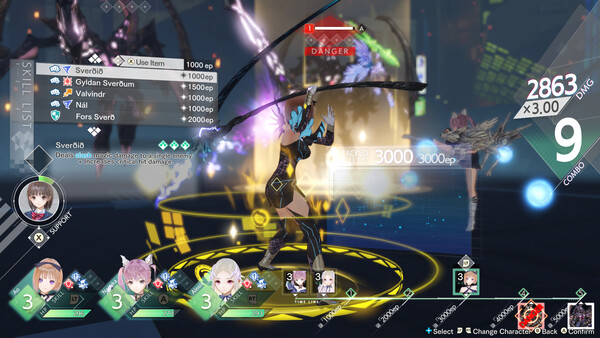 © KOEI TECMO GAMES CO., LTD. All rights reserved. ©2021 EXNOA LLC / KOEI TECMO GAMES CO., LTD. All rights reserved. ©KOEI TECMO GAMES/AASA Blue Reflection: Second Light follows a young girl named Ao Hoshizaki who, while walking to summer school, suddenly finds herself in another random school with none of her memories, along with a few other students who've experienced the same. Together, they must travel throughout areas called Heartscapes in order to find their way home. Much like the first Blue Reflection, friendship and bonds are once again big themes. However, they feel a lot more intimate here in Second Light, as the other school girls make up the party in battle. The combat system is more representative of modern Atelier games, moving away from pure turn-based combat to incorporating more real-time action elements. The timeline is still present, but time doesn't automatically stop when it's a character's turn as it did in the first game. The timeline now moves left to right, and the longer you wait, the more Ether builds up, allowing you to perform stronger attacks. And once you reach a certain threshold, your party members will transform into their Reflector states, granting even more power. Compared to the first game, you're rewarded for playing patiently. It feels faster-paced. I wouldn't necessarily say that the combat system here is better, but I like how developer Gust tried to evolve it instead of copying the first. This version of Second Light also includes the same quality-of-life features that the first Blue Reflection had, like increased movement speed. But the most significant addition is that eight brand new characters from Ray and Sun can participate in battle. This really helps expand possible party member compositions. However, these characters only seem to appear in battle, and don't have any impact on the story. While that's disappointing, they're still worthy inclusions to the overall package. 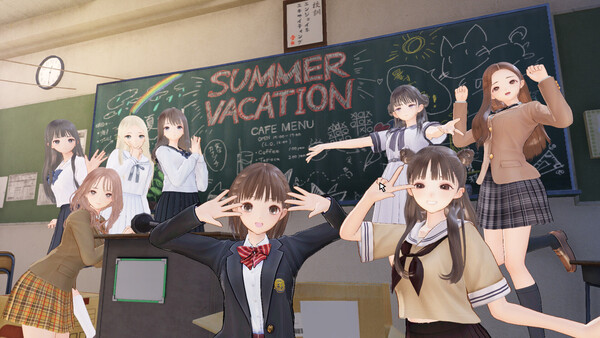 © KOEI TECMO GAMES CO., LTD. All rights reserved. ©2021 EXNOA LLC / KOEI TECMO GAMES CO., LTD. All rights reserved. ©KOEI TECMO GAMES/AASA Lastly, there's a separate large reference flowchart database included in the title screen that literally goes over each character and all of the important events in the Blue Reflection universe. It shows how they're all connected so that you can catch up on the lore and clear up any confusion. That's definitely something I appreciated since I needed a refresher. Kingdom Hearts fans, you'll love this! Both upgraded versions of Blue Reflection and Blue Reflection: Second Light themselves are worth getting Blue Reflection Quartet for. Alone, both games are US$60 each. With Quartet, however, you're getting four games for just US$50. The math just makes sense. The execution of Blue Reflection Ray and Blue Reflection Sun is awkward, but it's understandable given their media origins. |
|
The views and opinions expressed in this article are solely those of the author(s) and do not necessarily represent the views of Anime News Network, its employees, owners, or sponsors.
|
| Grade: | |||
Overall : A-
Graphics : A-
Sound/Music : A
Gameplay : A-
Presentation : B+
+ The turn-based gameplay still holds up well, and the quality-of-life additions are helpful. The cast of characters is likeable too. |
|||
|
discuss this in the forum |
bookmark/share with:

|
|||