

This Week in Games
Into the Fading Dusk
by Jean-Karlo Lemus,
Welcome back, folks! The heat is well and truly on; while it's already been sweltering in most parts of the country, my city also had its own little two-day heat wave. I can only hope that our spot of rain cools things off some (and cleans up some of our smog). It's a good time to have some ice cream in the freezer...
Final Fantasy X Rings In Its 25th Anniversary
Back when games could be produced at a regular clip, Final Fantasy was on top of the world. It helped that all of its major games released within a span of a literal decade, and each was of substantial quality. Sure, Final Fantasy VII was the king of the hill—an argument could be made that part of Final Fantasy VIII's reception was because it just wasn't Final Fantasy VII. And a lot of people turned their nose up some at Final Fantasy IX's more storybook-inspired aesthetic. But when Final Fantasy X released in 2001, it made major waves—and not just because of Sin being a titanic whale-like behemoth. It looked great and it played great, really feeling at times like an interactive move. Final Fantasy X just hit its 25th anniversary, and Square Enix released a nice little video commemorating the occasion with major moments from the game.
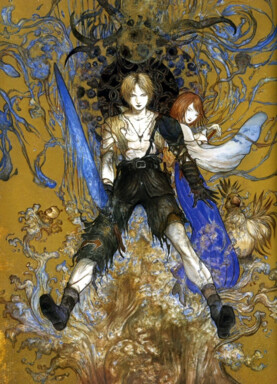
Final Fantasy X tells the story of ace athlete Tidus, who finds himself teleported from the metropolitan city of Zanarkand to the sleepy coastal town of Besaid. A colossal entity named Sin regularly devastates the land, wherein people will rise up as Summoners and take a pilgrimage across the land of Spira in the name of hopefully quelling the beast. This isn't permanent—Sin always comes back a few years after its defeat. But Summoners are looked upon as religious figures by the people, and are important for "Sending" the spirits of the departed to the afterlife—lest their regretful spirits stay trapped in the mortal world and become Fiends. Tidus winds up joining the party of the Summoner Yuna and her guardians as they travel the land. But there are a few complications. For starters: nobody in Spira believes that Tidus is from Zanarkand... because Zanarkand was destroyed ages ago. For another, Tidus and Yuna share a bit of history. While they never met before, it turned out that Yuna's father Braska was also a summoner who went on a Pilgrimage—and Tidus' estranged father, Jecht, was Braska's guardian, just as Tidus was for Yuna. Zecht was a negligent parent towards Tidus, if not actively abusive (the game makes no bones about Jecht struggling with alcoholism). While Tidus has tried to make a life for himself out from under Jecht's shadow, there are a lot of unhealed wounds and a lot of words unsaid. What follows is a journey where Yuna and Tidus travel and grow together in the name of overcoming their personal demons as well as the material monster that is Sin.
Final Fantasy X
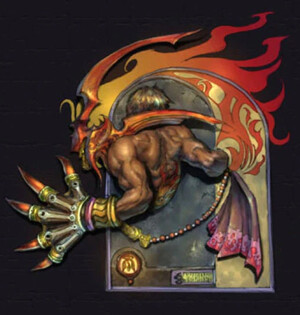
Now, Final Fantasy X is great, and there was a lot of wonderful worldbuilding within it. For example, there was the region of Al Behd, and Tidus could learn the language of Al Behd by collecting dictionaries which decoded the language. Without them, any spoken Al Behd was written in a cypher; as you collected more, you could understand more and more of the language in-game to the point where you could either decode the rest by intuition. This was helpful because Al Behd factored heavily into the plot, for lore reasons. The problem was, there was a lot of bad faith discussion about Final Fantasy X. This was the era, after all, where Japanese RPGs were "JRPGs," and "JRPG" was a four-letter word for many. Tidus' earnest angst regarding his father's abuse was considered melodramatic, with Tidus being looked on as a sissy (being rather effeminate didn't help), the turn-based battle system was engaging and fun but still looked on as rather old-fashioned, and Tetsuya Nomura's character designs were, for better or worse, getting slapped with the label of "It's all belts and zippers!". And then there was the infamous "laughter" cutscene which people liked to dunk on. There was a period of time where it was honestly difficult to discuss Final Fantasy X in good faith. We've luckily moved past that, but the damage was still done I think. People who still carry on about wanting new turn-based Final Fantasy games do not remember just how bad things got in the early 2000s (Yoshi-P remembers).
Reputation notwithstanding, Final Fantasy X is still great. Its battle system is quick and breezy, revolving around the idea of your characters being bodyguards for a central character. You can swap characters at a moment's notice to take advantage of enemy weaknesses, while also customizing everyone's weapons for best effects. The Sphere Grid was also a unique take on character progression: instead of automatically "gaining levels" at certain intervals, characters would earn points that allowed them to access new skill nodes on a grid, with certain stronger nodes with unique skills locked behind sphere slots that required keys. It was possible, with enough effort, to have characters follow in each other's skill paths (thereby teaching Yuna some of Lulu's Black Magic, or teaching Auron some of Tidus' priority-based attacks). These systems went on to inform Shin Megami Tensei: Digital Devil Saga, to an extent, with its rotating battle parties and the Mantra grid (consider that one if you need another Final Fantasy X in your life, or if you have opinions on cannibalism). Final Fantasy X was also one of the first Final Fantasy games to get a dedicated sequel, Final Fantasy X-2, which featured a new and improved battle system revolving around Dresspheres. It's got its fans, and while 100% completion is a pain to unlock in X-2, it's worth it for the ending.
Nowadays, Final Fantasy X and Final Fantasy X-2 are available together in a remastered two-pack, which is on most storefronts for most consoles. Unfortunately, the remaster messes a few things up; the lighting isn't quite the same as the old PS2 version of the game, so buyer beware. But it's still totally worth looking into if you've never played either Final Fantasy X title. I don't really have much else to end this on but my favorite bit of Final Fantasy X-related paraphanelia: Peter Falk as Columbo, done up in Tetsuya Nomura's art style circa Final Fantasy X.
It's a shame they had to cut Columbo from Final Fantasy X, but he did add about 40 hours to the cutscenes alone. pic.twitter.com/rmMC09KrdP
— Daisy 🐝 (@DaisySpiers) October 10, 2022
Nintendo Moves To Keep Its Tariff Earnings
In case Nintendo has been a bit too quiet amidst Sony and Microsoft hacking their legs off at the knee, we've gotten an update from them regarding an ongoing class-action suit. Readers will remember that the United States Supreme Court declared earlier this year that President Trump's tariffs were illegal. In response, Nintendo and a number of other companies lobbied to sue the United States government for a refund of the monies the United States government collected from the tariffs. So in exchange, a pair of West-coast gamers filed a class-action lawsuit towards Nintendo demanding refunds of the monies Nintendo stands to regain from the United States government, arguing that Nintendo stands to make money twice on the deal (once on the purchase of goods from customers, and again from the US government's refund). Nintendo has issued a response, which is a predictable "We're not doing that."
According to Game File, Nintendo's response regarding the class action lawsuit was that consumers "received exactly what they bargained and paid for" and weren't entitled to refunds "simply because of intervening legal developments related to tariffs." Nintendo alleges that the central point of the suit appears to be that the plaintiffs argue it was "unfair" that Nintendo isn't retroactively dropping its prices in the wake of the tariffs being overwritten, which "is not how commercial transactions work." And to be fair: they kinda have a point? Like, it's on you if you bought a game on Steam the day before it went on sale. You can't demand a refund for something you bought before a discount was applied.
For a reminder: during the Switch 2's launch, peripherals, Amiibo and the Switch 1 saw price hikes as a result of what Nintendo claimed were precarious times. The Switch 2's price wasn't officially affected (especially since it launched right around the beginning of the great Conusmer Electronics kerfluffle, no thanks to Data Centers and Generative AI), but Nintendo definitely was sweating, hence them nickle-and-diming literally everything else. And the Switch 2 is seeing a US$50 price hike... this September, with this whole summer leading up to it. While the tariffs were very clearly a factor in the price of Nintendo's peropherals, it's hard to argue that the tariffs affected the Switch 2's cost in a court of law since, y'know... they didn't sell Switch 2's before the tariffs were imposed. But that's okay, just give folks refunds for the Joycon Pro 2s and cameras they bought, right?
This one is hard to navigate because literally every company could stand to sell stuff cheaper. We're all broke. But also, nobody said you have to honor a sale retroactively. Buying a game on Steam doesn't mean you get to sue Steam for selling it at a discount the next day. Considering there are actual material things affecting Nintendo's prices (global economic crisis, the aforementioned mess from Generative AI sucking up all the air in global manufacturing), I don't know how you argue a price hike being as a result of reacting to global changes versus being imposed simply as a means to make money. Again, I'd be first in line for a rebate, and consumer electronics shouldn't cost as much as they do right now. But it's not Nintendo's job to balance the global economy any more than it's Sony's or Microsoft's obligation to do so. Also, literally any other company suing the United States government for tariff would also have to be under this lawsuit's lens—so shouldn't folks also be suing FedEx and Costco?
I think it's reasonable for people to want relief because crimeny, the world is literally on fire and we're being choked. I think it's reasonable to want relief immediately in the wake of the tariffs being dismissed (even though Trump is already issuing another set of tariffs against Canada). But this is not a problem of one or two factors, and the economy was not going to immediately repair itself when the tariffs were thrown out. The entire gaming industry is on shaky ground at the moment, as is pretty much everything else. Don't get distracted here, a union and universal income is probably gonna do more to help the cost of games than a pair of dudes suing Nintendo. (Hey, Nintendo, speaking of unions...)
Interview with Diego Redongo González, Art Director for Duskfade
You might have seen trailers for Duskfade around the Internet, an upcoming action-adventure game from Spanish developers Weird Beluga. Duskfade makes no small bones about its inspirations, that being the mix of older PS2 titles like Jak & Daxter and Kingdom Hearts. It looks frantic and stylish (and it helps that it's an action-RPG that's not trying to be a manic character-action game). I had the chance to sit down with Diego Redongo González, Duskfade's art director, to learn more about the game and its many influences and hopes.
This Week in Games: Kingdom Hearts and Jak & Daxter have been discussed as your major inspirations behind Duskfade. Were there other inspirations that helped shape it?
Diego Redongo González: Visually, we also drew inspiration from Treasure Planet and games like Wayfinder.
In terms of gameplay and design, some of our biggest influences were Ratchet & Clank, A Hat in Time, and Alice: Madness Returns.
TWIG: Much of your outreach regarding Duskfade references its Kingdom Hearts influences. Do you worry that Duskfade will end up in Kingdom Hearts' shadow?"DRG: "Kingdom Hearts is an incredible game with a huge fanbase. That said, Duskfade
stands on its own, and I'm confident that players will recognize it as a great game with its own unique identity and spirit.
Why wait until August 13th? You can now pre-order Duskfade on Nintendo Switch 2! 🌛 pic.twitter.com/K3KHmQnXYi
— Duskfade🌙 (@WeirdBeluga) July 16, 2026
TWIG: Other than obvious visual elements, what things from Kingdom Hearts and Jak & Daxter inform the design in Duskfade?
DRG: Elements like the fast-paced, accessible combat and magical abilities from Kingdom Hearts—adapted to fit the scale of our game—have been a big influence. From Jak & Daxter, we've taken inspiration from its platforming and the idea of having a companion who accompanies you throughout the adventure, something that was a hallmark of many great PS2-era games.
TWIG: Your release schedule shows that Duskfade will be releasing on all major platforms (Steam, Switch 2, PS5, and Xbox Series). Has it been difficult for your team to develop a game for that many SKUs at once?
DRG: It has definitely been a major challenge, especially considering the scope of the game. Even so, I believe we've managed to deliver satisfying versions across all platforms, and I'm sure players will enjoy them. On my side, we started optimization and console testing fairly early in development, which made a huge difference during the final stages and prevented platform optimization from becoming a major issue.
TWIG: What do you think was the key element in early 2000s mascot action games like Jak & Daxter or Ratchet & Clank that captured the imaginations of players worldwide? Similarly, how are you trying to incorporate that into Duskfade?
DRG: I think the PS2 era was the first time developers were able to create large, imaginative 3D worlds that felt truly rich and varied. That opened the door to more ambitious fantasy stories, memorable characters, and adventures that went beyond simple platforming. Another key element was the companion character. Watching the relationship between the main hero and their companion evolve throughout the adventure created so many
funny, heartfelt, and memorable moments. That's exactly the feeling we've tried to bring back with Duskfade. Zirian and Cuco are a duo whose friendship helps them overcome every challenge they face. Along the way, they share disagreements, humorous moments, and emotional scenes, all while uncovering a deeper story that unfolds throughout the adventure.
every hero needs a sidekick, and in our game it's Cuckoo 🐤 pic.twitter.com/G3piMR6z6I
— Duskfade🌙 (@WeirdBeluga) June 23, 2026
TWIG: Considering Jak & Daxter featured many genre-bending moments (like racing segments or third-person shooter segments with the Morph Gun), will there be similar genre-blending moments in Duskfade?
DRG: Not really. The entire Duskfade experience is built around movement and platforming, and every challenge is designed with that core philosophy in mind. It's true that you'll ride rails, glide, and even fly at certain points, but those mechanics are fully integrated into the core gameplay rather than feeling like entirely different genres inserted into the experience.
TWIG: Weird Beluga is based out of Spain; what, if any, do you feel is the main "Spanish"
inspiration in Duskfade?
DRG: One of our bosses is named Guayota, after the deity from Canary Islands' mythology. One of the game's towns is also artistically inspired by my hometown, Tazacorte, a small coastal town on the island of La Palma in the Canary Islands.
TWIG: One of your tweets mentions that the idea for Duskfade was made three years ago, and it's been two since your prototype was made. In an era where many large games can take twice as long to be produced, to what do you attribute the speed with which your team has produced Duskfade?
DRG: From the moment we signed with our publisher, the game's final delivery date was already set, along with a series of intermediate milestones. That meant we simply had to stay on schedule. The real secret is organization—always knowing the current state of the project and exactly how much work remains. Along the way, we had to cut some ideas entirely. Others made it into the game even if they weren't fully polished at first or didn't yet feel quite right. Rather than delaying the project, we kept moving forward and refined those elements during the later stages of development to deliver the best experience possible.
TWIG: Given Duskfade's 2000s-esque influences, have you considered any kind of fun "retro"
modes like a 4:3 mode or an early-2000s-style AMV?
DRG: "We don't have any plans for that at the moment, but it definitely sounds like a fun idea!"
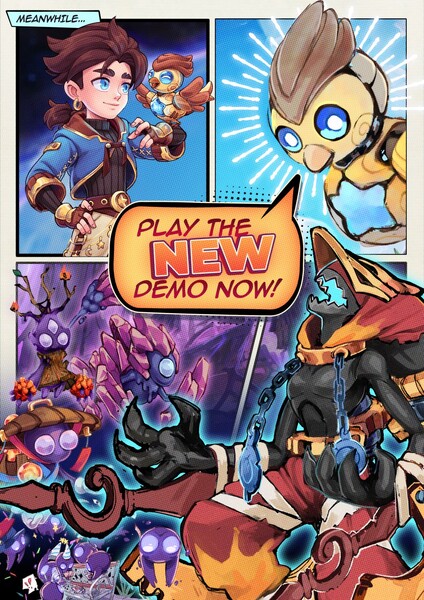
TWIG: What are some modern games that you and your team have been enjoying?
DRG: We've been playing Donkey Kong Bananza, Lies of P, TUNIC, Diablo II, Star Fox, It Takes Two, VALORANT, Mina the Hollower, and Slay the Spire 2.
TWIG: Do you have any final words for our readers?
DRG: I'm incredibly proud of the game we've created. At the very beginning, Duskfade was being developed by just two people—a programmer and an artist. In the end, we grew into a team of fourteen, and that allowed us to raise the quality of the game far beyond what we originally imagined. I can't wait for players to finally experience Duskfade. I'm incredibly excited for the launch!
Many thanks to Diego for taking the time to answer our questions, and to Colbi Tortorici for facilitating this interview for us. Readers can look forward to Duskfake releasing this August 13 on PlayStation 5, Switch 2, Steam and Xbox Series X|S.
Let's wrap up with some quick tidbits:
That will do it for this week, I think. I've got a neat thing for folks to look forward to next week, but in the meantime I hope folks are taking precautions against the heatwave. Try to stay indoors as much as you can, and don't be afraid to sleep off the heat. And, of course, keep water handy. It's one thing to be in a heat wave when you're from the topics; it's another when you're living in Cincinnati. Be good to each other, I'll see you in seven.
This Week In Games! is written from idyllic Portland by Jean-Karlo Lemus. When not collaborating with Anime News Network, Jean-Karlo can be found playing Japanese RPGs, eating popcorn, watching VTuber content, and watching tokusatsu. You can keep up with him at @ventcard.bsky.social.
The views and opinions expressed in this article are solely those of the author(s) and do not necessarily represent the views of Anime News Network, its employees, owners, or sponsors.
discuss this in the forum (3 posts) |
