

Advertorial
How BanG Dream! YUME∞MITA Uses Anime and Manga Culture To Shape Its Identity
by Bushiroad (Paid Advertisement),
The musical adventures of the girls bands in BanG Dream! have always been integrated with anime, naturally. The series exists within the space, with musical performances, animated music videos, video games, and anime series making it a component of otaku culture. But as a new entry BanG Dream! YUME∞MITA has moved the series ever forward, so too does it do so more marinated in said culture. The characters of YUME∞MITA live adjacent to Akihabara, long seen as a mecca of otaku culture in Japan, and its bountiful backdrop lends the series much of its distinctive flavor from the outset. Of course these girls are going to be steeped in anime and manga material, and it shapes both their identities and the vibe of YUME∞MITA.
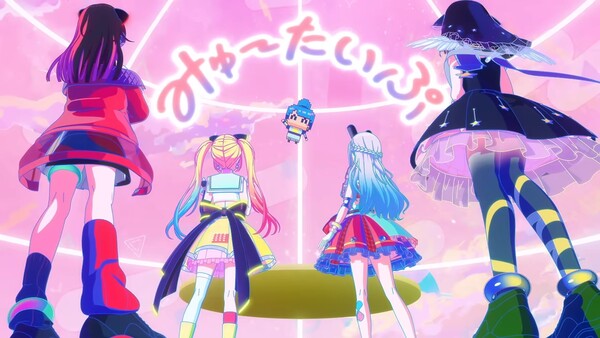
Mugendai MewType immediately propel themselves into otaku-culture modernity with their presentation. A "virtual band," they're presented as kemonomimi'd characters akin to current popular online streaming avatars inhabiting their internet space. They're accompanied by the chibi pixel-art visage of their manager, embracing so many signifiers of hit digital presences. These sorts of performers themselves are powered by regular references to anime, manga, and games, and hence it is no surprise that popular cultural connections that have defined the era of otaku-dom are also showcased.
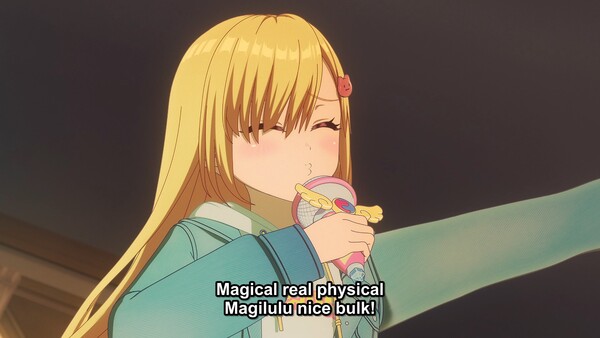
The characters themselves are shown to be propelled by their love for anime series. Series lead Arale is defined early on by her love for the in-universe magical girl anime, Magical Physical Kululu. Years into her teens, she still adores the series and turns to her fandom of it for support. She's sung the in-series songs as part of her previous online performances. But YUME∞MITA also shows why Magilulu is so integral to Arale's love of performance and how she operates with others. The series was what she and childhood best friend Ritsu initially bonded over, and connecting over those songs led both of them down the path to becoming online performers. Furthermore, once they were performing in La La La La Girls, it was glimpsed that Arale, Ritsu, and the others did videos on Vocaloid songs and other otaku music media. The online appreciation for material in this sphere is self-propelling (memetic, in the sense of how so much of this gets shared and propagated across the internet) which is why internet content creators are so enthusiastic about making material with their own spin on it. It even reflects the fandom of the broader BanG Dream! universe, with Ritsu getting a request to perform a song from fellow animated band Roselia.
Anyone within these kinds of online fandom spaces knows how powerful it can be for making friends and discovering an energetic, supportive community. Of course, we've previously touched on how YUME∞MITA has shown the potential for darker sides of that online community and how it can be weaponized. But the fact remains, as shown by Arale's resurgence as a member of MewType, that otaku fandom always has new avenues for bonding with fellow creatives. In YUME∞MITA, it of course comes back through Magilulu. It turns out that Arale's new band-mate Miyako is also a huge fan of the magical girl series, and the two bond over that love—and of course the epic highs and lows of chasing limited-edition fan merchandise for the franchise.
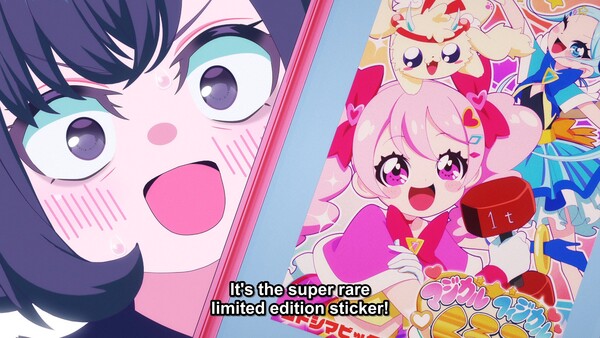
Pointedly, the case of Arale and Miyako also shows how fan creations within otakudom can propel creators and the people they interact with. Miyako is a popular illustrator and manga artist who created fanart for Magilulu early on, which is how Arale initially became a fan of her online persona. This also led to Arale being a fan of Miyako's serialized manga, idolizing her as a creative. This highlights the phenomenon of fans developing parasocial attachment to online creators like illustrators, singers, and streamers within these spaces. It's attachment that can fuel that fandom even harder, but can also propel those negative elements mentioned above. In this case, wanting to maintain that safer, respectful distance with someone she was a fan of initially fueled uncertainty in Arale. After all, she herself had already been a victim of what happens when reactions in fan spaces became too attached and incendiary.
For Miyako's part, she specifically highlights the part of otaku culture that produces it at the source: as well as a fanartist she's an original manga creator. She's demonstrated to be a popular one as well, building up a fandom enough that they can crossover and supplement the success of MewType in-universe. Of course, nowadays, so many manga artists began as fans of manga and anime themselves. They begin and develop through the Japanese doujinshi scene for fanworks, just as Miyako was shown to do. And they build up fandoms around themselves just as well as their work. In Miyako's case, that devoted, defensive fandom around her even causes issues alongside the damaging workload she's taking on to function as both an illustrator and performer. This too works as a reminder that the media we love as otaku does not spring into existence from nothing—it's made through hard work by creatives that love the art form just as much. They're people, and fans, and the act of making is their own expression of love for the fandom as so many others have.
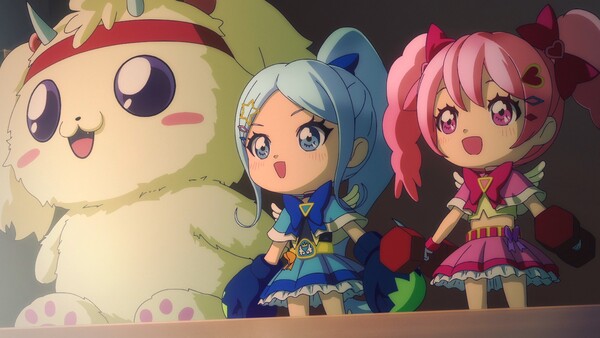
It's perhaps appropriate then that Arale getting over her concern and interacting with Miyako as equal creatives—as people—was done through their mutual fandom and love for Magilulu, another piece of otaku media. Arale adores Miyako's fanart for the series, of course, but then it must be remembered that Arale herself is also a fan-creator around the anime, with her performances of song covers. They are on the same standing, especially as they're both performing in the same group, and can bond over how their fandom of Magilulu brought them there. Appropriate for a magical girl anime presumably all about the earnest power of teamwork and the strength of working together (and also muscles, apparently).
This applies to all members of Mugendai MewType now, of course. Nonoka streams guitar-playing including covers of otaku-friendly songs. Yuno is a nerd steeped in online tech culture arguably to the point of playing a somewhat stereotyped shut-in early on in the series—of course she just needs her new band-mate friends to help her come out. The fandom focus of all of them helps unite them in their odd little group and, as shown with Arale and Miyako, can directly bring them closer together. It remains to be seen how this might continue with the other members of the band or, indeed, if it might bring others in to share in their creative spirit. Existing in this context with Akihabara as their backdrop makes these connections more visible. Colorful anime characters (from both within and outside of BanG Dream! itself) are regularly backing their antics. These are girls that are comfortable shifting into art styles referencing classic shoujo and Osamu Dezaki "postcard memories." Their medium is the otaku-sphere, and they're drawing others into it.
That's all framing, background energy that gives BanG Dream! YUME∞MITA and its characters their own unique flavor. It shows how something like a setting shift, from the streets of Akihabara to the virtual world of online performances, can make a new entry in a franchise stand out. The otaku references in the series are to fandoms that both exist in-universe and out of it, and this highlights how they aren't just shout-outs for the sake of themselves. As demonstrated by the bonds the characters forged (and broke) over their shared love for these stories, it's a demonstration of the uniting power of fandom itself. Appropriate, perhaps, for a series like BanG Dream! that has been running for so many years, drawing its own crowds to concerts and movies to come together and cheer for these girls, and make friends within the community at the same time. Who knows how else they might inspire a next generation of creatives both in and out of fandom.
discuss this in the forum |
