

All the News and Reviews from Anime Expo 2026
'A New Era' for Kyoto Animation: An Interview with Sparks of Tomorrow Director and Producer
by Kalai Chik,
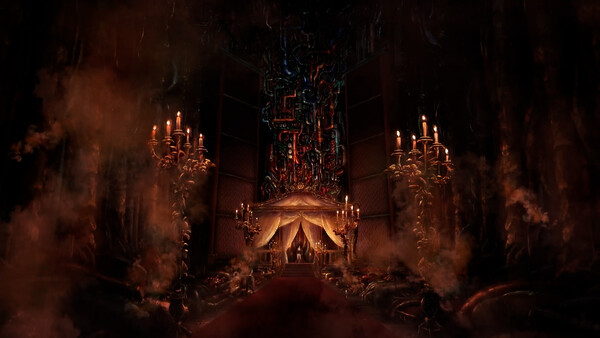
Kyoto Animation's newest anime title, Sparks of Tomorrow, has been making waves after its July 5 premiere. The animation project was originally announced in 2018, but no updates followed until 2025. Now, as global viewers have caught up with the two episodes shown at Anime Expo, the world has seen the charm of the characters set against a gritty, steam-covered Kyoto.
Director Minoru Ōta spoke with Anime News Network after the anime's panel, while producer Satori Senami provided her answers through email. Both are longtime veterans of KyoAni: Senami's résumé spans two decades, and Ota's experience at the studio is almost as long. Ota enthusiastically explained his creative process, described how he built up his experience, and how KyoAni supported his path to becoming a director.
 |
 |
This is your directorial debut, and you joined Kyoto Animation in 2009. How has your experience with other Kyoto Animation series helped you prepare for your work as a series director? Was there a mentorship program that helped you?
Minoru Ōta: I've been involved since I joined KyoAni as part of the drawing (sakuga) staff. I understand how animators think and feel, which greatly helped. I was in a fortunate environment, surrounded by more experienced directors. They gave me a lot of advice, not just for the work itself, but also on how to communicate with other departments to create a complete work.
To clarify, there wasn't an official mentorship program. Was it an informal process?
OTA: That's correct; it wasn't a formal mentorship program. However, there are a lot of directors who want to give advice to less experienced directors. Because there's that culture, they organically become mentors for the younger generation.
Kyoto Animation is known for mentoring its staff. Can you speak on your career as a long-term producer at the studio and how your experience prepared you for Sparks of Tomorrow?
Satori Senami: Kyoto Animation serves as both an animation production studio and a lead production committee company, but our fundamental focus has always been on creating animation and delivering it to audiences. We have always placed importance on working alongside creators to make high-quality works, sharing them with audiences in the right way, and returning profits to the creators. We are approaching Sparks of Tomorrow with the same philosophy.
As a series director, you oversee a lot of staff. What is the best form of communication with a big team?
OTA: I think the most important element is to understand what each person likes. Each creator has something they're good at and something they're not so good at. It's important to understand what they're good at and what they like. For example, not giving an action scene to someone who isn't good at action.
It's a rare opportunity for those outside of Japan to learn about Kyoto Animation's production process. Generally speaking, could you describe your responsibilities as a producer for Sparks of Tomorrow?
SENAMI: In addition to working closely with the director to support the production, my responsibilities include forming the production committee, creating the budget, and coordinating with various points of contact. Each team, including production and promotion, has its own person in charge, so after establishing the overall direction, I generally entrust the work to them, stepping in when necessary to make adjustments and maintain overall control of the project.
You've mentioned that you went out of your way to focus on the backdrops. Could you tell us about how you worked with Takaaki Suzuki, who also worked on Violet Evergarden, and what you were aiming for with the anime's background art?
OTA: Regarding Suzuki-san, his role was to create the world of this anime. It's set in the alternate universe of the Meiji era in 1907, where steam technology has advanced. I worked with Suzuki-san in terms of crafting that world. Regarding the background art, I felt it was possible to depict advanced steam technology capable of doing many of the things we currently do in the real world, such as vacuuming. But with such technology, the world can get stagnant. I felt that the advanced steam technology shouldn't really threaten the world, and that people would be living normally.
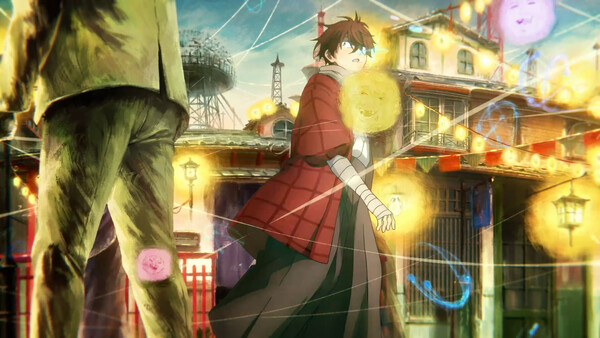
You've called this a story of “renewal.” Both characters, Kihachi and Inako, are in a muddy, smoky Kyoto. There's been concern about Japan's youth, who often feel a sense of loss and apathy during this complex time. Are you hoping this series sparks change for its viewers?
OTA: I think all of the characters in this anime are very self-aware. So I hope that it will inspire the young audience in Japan. I want it to tell the younger audience that it's okay to be pure and sincere, and to live the life you want.
Would you consider Sparks of Tomorrow a new era for Kyoto Animation? Previous releases were sequels of existing series, such as Sound! Euphonium, Tsurune, Miss Kobayashi, and Violet Evergarden. Ota-san also described Sparks of Tomorrow as a “work we can confidently present to everyone” in another interview.
SENAMI: While series work remains extremely important to Kyoto Animation, creating and delivering a new title has also been a long-held aspiration for all our staff. Over the past year, we have gradually been working on new titles alongside our ongoing series projects, and we have finally reached the point where we can share Sparks of Tomorrow with audiences. In that sense, we believe Sparks of Tomorrow represents the beginning of a new era for Kyoto Animation.
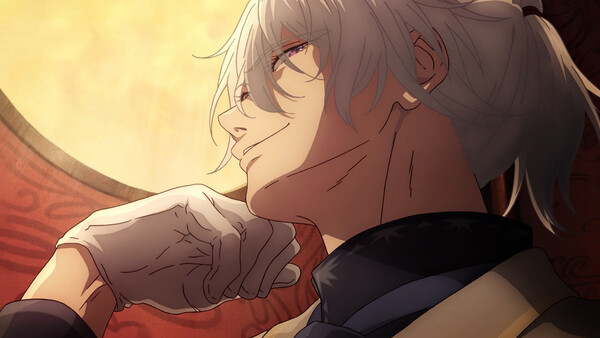
Although only a couple of teasers have been released for the series, why do the characters not speak in the Kyoto-Kansai dialect, even though it takes place in the Fushimi area? Or did you choose to use standard Japanese for the anime adaptation?
OTA: I'm very surprised to hear that question! This is something that's coming from the perspective of Japan, but the Kansai dialect gives a certain impression. It can be cheerful at times and aggressive in others. The dialect has a certain image, and I was afraid that it would make the characters too positive to begin with. Also, because it comes with a certain characteristic, it would limit the character development that I wanted to do. That aside, I think there are people who don't really like the Kansai dialect. I wanted as many people as possible to enjoy this, so I avoided the Kyoto dialect.
How was the music (background, opening, and ending) composed for Sparks of Tomorrow?
OTA: In terms of background music, I did an audition for the composer and the music department. Because this anime has a certain visual of a steam pipe with steam coming out, I wanted to include elements of that environment. I wanted to feel those environmental elements in the music, so I worked closely with the anime's dubbing director. Together, we came up with an idea of including brass instruments.
For the opening song, we were thinking of which artist to work with. I was searching for artists, and it was really difficult to find one that matched the world and the anime. I started wondering why it's so difficult, so I came back to the idea that we could also work with the series' composer. It was a wild idea at that time, but I ended up working with Hitomi Kotō-san for the opening song. Koto-san was hesitant at first, but I think it ended up working out well.
For the ending song, which is something that the audience ends with, I think the lingering impression is really important. I was looking for a certain voice that has a chill vibe but not in an acoustic style. I wanted to achieve that with a digital sort of sound. In short, I think I was looking for a sound like Yellow Magic Orchestra, but I wasn't really familiar with the music world. I spoke with the music team of this series, and they helped me find the artist.
Given that Netflix is exclusively streaming the series worldwide, is there any concern over promotion, as other studios have publicly messaged Netflix to better promote their anime series? How has Netflix partnered with Kyoto Animation to promote this series?
Cai AILIAN (Representative from ABC Animation): Our company, ABC Animation, is handling this title's global sales and distribution. We work closely with Kyoto Animation on a lot of titles. Netflix has been a good partner for us. We worked together on titles such as Miss Kobayashi's Dragon Maid and Violet Evergarden, so Netflix understands KyoAni's style. When we started considering who we wanted to work with, we shared the storyboards with Netflix. They really wanted to work with us for the title, and that's how the collaboration started.
What message would you like viewers to take away from your anime?
OTA: The characters start from a place of setbacks, including Yosuke, who could be seen as a villain in their world. But it's a story of regeneration, and they try to get up from those setbacks. I hope that inspires the audience.
discuss this in the forum |

back to All the News and Reviews from Anime Expo 2026
Convention homepage / archives