

This Week in Games
Octo Paths and None of Them Lead to Upgrades
by Jean-Karlo Lemus,
Welcome back, folks! I spent my weekend at a family friend's wedding; it was a pleasant time, and part of the proceedings had me play as Hippolyta during a brief recitation of A Midsummer Night's Dream. Sadly, I also heard news that Sam Niell passed away over the weekend. This one hit me hard; I was a kid fully enmeshed in dinosaurs and paleontology before I could ride a bike, and Sam Niell's performance as Dr. Grant was a huge part of that. I wanted to pursue paleontology in college up until I realized none of the local colleges had paleontology programs (and we didn't have the money to send me to college abroad). I also had fond memories of playing the Sega Genesis version of Jurassic Park, although I could never beat the game. New Zealand lost a real one. I would like to have seen the fossil fields in Montana...

Before We Begin
It was brought to my attention last week that I neglected an important fact regarding School Days' release in America—specifically, that JAST had released the original game in the United States back in 2012. That was a glaring omission on my behalf, and I apologize to my readers and to JAST for the fumble. I also want to extend an apology to voice actor P.M. Seymour for misspelling his name—this one hits me hard, being that I also have an exotic name that people constantly spell wrong. I take these mistakes to heart and strive to do better here at This Week in Games. Also, as one of my readers kindly pointed out in the comments last week, JAST is being very generous to long-time fans of School Days and is offering the remaster for free if you already own the original School Days HD. This is foreshadowing for later!
Octopath Traveler Comes to Switch 2—But Square Enix Fumbles The Bag Some
Octopath Traveler! I haven't played either game to know how well they stand within the greater repertoire of Team Asano's titles, but folks like them plenty, and they're standouts showcasing Square's beloved HD-2D art style. It's hard not to love them. And while they're out on pretty much every other platform, folks would be forgiven for wanting the first two games on Switch 2. The good news is that Square Enix is acquiescing: the first two games have been released on Switch 2 in Japan as of July 13, and will come to the U.S. market on October 1. And according to RPGSite, they're... okay? Apparently, they're notably better than the Switch 1 versions, not that that was a high bar to cross.
The problem is, Square Enix pulled no punches with these releases. If you already own copies of Octopath Traveler or Octopath Traveler 2, there won't be any options to upgrade the titles. It'll be buying a brand-new copy, or nothing. And even if you do buy new copies, there are no options for transferring your save data. You can understand how infuriating this would be for people who've invested time into these extensive RPGs. As if to add insult to injury, they'll be releasing as game key cards in the U.S. Not quite as bad as Sony's refusal to sell any physical media (which has apparently been covered by mainstream news media). You can trade and resell game key cards, at least. But by and large, the past two weeks have shown that players really prefer actual physical media.
By and large, folks have been pretty unhappy with this, and I'm one of them. It's pretty scummy on Square Enix's behalf; I'm not sure there's any other word for it. Folks are effectively forced to either go with whatever older version of the game they have or effectively buy a whole new game, on a bloody Game Key Card with that ugly banner on the bottom of the cover art. And it's not like this has been an innate decision at Square Enix across the board. Currently, two of their RPGs offered on Switch 2 have upgrade options: Romancing SaGa 2: Revenge of the Seven and Final Fantasy Tactics: The Ivalice Chronicles. So... what gives? This gets especially egregious when you look at certain titles like, say, the Final Fantasy X/X-2 HD Remaster, since the game is already remastered in high-definition. You can't even give people a US$10 upgrade pack to let them play the game in 4K resolution.
I'm highly disappointed by these decisions. Given my extremely extensive Switch library, anything that can improve the fidelity of my titles is much appreciated—even if I have to pay money for them. Heck, I paid US$10 to improve Xenoblade Chronicles Definitive Edition, and in my eyes, that money was extremely well spent. And I've got plenty of Square's offerings in my collection. The Dragon Quest HD-2D remasters, the aforementioned Romancing SaGa 2: Revenge of the Seven, Final Fantasy XII: The Zodiac Age, Dragon Quest Monsters: The Dark Prince... People like it when the stuff they bought gets continued support. I hope Square sees reason.
Megami Tensei Author Working To Get Novel Published in America
You might know Shin Megami Tensei as "the series that's been eclipsed by its spin-off, Persona." But what a lot of people forget is that it's actually a sequel to a series of games, themselves adapted from a series of novels. Written by Aya Nishitani, the original Megami Tensei: Digital Devil Story novel is part of a trilogy. These have never been available in the United States, but Aya Nishitani is aware of the demand from fans—and he's making more moves to get these novels published stateside!
Three years ago, I promised an American reader that I would translate “Megami Tensei” into English myself. In order to fulfill that promise, I am publishing this translation.
However, since contractual matters were resolved this month, my partner and I are in discussions with an…— Aya Nishitani 西谷史 (@ayanakajima3) July 12, 2026
At the time of writing, Nishitani has the first chapter of the first volume of Digital Devil Story available for fans to read, though this is only for a limited time, as it'll be removed at the end of this month. Over the course of this week, he's published a few of the other chapters. The translation has been done on his own, so Nishitani warns that it's not very polished—which is part of why they'll be taken down at the end of the month. He also states he's looking for a translator that he can "trust to understand his Japanese." I, for one, am extremely excited about this news and look forward to reading these novels in English!
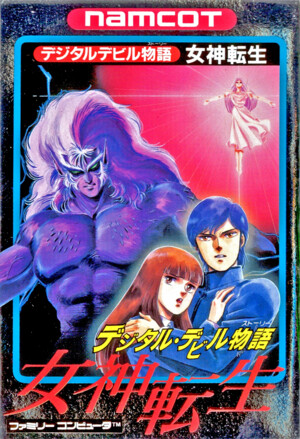
The Megami Tensei games inspired a lot of what would later become pillars of the Shin Megami Tensei series: protagonists surviving a demon-wrecked apocalypse by negotiating with and summoning other demons, storing them as data in portable computers. (It's very "1980s" in that way.) While later games would tone down the emphasis on the cyberpunk horror (see: Shin Megami Tensei III: Nocturne and Shin Megami Tensei V: Vengeance), it's still there in the background. People use cell phones and apps instead of wrist-mounted computers. Even the spin-offs get into the tech angle, like Shin Megami Tensei: Devil Survivor, revolving around demon rituals encoded as pop music, or Shin Megami Tensei: Digital Devil Saga involving demons being uploaded onto computer chips. But the original Megami Tensei: Digital Devil Saga was a bit more esoteric: a high-schooler named Akemi Nakajima summons the god Loki through a computer program he devises. Loki eventually goes out of control, leaving Akemi and his classmate Yumiko to deal with them. Complicating matters is the revelation that Akemi and Yumiko are reincarnations of the Japanese gods Izanagi and Izanami (you might recognize them from Persona 4). Over the course of the series, Yumiko and Akemi also end up having to deal with Set and Lucifer. The popularity of the trilogy led to Nishitani producing a new series, New Digital Devil Story, which follows the consequences of the original trilogy's events.
The first Megami Tensei game ended up being something of a sequel to the original trilogy; Akemi and Yumiko venture into a labyrinth to fight Lucifer, who has also resurrected Loki and Set as his servants. Along the way, the two recruit demons to help them. This isn't easy, since demons need tribute in the form of Magnetite to ensure their loyalty—a fact imported from the original novels, as much of the conflict arises from Akemi refusing to give Yumiko to the demons as tribute. The later Megami Tensei games differed from the novels, with Nishitani's blessing, but of course, it led to the Megami Tensei and later Shin Megami Tensei games becoming the franchise they are. Digital Devil Story went on to get an OVA adaptation, as was the style in the 1980s.
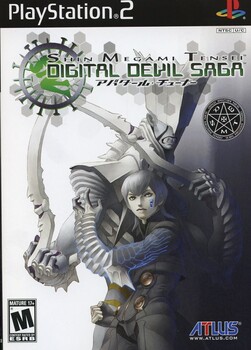
Now, you might've been seeing the title "Digital Devil Story" and getting confused over the duology of PS2 Shin Megami Tensei games. Long story short: those are the Digital Devil Saga games, and that title is a localization change; those games are titled the Avatar Tuner games in Japanese. Which makes sense; the games are heavily based on Hindu mythology, and Vishnu's various Avatars in the Bhagavata Purana are major figures. I can only wonder why Atlus made the change during localization (avoiding confusion with Avatar: The Last Airbender, maybe?), but I have to imagine that wanting to reference the original Digital Devil Story title was at least part of the equation. (Also, hey, when are we getting Digital Devil Saga ported to modern consoles? Tick-tock, Atlus, I'm not getting any younger!)
Nishitani has only just announced these efforts, but I'm already itching with excitement at getting to read the Digital Devil Story books. In his original tweet, Nishitani even mentions wanting to do this to keep a three-year-old promise with a fan. Aww. Best of luck to Nishitani!
Generative AI Encroaching on Otome Games
It's tough enough for otome games out there; few are released in the US, and fewer still get any kind of meaningful discussion outside of small enthusiast circles. While many of the beloved heavy-hitters for the genre are only just making their way over (where's Angelique?!), otome fans latch onto just about anything they can get their hands on. And it looks like their options might be limited further, because now otome games are increasingly developed with generative AI.
The two games we're here to discuss are 1000 Princes: Chouchou Condo and Bungou Catharsis, both of which are releasing on Steam later this year. And... well, they're both pretty evidently generated with AI, long before you see the disclaimers on their Steam pages. 1000 Princes lays out that practically the whole game has been made through combined use of Midjourney or ChatGPT, and looks the part through its uncanny faces and animations. But also, the game's main selling point is its 1000 love interests; that's a pretty ridiculous number that is obviously not commonly replicated because of the amount of work that kind of endeavor would take, between drawing art assets, writing stories, vocal performances, and what-have-you. Bungou Catharsis, which is wholly unrelated to Bungō Stray Dogs, is a bit more scaled-back in scope. It's a romance featuring fictionalized (and hunky) interpretations of famous Japanese authors, specifically Osamu Dazai, Ryūnosuke Akutagawa, Kenji Miyazawa, and Natsume Soseki. Their page also features a disclaimer noting that generative AI was "used across multiple stages of development to make production feasible," whatever that might mean. While we sympathize with the plights of smaller developers and the difficulty in making games, do you really have to resort to the water-wasting plagiarism machine for it? Really? When Henry Stickmin exists?
I can only presume that, among other things, the narratives are generated through LLMs, which doesn't bode well for games that are supposed to be about stories. I reviewed a game that used generative AI for its stories a while back, AI2U: With You To The End. The storytelling in that game was, notably, complete garbage: presumably each of the three girls was connected to an LLM of some sort that was given some prior prompts for personality and then told a story from there. In theory, I suppose this means the story would have infinite permutations, but in practice, it just meant that the girls would mention some details on individual runs and never expand on them. There was no real way to tell a meaningful story because no story was written; it was just an algorithm putting words in order. So it was hard to meaningfully get attached to anyone because there was nothing to get attached to. This could easily spell doom for a game like 1000 Princes, given that it's very likely each prince is just an LLM on their own. Bungou Catharsis, with its four characters, likely just generated a whole story that was later modified by a creative—but that's still a story they didn't write themselves. And the major crux of the whole thing is, if you couldn't be bothered to write it, why should I play it? And of course, that's before you factor in the environmental cost of generative AI. You don't see a lot of the folks who push hard for generative AI lining up to move next to a data center.
The best otome games are about connection. They're about memorable characters and heartwarming moments. These require deliberation and emotion. In a lot of ways, that involves putting yourself on the page—so it goes for any creative endeavor. You need to make characters players can fall in love with, but that means making a complete story—one that ends and doesn't have "infinite replayability" from randomized elements. And if you can't really tell a story... well, there isn't a story to tell, is there? It's disappointing to see generative AI take hold in otome games. The good news is that, in the here and now, generative AI isn't an industry standard. It's a buzzword. It's a trend. And games are still being made without it. Players have their options for meaningful stories and characters. Those will always win out in the end.
Let's wrap up with some quick tidbits:
That'll do it for this week. I understand it's a tough time for folks in Canada and much of the midwest, given the raging wildfires up in Canada at the moment. I'm hoping my readers are safe from the fires and safe from the smoke. Here's hoping both blow over soon. Keep close to those you love this weekend, I think we'll all need it. Be good to each other. I'll see you in seven.
This Week In Games! is written from idyllic Portland by Jean-Karlo Lemus. When not collaborating with Anime News Network, Jean-Karlo can be found playing Japanese RPGs, eating popcorn, watching VTuber content, and watching tokusatsu. You can keep up with him at @ventcard.bsky.social.
The views and opinions expressed in this article are solely those of the author(s) and do not necessarily represent the views of Anime News Network, its employees, owners, or sponsors.
discuss this in the forum (1 post) |
