

Summer 2026 Manga Guide
Cocoon
What's It About?
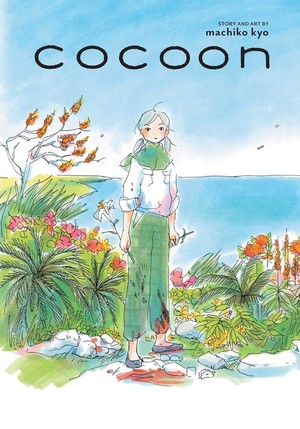
San and her best friend Mayu attend a boarding school for girls on Japan's Southern Island, but their studies are interrupted when they and the other students are recruited to help the war effort as assistant nurses. Sent to the front lines, the girls must deal with more than just the threat of enemy bombs overhead. Stuck working in the horrifying caves of a field hospital, San wishes she could wrap herself and her friends in a Cocoon of protection. But invisible threads of affection are no match for the carnage that surrounds them, and more students perish day by day. Worn down by starvation and loss, what will San and her remaining friends do when they are told to find their way home through the fields of war?
Cocoon has a story by and art by Machiko Kyō. English translation is done by Jan Mitsuko Cash and lettering by Elizabeth Conley. Published by Viz Media (June 16, 2026). Rated T+.
Content Warning: sexual assault, gore, death of children
Is It Worth Reading?
Rebecca Silverman
Rating:
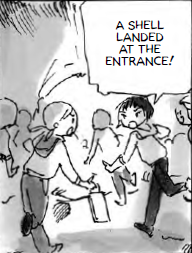
In 1945, the Japanese army mobilized over 222 schoolgirls on Okinawa to work as medical aides in field hospitals. Eleven of them survived. Originally told they would be behind the front lines, they instead were placed right near them, made to assist in amputations and other difficult surgeries. When it became clear that Japan was going to lose the war, the girls were simply told to “go home.” Before this order, only 18 girls had died. The rest either were killed by the crossfire between Japanese and American forces or committed suicide. The history of war is never beautiful, but this is a particularly ugly chapter.
Machiko Kyō's Cocoon explores the history of the Himeyuri Corps through the eyes of San, one of the girls. We see her excitedly go into the field, clean maggots out of festering wounds, carry corpses and chopped-off limbs, and eventually flee with four of her friends when instructed to do so. She watches friends die, acquaintances commit suicide, and learns firsthand that war is not glorious. This is doubtless a book that deserves a wide audience, but it's also one that you need to be ready to read, because it is brutal. Kyo's deceptively sketchy art emphasizes the unreality of the experience as San struggles to create a lens through which to view it – her friend Mayu tells her to think of all of the men as white shadows rather than people, and San takes comfort and inspiration from the idea of being inside a silkworm's Cocoon, safe and clean, and sheltered.
Kyo works brilliantly with symbolism throughout the book. She introduces the idea of the silkworms early on, explaining that although most die so that silk thread can be harvested, at least one must survive to carry on the species, and we can see this symbolism play out over the course of San's story. She dreams of silk and snow, a veiled wish for a return to the innocence and purity of her prior life, and there's a repeated motif of lilies in the artwork, a reference to the Himeyuri Corps' name as well as to funerary flowers. No men are drawn as anything but white shadows until the end, when the war is over, including the one who rapes San. This, too, is an interesting choice, because all of the girls are taught to fear predatory U.S. soldiers, but it's a Japanese soldier who assaults San, and American soldiers who ultimately prove kinder. The only certainty in war is death.
Cocoon is an important book. Its unflinching depiction of wartime is one we need to be reminded of, because it's easy to mythologize war. San's story reminds us that while someone will eventually be proclaimed the winner, everyone loses, and even if you break out of your Cocoon, you might not be able to fly away.
Erica Friedman
Rating:
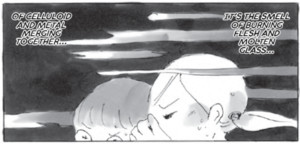
Any book about World War Two is, by definition, going to be a tragedy. Cocoon tells the story of the Himeyuri students, girls at a private school in Okinawa, whose lives were treated with utter contempt by the Japanese government. They were lied to and largely left to fend for themselves as nurses on the Okinawan Front. Then disbanded and were told to “go home” in the middle of an active war zone. 211 students and 16 teachers died, some by suicide.
The art here is simplistic and raw, so we have to sit in the middle of the story without the pretense of distraction. There is nowhere to look except at the brutal treatment of young women whose lives were not valued by anyone other than themselves. This manga filled me with tearful rage, even more than I felt reading I Wish I Could Meet You Again on the Hill Where That Flower Blooms, which was about the specific way the Japanese government threw away thousands of their young men's lives as kamikaze pilots. The reminder that women are seen as little more than tools to be discarded by men of power is my default setting. This manga gave me a whole new box of rage to deal with.
Needless to say, CW for violence and death, suicide, white sulfur damage, war hospital amputations, and the general horror and misery of war.
Like other war memoir-style manga, this is important, and we should all read it, but there's little entertainment here.
Caitlin Moore
Rating:
Before you sit down with Cocoon, make sure you are in the right place mentally. I'm not messing around here. It has graphic imagery of teenage girls going through pretty much every horror of the war, including starvation, dismemberment, and being blown up by bombs. It's an upsetting, heavy read, and I had to go sit outside for a while after reading it.
It's made all the more painful to read because it's based on the true story of the Himeyuri Student Corps. During World War II, the Japanese army recruited a group of a couple of hundred high school-aged nursing students and their teachers to assist with the war effort. Instead of serving in a safe zone, they were sent to crude hospitals set up in caves at the front lines, treating grievously injured soldiers and burying the dead. A few days before the three-month battle ended, the units were disbanded, and the girls were told to go home in an active warzone with no support or protection.
Only a handful survived.
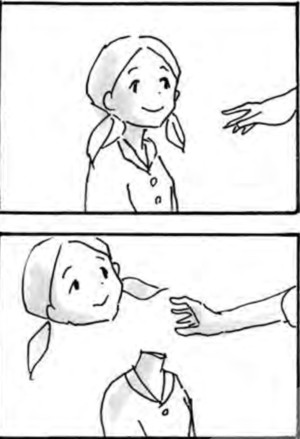
Even if it's a difficult read, I applaud Machiko Kyō for writing such an unflinching depiction, telling the story when there are few left in the world who experienced it. She shapes the story around Mayu, an ordinary girl who signed up out of a sense of obligation while her father and brother fight as soldiers. She tries to cope with the reality around her by adorning it with fantasy, imagining the cave as a cocoon and the men she treats as formless ghosts. The girls try to support one another, but they can only do so much in the face of a hopeless situation. Even as Mayu tries to protect herself with her imagination, Kyo doesn't hesitate to show us the horrors the characters go through: maggots, amputated limbs, and showers of guts all adorn the page. Since it's based on a true story, it feels more honest than gratuitous. Kyo's sketchy, simple art looks like it could come from a schoolgirl's doodles, which only adds to the immediacy and horror of what they're going through.
When the movie adaptation of Cocoon came out, some controversy followed it. After all, it was a sympathetic depiction of people fighting on the side of the Japanese during World War II. The country's colonialist moves in other parts of Asia were unambiguously evil, and much of modern-day leadership still refuses to reckon with the abuses they committed. However, I'd argue that these girls were victims as well: children who thought they were doing good, only to be used and abandoned by those in power. It's cruel and heartbreaking, and their story makes for one of the most powerful anti-war narratives I've ever encountered.
Kevin Cormack
Rating:
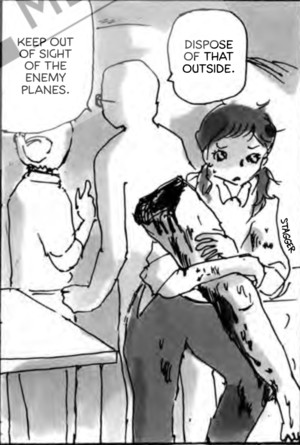
Cocoon is one of those manga that's a difficult read, yet a rewarding one. It's a war story told by a survivor from the losing side, a young girl who endures terrible hardship, witnesses unspeakable atrocities, and loses almost every single one of her friends one by one. San is a normal schoolgirl who attends a boarding school. She has a best friend in the tall, striking Mayu, who always keeps her encouraged even when the world seems dark and hopeless.
San and Mayu are sent along with their classmates to assist in an army hospital that's hidden from enemy raids within a dank, dripping cave system. As the bodies pile up around them, there isn't even room to lie down to sleep. They witness horrors like bloody amputations and men driven mad by war and illness. These aren't things any young girl should see, but they're told they must endure in the service of their country.
Events go from bad to worse, as the girls are instructed to flee the hospital and make their way across open ground, dodging bullets, flamethrowers, and enemy soldiers as they go. With starvation and disease as constant threats, it's clear that few of them will survive. Throughout all of this, Mayu invokes imagery of a silkworm's Cocoon, white threads surrounding San to keep her safe from the horrors of war.
Illustrated simply, like a children's picture book, Cocoon's sudden moments of bloody violence and visceral gore are all the more shocking. We're never allowed to forget that these are mere children, struggling without parents or the protection of society. They're left to suffer and die, sometimes even taking their own lives in acts of desperation or misguided duty. Although this is a fictionalized account, it's based on the real story of the Himeyuri Corps in Okinawa. It's impossible to come away from Cocoon without lamenting the futility and cruelty of war and mourning the needless loss of innocent life. I'm glad books like this exist, stories that don't glamorize war, that illuminate sometimes difficult truths about our world. There are definitely some similarities here with Grave of the Fireflies, so be warned not to expect something light and fluffy; the childlike art style is deceptive.
The views and opinions expressed in this article are solely those of the author(s) and do not necessarily represent the views of Anime News Network, its employees, owners, or sponsors.
discuss this in the forum (3 posts) |

back to Summer 2026 Manga Guide
Seasonal homepage / archives