

Summer 2026 Manga Guide
Draw This, Then Die!
What's It About?

Yasumi Ai, a first-year high schooler living on the remote island of Izu Ōshima, has one obsession: manga. When she discovers that her long-idolized but reclusive favorite manga creator, Hoshino-sensei, will make a rare appearance at Comitia, Ai doesn't hesitate—she has to meet her hero. But that single decision sets off a chain of encounters that will shatter her assumptions about art, genius, and what it truly means to create.
Draw This, Then Die! has a story and art by Minoru Toyoda. Translation by Evan Ward, and lettering by Isabell Struble. Published by Seven Seas Entertainment (August 11, 2026). Rated T.
Is It Worth Reading?
Erica Friedman
Rating:

If you've been a manga fan for a while, you're sure to have found yourself reading a manga about making manga. In fact, it's a bit like the manga world equivalent of a hit band's second album with songs about how hard it is to break into the music world.
There's always a teacher who uses cruelty as kindness to shape the manga artist into the young artist they become. Some friends join them along the way and help them make their dream come true. In these ways, Draw This, Then Die!, Volume 1 is a story with which you may be familiar. But don't let that stop you from giving it a try.
The story begins with a twist that sets everything into motion. Ai's first attempts at drawing and writing are crude, but her passion is obvious, and that passion draws people to her. Toyoda cleverly constructs a story within a story here, as the “real” story is wrapped around a manga-worthy plot that is itself wrapped around Ai's own story…a doujinshi that is initially a blatant copyright violation of Ai's favorite manga, which brings us back to the twist at the beginning. It's all rather more intelligent than the manga implies.
Because this is a story about the art of making art. Toyoda is called upon to draw a manga about a manga and doujinshi based on that manga and another artist's interpretation of that doujinshi. It all speeds past the reader, but when you slow down to consider it all, it is quite impressive. Layers of good writing and art about bad writing and art keep the story moving along quickly.
Draw This, Then Die!, Volume 1 is an original execution of one of the oldest stories about making stories.
Bolts
Rating:
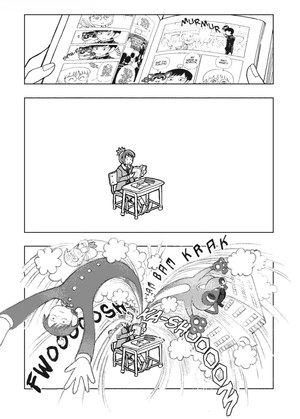
I love manga about manga. The world of creating and understanding manga has been done a lot, but I appreciate the fact that almost every story I've come across about the subject has been shown in a very different way. In the case of Draw This, Then Die!, the story is from the perspective of a young girl named Ai who learns to be more expressive thanks to manga and has a deep passion for it. She discovers that the author of one of her favorite manga is actually her super strict teacher who constantly tries to discourage Ai from engaging with it too much, but the two end up having a profound influence on each other. Other characters get involved throughout the course of this first volume, and the prevailing message of how manga can be a passion that can change a person's life for the better is put at the forefront. However, it's not all sunshine and rainbows.
Despite the rather cartoony and almost childlike style of the manga, some scenes show how that passion can act as a double-edged sword. The more passionately you feel about something, the more you can get burnt out and jaded by it when things don't work out. That seems to be the character that is set up with Ai's teacher, who acts as a literal overwhelming wall of text in an otherwise visually creative first volume. Sometimes the sheer amount of information on a page can be a lot to digest at once, and sometimes the exaggerated facial expressions can be a little bit off-putting. But overall, there is a strong, deliberate innocence here that is supposed to cut through that cynicism.
The manga also blends a variety of different styles together in order to communicate distinct points, which fits when the theme is all about that artistic expression. This is the kind of story that I read, and then when I'm done, I immediately feel like doing something. Ironic that a story about the profound impact that manga can have on you would end up doing the same thing for other people. Definitely recommend this to anybody with an artistic passion out there, especially if you ever feel like you need to be reminded why it's important to keep going.
The views and opinions expressed in this article are solely those of the author(s) and do not necessarily represent the views of Anime News Network, its employees, owners, or sponsors.
discuss this in the forum (22 posts) |

back to Summer 2026 Manga Guide
Seasonal homepage / archives