

Summer 2026 Manga Guide
Mars 30th Anniversary Edition
What's It About?
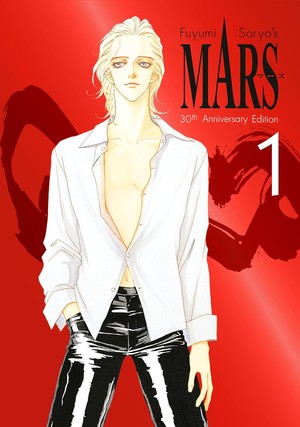
Kira's life has been marked by pain. Gang violence took her father when she was young, and her mother's remarriage inflicted even more appalling scars. She has no trust left to offer the world, so when a ravishingly handsome boy asks her for directions one day, she draws a map and hands it to him without a word. On the other side of the map is one of her drawings, which catches the eye of the boy, a motorcyclist named Rei. When the two end up in the same class, an outrageous incident will bind them together—Rei promising to model for Kira in exchange for more of her art. But Rei has also suffered a family tragedy that has worn down his temper to a short, flashing fuse. Can these two damaged souls with nowhere else to turn heal each other, or will they burn themselves out first?
Mars 30th Anniversary Edition has a story and art by Fuyumi Sōryō. English translation is done by Stephen Paul and lettering by Lys Blakeslee. Published by Kodansha USA (June 16, 2026). Rated OT.
Content Warning: sexual assault, suicide and suicidal ideation, bullying
Is It Worth Reading?
Caitlin Moore
Rating:
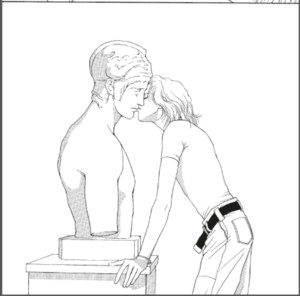
Back when manga was first booming, Tokyopop took a brave new tactic for the US manga industry: license and sell series aimed at teenage girls. Their licenses for, well, pretty much all those series have long since expired, and most of the notable ones have been released by other companies since then. Unfortunately, Mars, Fuyumi Sōryō's gorgeous teen romantic melodrama, got a digital-only release with the janky old translation. Collecting the volumes for affordable prices has long been one of my white whales.
Until now.
Kodansha has finally seen fit to grace us with a new collector's edition, collecting the first two volumes with a large trim size, a literally glossy hardcover, and a brand-new translation by Stephen Paul with lettering by Lys Blakeslee. This 30th anniversary edition is gorgeous, put together with care, even reverence, for Soryo's art. That care is well-earned – I remember being struck as a teenager by just how lifelike her characters were, even with their anime faces, when I was used to long, coltish limbs and broad shoulders in manga art. I suspect her art won't be for everyone, especially the distinctive way she draws faces and especially eyes, but her technical skills and passion for art are undeniable.
Similarly, the story won't be for everyone, as a classic tale of a “good girl” who falls in with a “bad boy.” However, Soryo writes them with an unusual degree of sensitivity. Both Rei and Kira are genuinely troubled, suffering from the kind of severe trauma that brings with it PTSD, with all its flashbacks and triggers. Still, the two of them find connection and joy in their respective passions: Rei in his motorcycle racing and Kira in her art. It's messy and melodramatic, and the two main characters are threatened on more than one occasion, even in these first two volumes. But it's the kind of high drama that expresses authentic emotions for an audience where everything feels heightened.
Mars was one of the best manga to come out in English in the early 00's, and it's long been a shame that it was unavailable to buy in print without paying exorbitant prices. I'm grateful that not only do I finally get a chance to put it on my shelf, but I have such a beautiful book to do it with.
Erica Friedman
Rating:
Mars is such a great reminder that the turn of the 21st century in shōjo manga goes hard.
Kira is presented as a quiet, talented young woman for whom the world is not an oyster. As she sits alone with her art, her mentor—a teacher at her school—sexually assaults her. He is stopped by the “bad boy” of the school, another teen for whom just living is hard work. Both adolescents are broken, misunderstood, and taken for granted by everyone around them.
Mars is not a gentle book. There is a great deal of violence and the threat of violence. School bullying, the aforementioned SA. More than one person jumps from a building. It is a lot, but somehow it always feels vaguely removed from the reader. Tragedy experienced secondhand, or a memory of loss. As I pondered everything I read, I realized just what I wanted to say about all of this—Mars is not a story about being a teenager; it is an adult memory of what it was like to be a teenager. Our memories are full of the very highs and very lows and almost empty of the everyday moments. Kira is experiencing all the bad things possible at once, and Rei is expressing all his losses and pain at once. This is not real life; it is reality-esque. As shōjo drama, it holds up well if you're not put off by the very muchness of it.
Rebecca Silverman
Rating:
Reading Mars as an adult really hits a lot differently than it did when I was a teenager. It's just as good, but in a very different way – reading it now, I can see that the adults in Rei's life have failed him, that the same can be said for Kira's on a different level. These are two teens suffering from PTSD and trying to cope as best they can, but life keeps throwing them more trauma to deal with. It's not hard to see, now, why I connected with this series so deeply as a teen; it was really the only story I read at the time that offered a glimpse of someone else struggling with PTSD. But it's also a pastiche of terrible coping mechanisms, melodrama, and other soapy things – and more than anything, it's a very good reminder that late-90s shoujo manga had teeth.
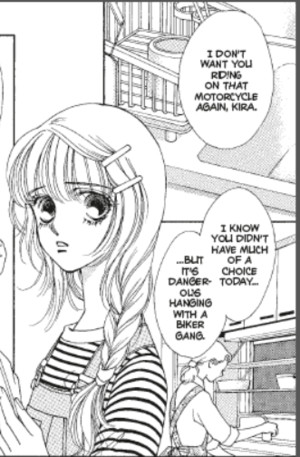
As you may have guessed, that means that Mars comes with many content warnings. Kira is sexually assaulted by a teacher, and there's an implication that her mistrust of boys and men comes from a similar experience in her past; she makes a very pointed comment to her mother about judging men by appearances. There are three on-page suicides or suicide attempts, and Kira is subjected to some terrible bullying. She and Rei are drawn to each other because they recognize the hurt they're both carrying, and at this point, they do seem to be able to help each other: Kira makes Rei slow down and think about how he's handling things, and Rei helps Kira to be more comfortable in the world. It's very much “good girl can change bad boy” on some levels, but it also acknowledges some truths about mental illness and trauma; at one point, Rei confronts a psychiatrist and says that he lied because Rei's not “fixed.” The doctor responds that there's no “fixing” mental health issues; just learning to handle them well enough to function in the world. For 1996-97, that's frankly astounding.
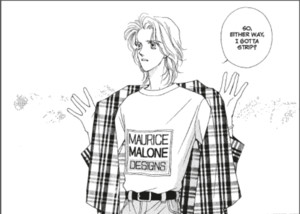
Soryo's art is very much of its time, and it really captures the late '90s fashion. Each page has an inventive layout, unburdened by grids, and the use of tones is particularly interesting. (I also love the “Lost Assholes” T-shirt.) There are still plenty of bad-old-days elements, like how Kira's bully is treated, but this is a must-read for shoujo fans. It's a snapshot of a different time in manga publishing, yes, but it's also an influential teen romance that knows how to reach its intended audience.
Kevin Cormack
Rating:

While I've heard from some of my fellow ANN reviewers that Fuyumi Sōryō's 15-volume 1990s shojo drama MARS is considered a classic, I come to it completely new, without preconceptions. I vaguely recall seeing Tokyopop's early 2000s paperback releases on bookshop shelves over two decades ago, but I don't think I ever even picked them up. I was a broke student back then, and the only manga I could afford to buy regularly were Dark Horse's pocket-sized Lone Wolf and Cub volumes, a markedly different reading experience.
I'm glad of the belated opportunity to read the series now, especially in Kodansha's sleek and shiny new hardback omnibus format. This first volume is a nice size, with decent quality paper, and its metallic sheen looks very classy. It's not as large or heavy as many other modern omnibus collections, but it still feels like a premium item. I almost want to pick up the rest of the series because it looks so pretty.
Thankfully, it's not only the superficial aspects that attract me to this series – the content is fantastic. It's a slow-burn high-school-set romance between two seemingly opposite characters. Dedicated artist Kira is an anxious, introverted girl who distrusts men and avoids communicating with her classmates. Thus, she is shunned and looked down upon as “weird” and “gloomy”. Rei Kashino is an impulsive womanizer, a rough motorcyclist with flowing blonde locks who captures the hearts of almost every woman he meets, yet in Kira, he sees something he doesn't see in any of the other girls he has slept with.
Their lives gradually intertwine in a story encompassing increasingly dark and emotive subject matter. Kira suffers sexual abuse from a teacher, plus endures cruel bullying from the other girls, jealous of her emotional hold on Rei. Rei, meanwhile, struggles with deep-seated trauma that this volume barely scratches the surface of.
What makes this manga so compelling is how truly human the characters feel. They're full of flaws and hang-ups, yet manage to be considerate and kind to one another. They navigate their way through life, steered by the pain of past experiences, but in each other find the strength to push forward. Soryo's clean and expressive art captures her characters' personalities well, from Kira's huge, watery eyes to Rei's slim yet muscular physique and his confident posturing. I was hooked within the first few pages, and will be counting down the days until the next volume's publication in September.
The views and opinions expressed in this article are solely those of the author(s) and do not necessarily represent the views of Anime News Network, its employees, owners, or sponsors.
discuss this in the forum (3 posts) |

back to Summer 2026 Manga Guide
Seasonal homepage / archives