

Summer 2026 Manga Guide
On Their Frontlines: The Lives of Japanese War Brides
What's It About?

Best friends (and possibly lovers) before the War, Haru and Yoriko are separated in the evacuation of their town during the air raids. As they search for each other afterward, Haru gets by as a waitress, while Yoriko sells her body at a brothel. Their fortunes change when they each meet respectful American soldiers, who take their hand. Arthur, a Japanese American, grapples with the inner conflict of his dual identity, while Scott is at once fascinated by Japanese culture and wracked with guilt over the destruction American forces have wrought.
On Their Frontlines: The Lives of Japanese War Brides has a story and art by Marina Lisa Komiya. English translation is done by Diana Taylor. Published by Fantagraphics (August 25, 2026). Rated M.
Content Warning: sexual assault, domestic violence, suicidal ideation, queerphobia
Is It Worth Reading?
Rebecca Silverman
Rating:
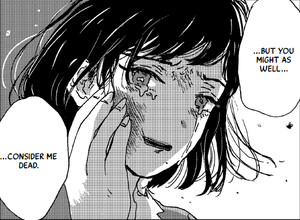
We don't talk about the ordinary people in wartime and its aftermath, and certainly not the marginalized ones. The creator of this book, Marina Lisa Komiya, says in their preface that they've thought about that a lot, particularly as a queer Japanese-American who has lived in both countries. What would it have been like to be queer in the 1940s and 50s? How must it have felt to be a woman in the aftermath of WWII? What, if any, choices were available?
On Their Frontlines is an exploration of that while still doing its level best to remain faithful to history, no matter how grim or upsetting it is. Yoriko and Haru were two schoolgirls in love when the war came to Tokyo, and they were separated when Yoriko's family evacuated. When the war ends, they're desperate to find each other...and simply can't. Yoriko returns to Tokyo alone, the last surviving member of her five-person family, but Haru's home is no longer standing, and someone new lives in the remains of her own. Haru, passing by six months earlier, has left her a note, but it says that she's married an American soldier and left for the US. Desolate and distraught, Yoriko ends up being sexually assaulted and shunted into sex work, where she also eventually meets an American soldier. Could marrying him be the way to find Haru again?
Haru's life isn't much easier. Her father beats her for the crimes of disobedience and being attracted to women, and although she's lucky enough not to end up in the sex industry, she's suicidal and ready to believe that life without Yoriko isn't worth living. That's how she meets Arthur, who takes her under his wing, eventually marrying her to free her from her father. But both he and Scott, the soldier who helps Yoriko, have their own issues - Arthur joined the US Military to escape from the Japanese-American internment camps, and Scott is very likely asexual. For all four of them, they are the safest options in a terrible, unsafe world.
Clear-eyed and more than a little bleak, Komiya's devotion to telling this story is important and very much worth reading. As a granddaughter of the Holocaust, I believe it's important for us to tell and read and understand these stories, because if we only talk about the “glorious” parts, we risk forgetting the horrors. What happened to Arthur's family is just as bad as what happened to mine. What happened to Yoriko is not limited to her alone. Scott's situation continues today, as does Haru's. It's difficult to read about these things, and even more difficult to truly understand that, although the people are fictional, the pain is real. But we need to. Because otherwise it will only happen again, and Komiya's unflinching portrayal of these four people understands that very well.
Erica Friedman
Rating:
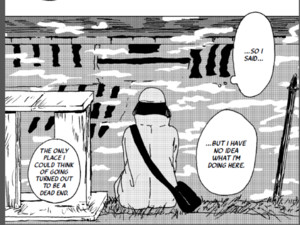
The creator of this comic, Komiya, wisely reminds us in her foreword that the women in On Their Frontlines: The Lives of Japanese War Brides are not strong, independent women. They had to rely on the kindness of the soldiers from the winning side. They are doing their best to survive. I appreciate that kind of note. It's much too easy to jump into a book like this and think “Well, I would have…” Would we, though?
As Komiya states, this is not an easy book to read. The reality of war and human society can be cruel. However, there is some kindness here, as well. Our characters are all trying to find their way in an impossibly difficult situation that they neither chose nor want. We see humanity at its worst and best in this book.
I've read some war-era books thus far for the guide. They've all been so rough to read, but with every one, I feel like I am a witness to important testimony that must not be forgotten or subsumed in crepe and flag decorations. On Their Frontlines: The Lives of Japanese War Brides' first volume is an important book that should be read by everyone who says they are “interested in” World War Two.
Bolts
Rating:
Some stories exist strictly to highlight the horrors of a situation. There are periods or cataclysmic events when people from various backgrounds and ages were simply not allowed to be happy. America's occupation of Japan was definitely one of those times, and I need to stress that you should not read this book if you are looking for some kind of hopeful story because while there are eye drops of levity here, the overall tone is depressing as characters struggle to make the most of their shitty situations. Every chapter in this volume shifts focus, following the perspective of a different character who is approaching Japan's occupation from a different angle. It starts off with the separate perspectives of two childhood friends named Haru and Yoriko who yearn to reunite after being separated, but then the story also includes chapters from the soldiers who got involved in those two women's lives.
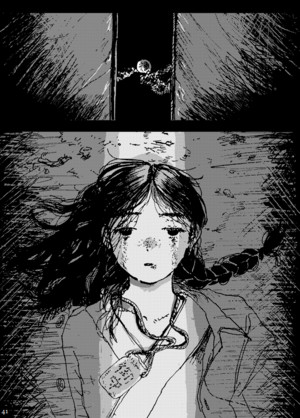
The trajectory that everyone's life takes and the unfortunate circumstances that put them in those positions in the first place are made clear, beautifully drawn in this crude but distinct style. The best way I can describe it is that the whole book is drawn in a way that makes it look like everybody is drowning in the horrors that they need to endure. Some people are disowned by their families after enduring abuse, some characters are forced to sell their bodies just for the sake of survival, some characters have PTSD due to the horrors that they either witnessed or had to contribute to, while others just want to do one good thing in a horrible district. There's never a sense of triumph, and reading this story really just comes down to characters choosing between the lesser of two circumstances.
But in that realness can be a sense of catharsis. This is the kind of story that I think you read because you want to be entrenched in that horror. Sometimes we need to drown in stories like this so we can really appreciate the air that we breathe. This is not for the faint of heart, as some panels and implications will leave you feeling cold. But I do think this stands as an impressive work of art that fully conveys the endurance that many people probably needed during this difficult point in history.
The views and opinions expressed in this article are solely those of the author(s) and do not necessarily represent the views of Anime News Network, its employees, owners, or sponsors.
discuss this in the forum (23 posts) |

back to Summer 2026 Manga Guide
Seasonal homepage / archives