

Ghost in the Shell
Episode 6
by Kevin Cormack,
How would you rate episode 6 of
The Ghost in the Shell ?
Community score: 4.5
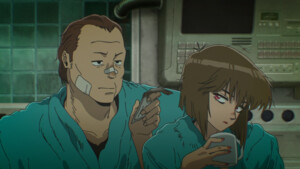
“Dumb Barter” is one of the original manga's better chapters, and this episode does an incredible job of adapting it with brutal efficiency for the screen. I'd argue this is a superior version – unlike with the manga, I had no difficulties following the plot, despite the density of information and complex inter-agency double-crossing happening in the background.
It's another mostly stand-alone episode, though I'm pretty sure Section 1's monstrous “think tank” was the one that a Fuchikoma briefly linked with at the beginning of last week's episode. We also meet the weird purple doctor again, as he performs icky-sounding micromachine brain surgery on revenge-motivated antagonist Tohru Soma. Once again, Amazon's subtitled version completely fails to even attempt to translate the voluminous on-screen text, although the dub manages well enough. You need to read fast to keep up, at least without judicious use of a freeze-frame. The micro-machine technology described still sounds plausible today, which is remarkable, almost forty years on from the manga's original publication date.
Most importantly, though: Kusanagi's changed not only her hairstyle, but her hair color too! I think I preferred her previous blue look, but her new more muted palette and severely angled style still looks cool as hell. At multiple points this week, she doesn't only appear businesslike, but icy cold. Her look of utter disdain as she unloads multiple bullets into her enemy's skull gave me chills. This Kusanagi is absolutely not to be messed with. Not even her boyfriend escapes from harm, as he receives a knife from her into his shoulder.
As her colleagues lament with her, it's a shame she's not dating a civilian. Kusanagi's unnamed boyfriend (of seven months so far, a new record, according to Batou, who receives a mug targeted at his forehead for the observation) is a similarly highly-ranked officer in Public Security Section 1, though unfortunately for him, his boss is an idiot. It's his fault that terrorist Soma can endanger both Kusanagi's and Togusa's lives, and Chief Aramaki is justifiably incandescent with rage. Stay after the ending credits for a darkly humorous joke about Section 1's chief perishing in a hit-and-run incident, just as Borma pulls up, with obvious damage to the front of his car…
Soma's hatred of Kusanagi is justifiable, at least from his point of view. Four years previously, in retaliation for torturing and killing two of her men, Kusanagi killed six of his, and contrived for him to shoot his own sixteen-year-old son through a closed door. The world these characters inhabit is dangerous and often horrific, and failing to ensure the death of one's enemies is likely to cause problems later. Kusanagi's an effective, decisive leader, but she's cold, calculating, and unafraid to take lives in the most brutal ways.
It can be hard to square this with her seemingly idyllic domestic life. Previously, we met her female friends-with-benefits with whom she meets for cybersex liaisons. (Note: in Shirow's manga, he states that in this world, cybersex with shared sensory input is only safe between members of the same sex as they have the same sexual organs in common. This was why Batou experienced pain and nausea when connecting with Kusanagi in the second episode's infamous boat scene, as he literally did not own the correct equipment.) Now we meet her steady boyfriend, and it looks like they live together. They seem mutually supportive, loving, and intimate, yet this is the same woman who executes criminals extrajudicially, her eyes glowing red with rage.
These seeming contradictions are what make Kusanagi such a fascinating lead character, and so far, this animated version has been the only one to satisfactorily explore all of these aspects. Oshii's film used aspects of this chapter's mech fight (plus some details from a later Human Error Processor chapter) for its climactic battle, but none of the warm relationship material. Even the relatively more light-hearted Stand Alone Complex mostly shied away from giving Kusanagi confirmed romantic entanglements. I wonder how fans will receive the show's take on The Puppet Master incident, which begins next week...
Rating:
The Ghost in the Shell is currently streaming on Prime Video.
The views and opinions expressed in this article are solely those of the author(s) and do not necessarily represent the views of Anime News Network, its employees, owners, or sponsors.
discuss this in the forum (37 posts) |

back to Ghost in the Shell
Episode Review homepage / archives