

Summer 2026 Manga Guide
Wild Love: A BL Guide to the Animal Kingdom
What's It About?

Are you a fellow BL academic looking to learn more about the animal kingdom? Grab your field notes and get ready for the sexiest crash course ever. In this academic collection, you'll learn all about the habits and lifestyles of animals in our world. Things like giraffe hierarchy battles, a pure romance between penguins, and even snail hermaphrodites with their own omegaverse plots. Packed full of ecology trivia, facts, and detailed visual guides, this BL manga guide is ready to teach you all about getting wild!
Wild Love: A BL Guide to the Animal Kingdom has a story by and art by Tsubuko Aratama. English translation is done by Tristan K. Hill and lettering by Karis Page. Published by Seven Seas Entertainment (June 16, 2026). Rated M.
Is It Worth Reading?
Rebecca Silverman
Rating:
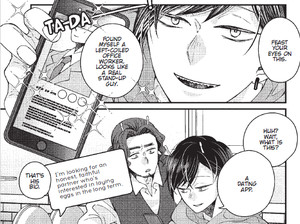
This is a book that absolutely should not work, and yet it really does. It advertises itself as being “a BL guide to the animal kingdom,” and that's true – it's a bit of an adult take on the frequently-banned-and-challenged picture book And Tango Makes Three. Essentially, this is Tsubuko Aratama combining two things they're interested in (animals and BL) and making it work. Not every manga creator who claims to pack a book with their favorite things can actually pull it off.
This is an omnibus of both books in the series, with each volume covering three animals in full and a couple more in little mini-informational sections. All are animals with known homosexual behavior in the wild. You've almost certainly heard about penguins thanks to the aforementioned picture book, and maybe about dolphins, who are famously freaky, but did you know that giraffes also engage in homosexual behavior? Or elephant seals? There are also fish that switch gender and intersex snails whose mating habits depend upon the direction of the swirl on their shells. Each of these animals is imagined as a couple of handsome young men, and their mating habits are explained in BL short stories. Some work better than others, and that often comes down to the nature of the animals themselves. Penguins are easy to make adorable and sweet because a) they are adorable and b) there's scientific evidence that penguins choose mates based on personal compatibility rather than gender. But sea lions, for example, are a less easy task because a lot of their homosexual behavior comes from frustrated males in rut taking it out on other males or pups, which is decidedly less cute. Same with dolphins, really, but they at least do form lasting same-sex partnerships even if they also try to stick their penises in each other's blowholes.
I learned a lot from this book.
Aratama tries to slot each couple into a specific romance or BL-specific trope, with mixed results. The penguins embody childhood-friends-to-lovers, and that works very well; the dolphins are also friends-to-lovers in a way that works with how dolphin pods function. The bluestreak cleaner wrasses (a kind of fish) don't quite fit the two-semes model, although I appreciate the effort put into making it work. Giraffes as hotblooded school thugs, on the other hand, is kind of brilliant, both because giraffe males apparently turn fighting into something else, and also because giraffes are, apparently, really, really bad at sex.
All in all, this is a remarkably fun book. There's a bibliography, and Aratama mentions their research several times, so this is at least a little informative on top of being entertaining, and it belongs in the same basic category as works like Eliot Schrefer's Queer Ducks. If you loved Tango's story as a little kid (or adult!) or just like learning about the weird world of animals' sex lives, definitely pick this up.
Lauren Orsini
Rating:

When I saw the title page of Wild Love: A BL Guide to the Animal Kingdom, my first thought was “Cowards!” When the premise is a story about real-life instances of the natural world imitating BL (or perhaps it's the other way around), it felt like a prime opportunity for the creator to portray some anthropomorphic, furry depictions. Instead, the couples are portrayed as fully human men, with clothing or accessories that offer a nodding resemblance to the animals they're supposed to represent: the Bluestreak Cleaner Wrasses, for example, wear striped ties. However, the content was too good for me to protest for long. This surprisingly educational manga offers hands-on (pun intended) demonstrations of the truly freaky ways different species get it on.
Everyone loves cute and cuddly penguins! But what about elephant seals? Or slugs? I truly appreciated the sheer range of animals in this unique book. Each chapter focuses on a different species (from giraffes to fish) and likewise follows a new BL couple as they get together, much like their animal counterparts might. Much has been written about the real-life homosexual behavior of dolphin pods, but you might not be as informed about hermaphroditic leopard slugs, for example. Incredibly, there are more commonalities between standard BL tropes and actual animal kingdom behaviors than you'd realize. For example, all Cleaner Wrasses start female, and the largest one in a group becomes male. So what happens if you put two males together? Scientists tried this, essentially recreating the popular doujinshi trope of “can't escape the room until one of you becomes a girl.” As you can imagine, the book has many comedic moments as these parallels become increasingly apparent! Cute anthropomorphizing scenarios (the penguins are childhood friends while the giraffes are high school delinquents, for example) combined with fascinating animal facts made this book an easy—and edifying—read.
I loved this book's combination of humor and education. It correctly gauges that the way to get me to learn something new is to get BL in the mix. It's also a celebration of the sheer diversity of life on Planet Earth. While LGBT people are forced to continue to fight for their rights in Japan, the US, and elsewhere, this book is a reminder that homosexual activity, being intersex, and changing from one sex to another (just to pick three examples from the book) are the most natural thing in the world and extremely normal across multiple species. It delivers the triumphant message that regardless of what human politics attempt to litigate, sexual diversity not only predates our civilization, but is here to stay.
The views and opinions expressed in this article are solely those of the author(s) and do not necessarily represent the views of Anime News Network, its employees, owners, or sponsors.
discuss this in the forum (20 posts) |

back to Summer 2026 Manga Guide
Seasonal homepage / archives