

Game Review
by James Beckett,Brigandine Abyss Game Review
PS5, Xbox Series X|S, Nintendo Switch 2, PC
| Description: |  |
||
The continent of Meltitea is divided by the conflicts between its Neo Abyssola Empire and the rebel nations that stand against the Empire's tyranny. Gran Dragnica is a kingdom where dragons and humans have formed a powerful alliance. The nomadic band of mercenaries known as Scarlet Will fight to stave off the forces of the New Empire. The Queendom of Mysteine strives to live up to the legacy of its legendary founders. Purifanoe is a hidden village of fairy folk that seek refuge from the destructive battles fought by mankind. Samura Village is an isolated tribe that must use their honored traditions to carve a path into the future. The secret organization of Pandemyuon serves the New Empire with its army of lab-grown Chimeras, but one escaped test subject and the sacred maiden who rescues him will stand against the Abyssolan forces. Brigandine Abyss is a grand strategy tactical RPG developed by Happinet and published by NIS America, Inc. for PC, PlayStation 5, Xbox Series X/S, and Nintendo Switch 2. A review code for the PS5 was provided for this review. |
|||
| Review: | |||
It was way back in 2020 that I reviewed the second game in the storied Brigandine franchise, The Legend of Runersia. At the time, I found the game's mix of grand strategy scope and tactical RPG battles pretty interesting, but the game was held back by its archaic design sensibilities and the limited presentation of its maps and story sequences. It ended up being the kind of niche throwback title that I respected much more than I actually enjoyed playing. To my surprise, Happinet has delivered a brand new entry in the franchise almost six years later. With the promise of quality-of-life improvements, a brand new setting, and more focus on the narratives of each warring faction, Brigandine Abyss has the makings of a sequel that improves on its predecessor's biggest flaws. In practice, though, the results aren't so straightforward. 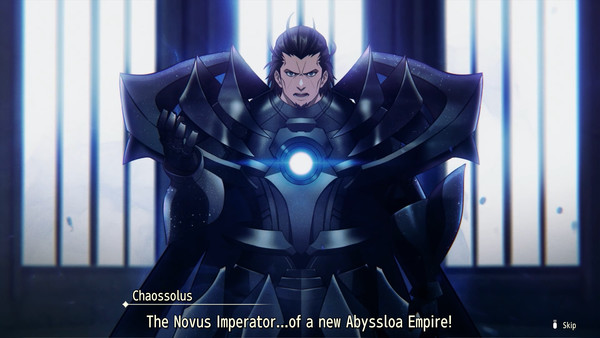 © Happinet 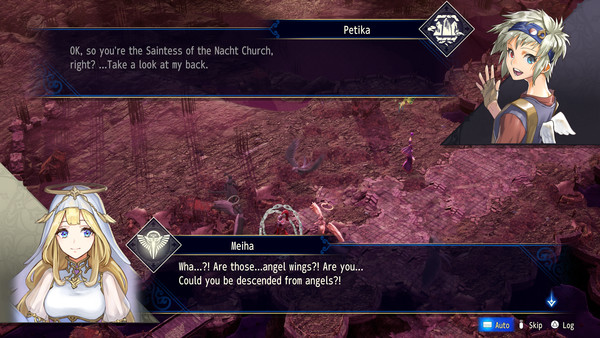 © Happinet We'll start with the story and presentation of the game, since that is where we can see the most obvious changes from The Legend of Runersia. While it is clear that the team at Happinet has worked hard to create a product that stands apart from its predecessor, I can't say I am completely won over by the new direction. First and foremost is the artwork used in all of the cutscenes and inter-battle dialogue sequences, which is a categorical step backwards. One of the best elements of The Legend of Runersia was the lush, painterly art of designer Raita Kazama, which gave the entire setting of that game such a cohesive and appealing presentation, even when the story itself was nothing special. Brigandine Abyss has taken the inverse approach of putting more emphasis on story than ever, only to use much flatter and more generic visuals to depict all of these new cutscenes and interactions. New designers Niji Hayashi and Junko Kawano have done exceptional work across the Fire Emblem and Suikoden titles, respectively, but Brigandine Abyss doesn't live up to those series' standards. It doesn't help that the cutscenes use motion-comic stylings to animate otherwise lifeless character artwork in a manner that can look awfully cheap. I know that no fan of Brigandine is approaching these monstrously dense campaigns of grand strategy because they're looking for the deepest narratives in the world, but I was honestly excited to see if Brigandine Abyss could bolster its gameplay with more interesting writing and visuals. Alas, while the stories of factions like Pandemyuon and Gran Dragnica are adequate enough to give each campaign its own flavor, I doubt they'll be sticking with any players for long after any given campaign comes to a close. Normally, I would try to dedicate some space around this part of the review to discuss the music, but I don't even have more than a sentence's worth of feelings to communicate about the score. It's even more forgettable than the new art style.  © Happinet 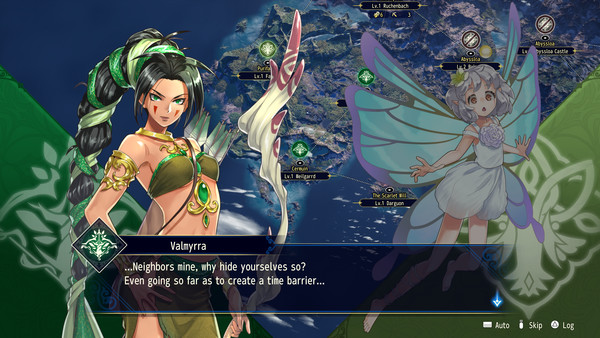 © Happinet On the battlefield, however, things are a little different. For one, this is an area where the game's new visual ambitions actually pay off for the most part. While the assets used to create the maps still look pretty darned generic, the battlegrounds upon which you wage your wars are more varied and, well, strategic than the tiles of Legend of Runersia. Elevation, choke-points, terrain differences, and all of those other variables feel like they matter more here, and they're easier to parse thanks to the added texture and depth of these levels. I wish I could say that the battles between your heroes, knights, and monster minions looked great in comparison to the earlier games, too, but I can't quite be that enthusiastic. I booted up my copy of Runersia for the PS4 to do some side-by-side comparisons, and I can say that the animations and models are a little more polished and animated, but this is still an exceptionally modest experience when it comes to the clash of steel and claw. It's a shame, too, because I think the one-on-one unit duels are where TRPGs can often shine the brightest by injecting much-needed personality and drama into the proceedings. In Brigandine Abyss, you never really get the sense that you're doing anything more than moving fancy miniature pieces around a highly detailed gameboard. 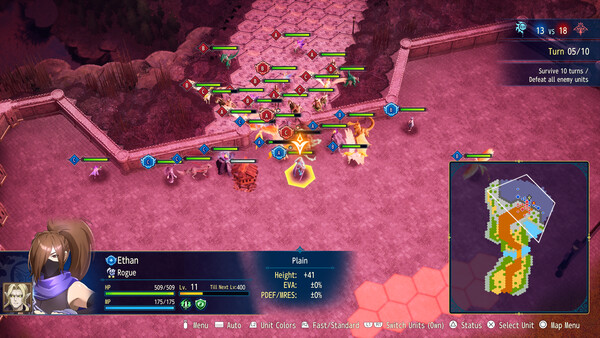 © Happinet 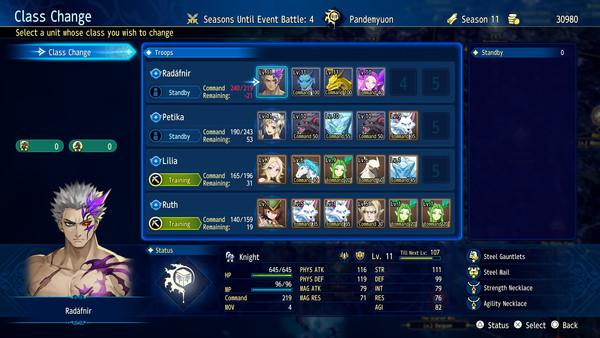 © Happinet That said, for the folks here precisely because they want to crunch a whole lot of numbers while moving their little miniatures across a fancy gameboard, I think Brigandine Abyss still has plenty to offer. The overall shape of any given campaign is much the same as Runersia: From the world map's Organization and Invasion phases, you spend each “Season” managing troops and summon new creatures to battle with using the Fate Binding system, and then you carefully select which units to level up, send out on resource gathering quests, stock up defenses in neighboring bases, and so forth. Then, as the CPU opponents do likewise and plan their own invasions, you play out the attacks across several lengthy rounds of turn-based RPG hacking and slashing. There are skills to master, special units to discover, and piles of equipment to manage by navigating an endless series of menus. Rinse and repeat until you reach the end of the story campaign. You get the idea, I'm sure. Coming from the perspective of someone who has not spent hundreds upon hundreds of hours navigating the intricacies of past Brigandine games, I'd say that the actual play of Brigandine Abyss is on par with what I got out of The Legend of Runersia, both for better and for worse. The satisfaction that comes from successfully building up an army and sweeping up the goodies from your enemies' fortresses remains as addictive as ever, but the battles themselves—which make up the vast majority of your play time, mind you—are merely…fine. The maps still feel too big, and the units still lack personality, and this all compounds on top of the slow pace of the fights to make combat feel too often like a chore you have to grind through. Because we're dealing with dozens of units on either side of the battle each time, it feels like every conflict devolves into a big pile-up of units all smashing into each other one tedious turn at a time. You can always turn on Turbo Speed and Auto Battle Mode if you're not feeling up to several lengthy dogpiles of anonymous monsters in a row, but at that point, Brigandine Abyss might as well add an auto-resolve feature to let you skip the fights completely. One new addition to the overall campaign flow that I appreciated is “Mission Mode”, which lets you choose from the whole catalog of twenty-four factions instead of just the six main nations that get the star treatment in story mode. Each of these nations has an interesting and often diabolical win condition, such as “Complete a successful campaign only using [X] units” or “Ensure that you can pay off the nation's debts after every Season.” This is a much more creative and unique spin on the post-game sandbox campaigns of Runsersia, and I imagine it will add a lot of replay value for fans. 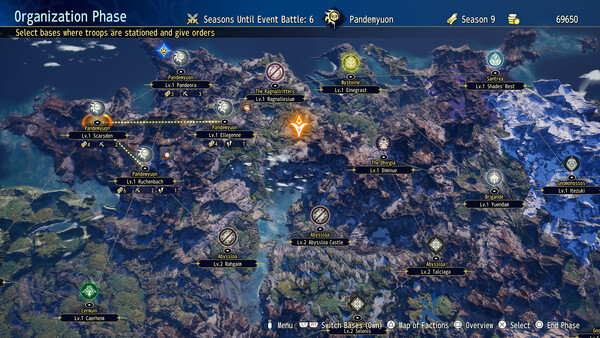 © Happinet 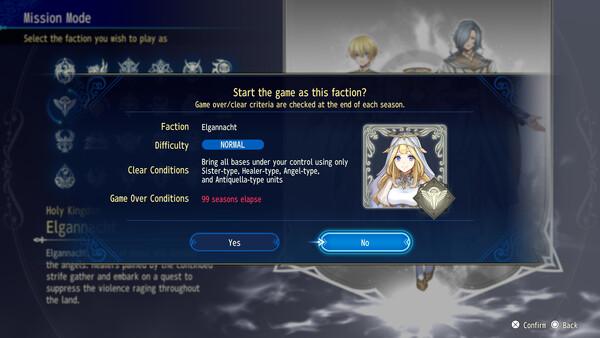 © Happinet In the end, Brigandine Abyss doesn't feel so much like a dramatic leap forward as it does a somewhat awkward shuffle to the side. For every gameplay improvement that it makes over the last Brigandine title, Abyss struggles to do much of anything interesting with its approach to presentation and narrative. It's a perfectly fine strategy RPG for franchise fiends and genre buffs, and I can imagine maybe returning to the war-torn maps of Meltitea someday when I clear out the many other games vying for attention in my backlog. If you don't already have a fondness for the Brigandine franchise, though, I don't recommend taking a chance on Brigandine Abyss until you can score a better deal than the sticker price. |
|
The views and opinions expressed in this article are solely those of the author(s) and do not necessarily represent the views of Anime News Network, its employees, owners, or sponsors.
|
| Grade: | |||
Overall : C
Graphics : C
Sound/Music : C
Gameplay : B
Presentation : C
+ Series' mix of grand strategy and tactical RPG battles remains compelling; New focus on developing faction narratives gives more context to the fighting; Mission Mode provides unique challenges to test players' skills |
|||
|
discuss this in the forum |
bookmark/share with:

|
|||